
Digital twins are becoming essential infrastructure for commerce and AI, yet most of them are still experienced through a flat webpage, a rendered video or a headset. A stronger collaboration would connect two complementary systems: industrial 3D capture at the source and calibrated spatial presentation at the destination.
The fit is unusually direct.
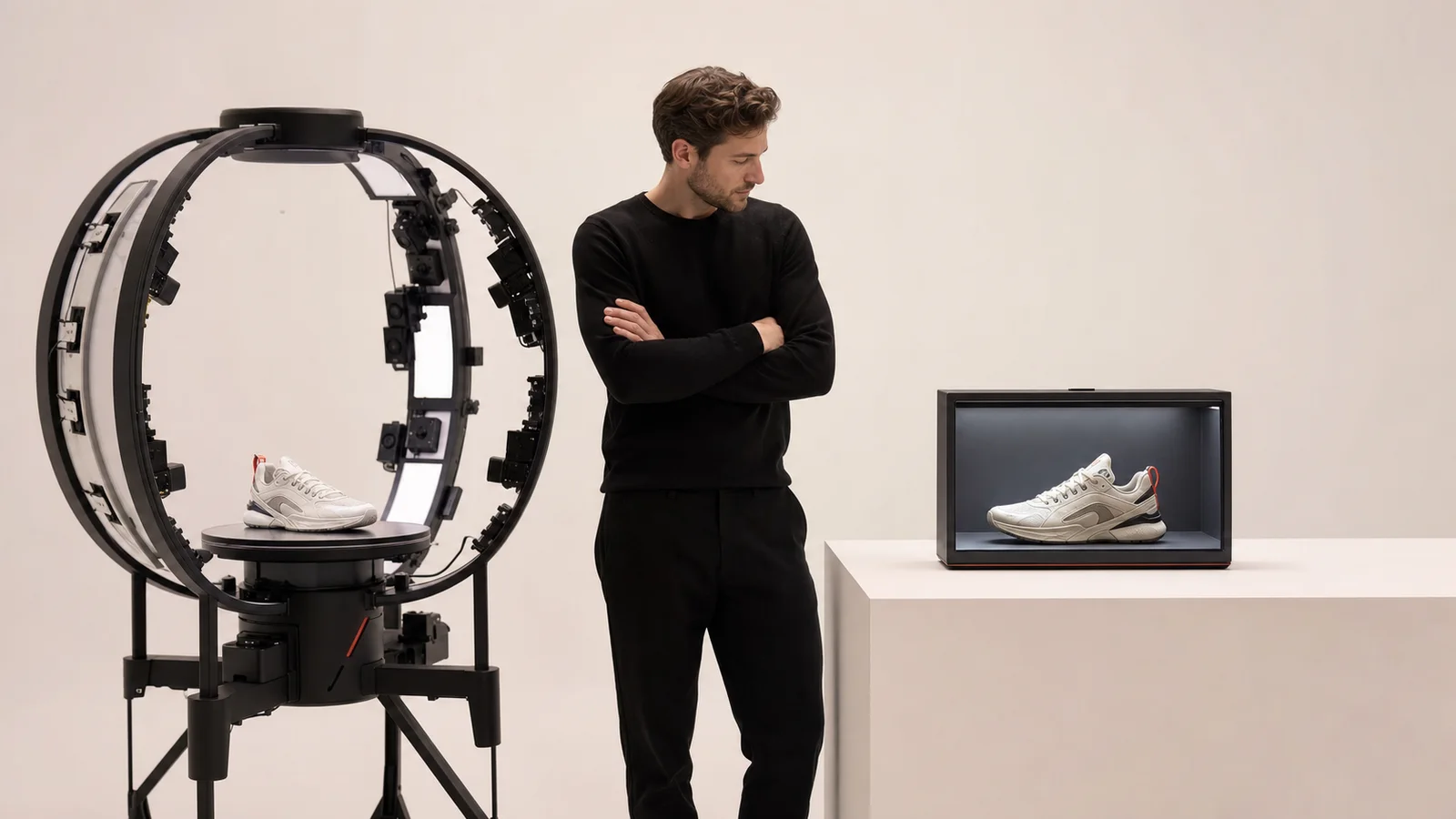
ALLSIDES describes itself as a 3D digital-twin factory. Its automated Sphere and Cube systems capture physical objects as high-fidelity, relightable 3D assets with detailed geometry and physically based material information. Reality Relay addresses the next question: once the asset exists, where can it become useful in the physical world?
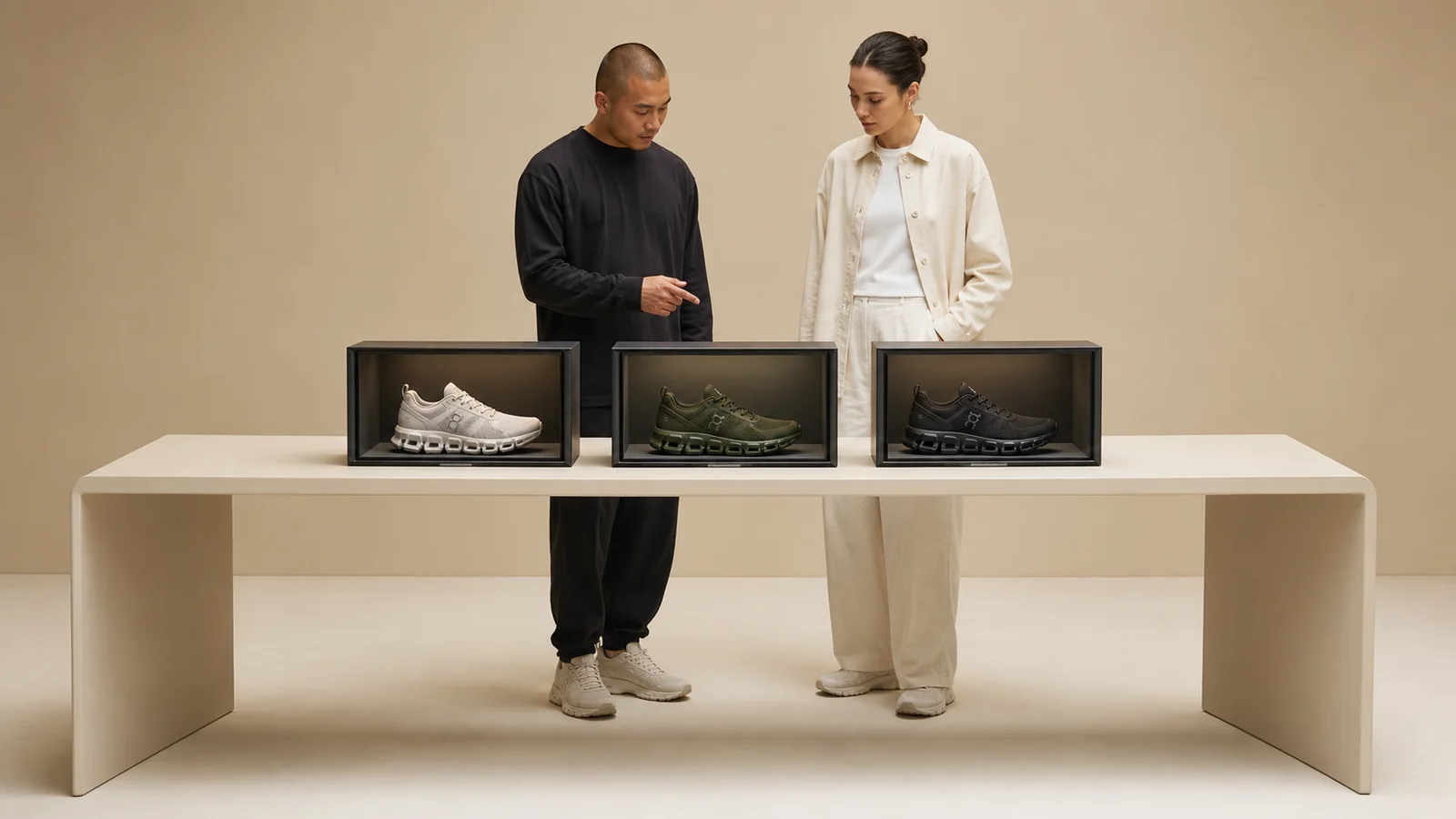
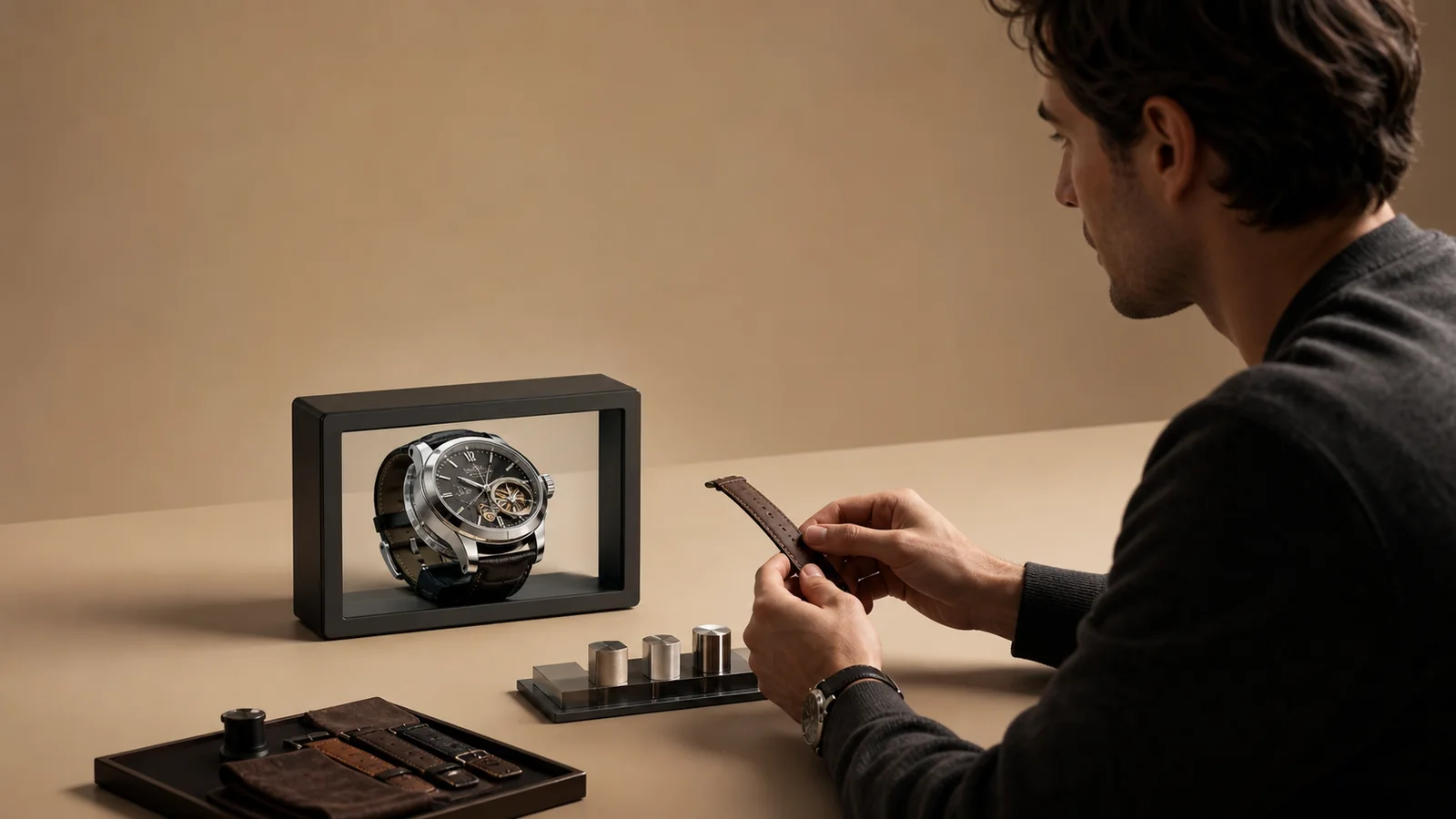
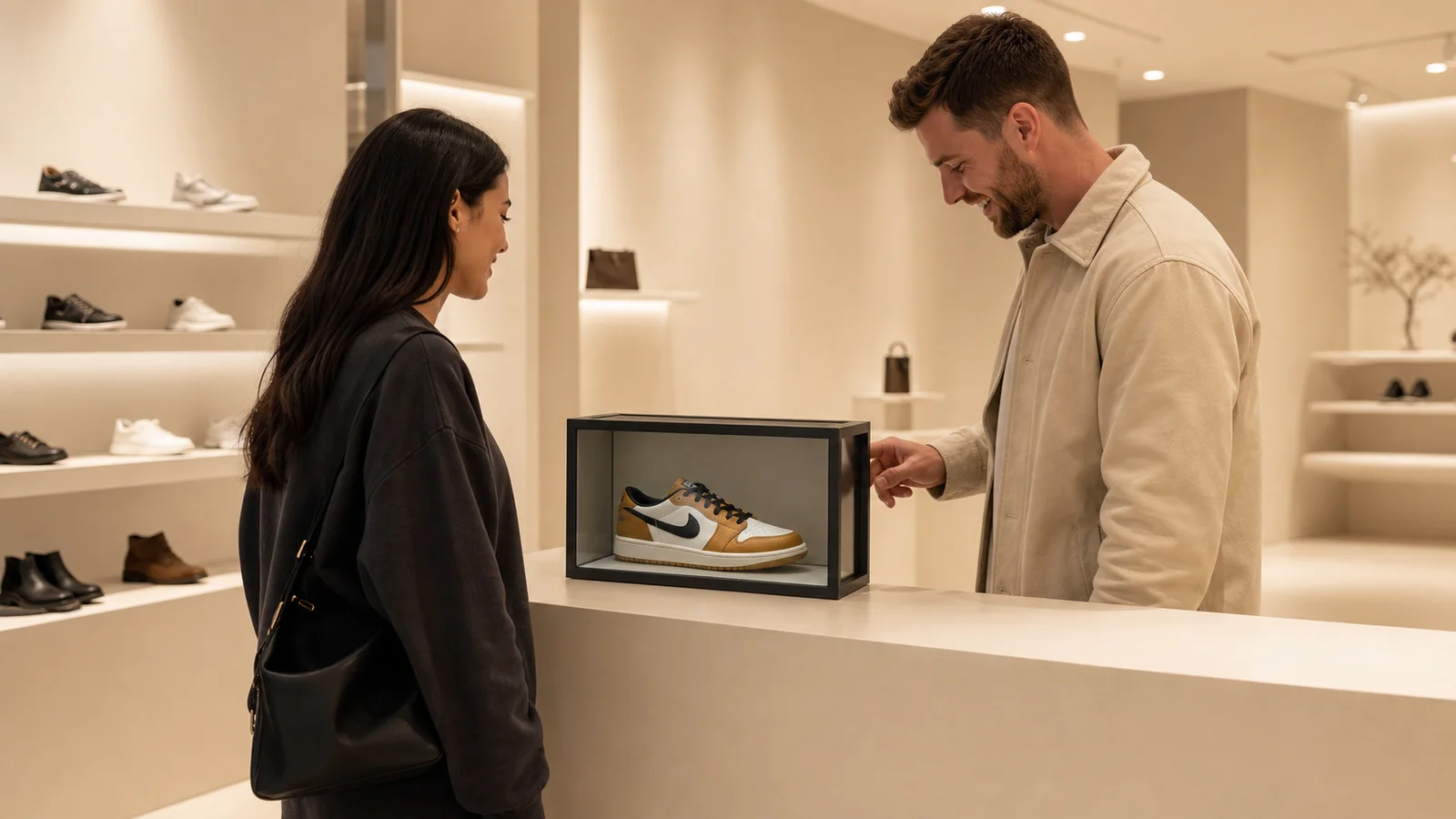
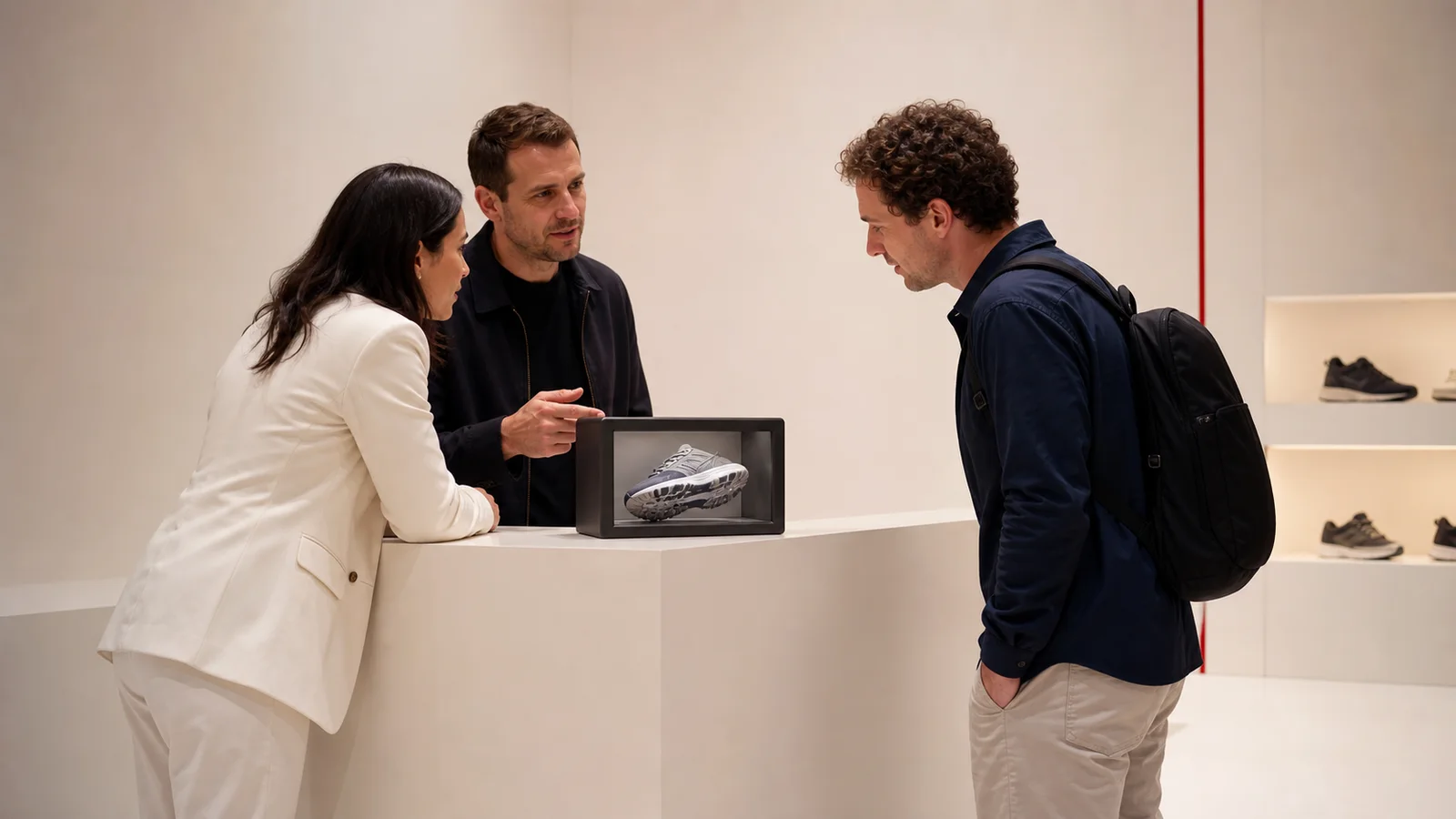
A calibrated tabletop Relay Frame 15 can provide a consistent destination for approved digital twins, while Relay Frame 10 handles watches, eyewear and smaller components. Product scale, viewpoint, background, lighting and interaction are prepared for a known optical volume rather than left to an arbitrary screen. The result is not an object floating over video. It is a compact bounded product space that can sit on a retail counter, design table, event plinth, service bench or AI workbench.
ALLSIDES can preserve the object as data. Reality Relay can make that data occupy a place.
One pipeline from capture to presence.
- 01
Capture the physical object
The ALLSIDES Sphere can handle rigid and soft products within a 70-centimeter capture volume, while the Cube is optimized for scaled production of smaller rigid objects such as footwear, toys, tools and home goods.
- 02
Validate the digital twin
Geometry, textures, material response, dimensions, orientation and structured metadata are checked against the physical source. The asset remains the authoritative reusable master.
- 03
Prepare the presence scene
Reality Relay adapts the master for a calibrated optical chamber: true product scale, camera envelope, relighting, safe interaction states, scene boundaries and content rights.
- 04
Publish to physical endpoints
The Reality Relay Platform can distribute approved scenes to Relay Frame 15 and Relay Frame 10 endpoints across stores, events, studios and service locations while maintaining version control.
- 05
Keep the product current
When a material, colorway or configuration changes, the scene can be updated from the governed digital-twin source instead of rebuilding every local presentation.
Small enough to scale. Large enough for the object.
Relay Frame 15 is intentionally closer to a laptop than a television. In landscape orientation, footwear and many accessories can appear at or near one-to-one scale while the endpoint still fits naturally on a counter or worktable. Relay Frame 10 is suited to watches, eyewear, jewelry, components and focused service views. Larger products can be shown at a disclosed reduced scale or through detail scenes rather than forcing every location to install a large display.
Why reality-grade capture matters.
Spatial presentation magnifies weak source data. A broken silhouette, baked lighting or inaccurate material immediately undermines the illusion of physical presence. ALLSIDES says its data platform preserves sub-millimeter geometry, high-definition physically based textures, clean meshes, relightability and structured object metadata. Those properties map directly to what a calibrated display needs.
Relightability is particularly valuable. A product should respond coherently to the scene rather than carry the lighting from the original scan. Leather must retain grain and specular response. Knit footwear must preserve soft structure. Metal hardware needs controlled highlights. Accurate dimensions allow the product to appear at one-to-one scale and make comparisons credible.
Retail gains inventory without the footprint.
A store cannot hold every color, size and limited release. A spatial endpoint can present a rights-cleared twin for products held elsewhere, discontinued reference pieces or configurations made to order. A sales associate can rotate the product, change approved materials and inspect construction while the customer remains in a shared physical conversation.
This is not a replacement for touching the physical item. It is a bridge between the shelf and the larger digital catalog. The strongest pilot would test whether customers understand products faster, explore more variants and move into a qualified purchase or sample request with greater confidence.
Global teams can review the same object.
Design, merchandising, sales and manufacturing teams often discuss a product through photographs that flatten proportion and material response. A governed digital twin gives every location the same source asset. Reality Relay adds a repeatable physical review surface: each team can compare its local sample, swatches or revisions against the same dimensional twin without shipping every version to every participant.
The workflow can reduce ambiguity without pretending to replace engineering validation or a required physical sample. It is most useful between those moments—when teams need a shared, inspectable product reference before shipping another object across the world.
One asset can support content, events and service.
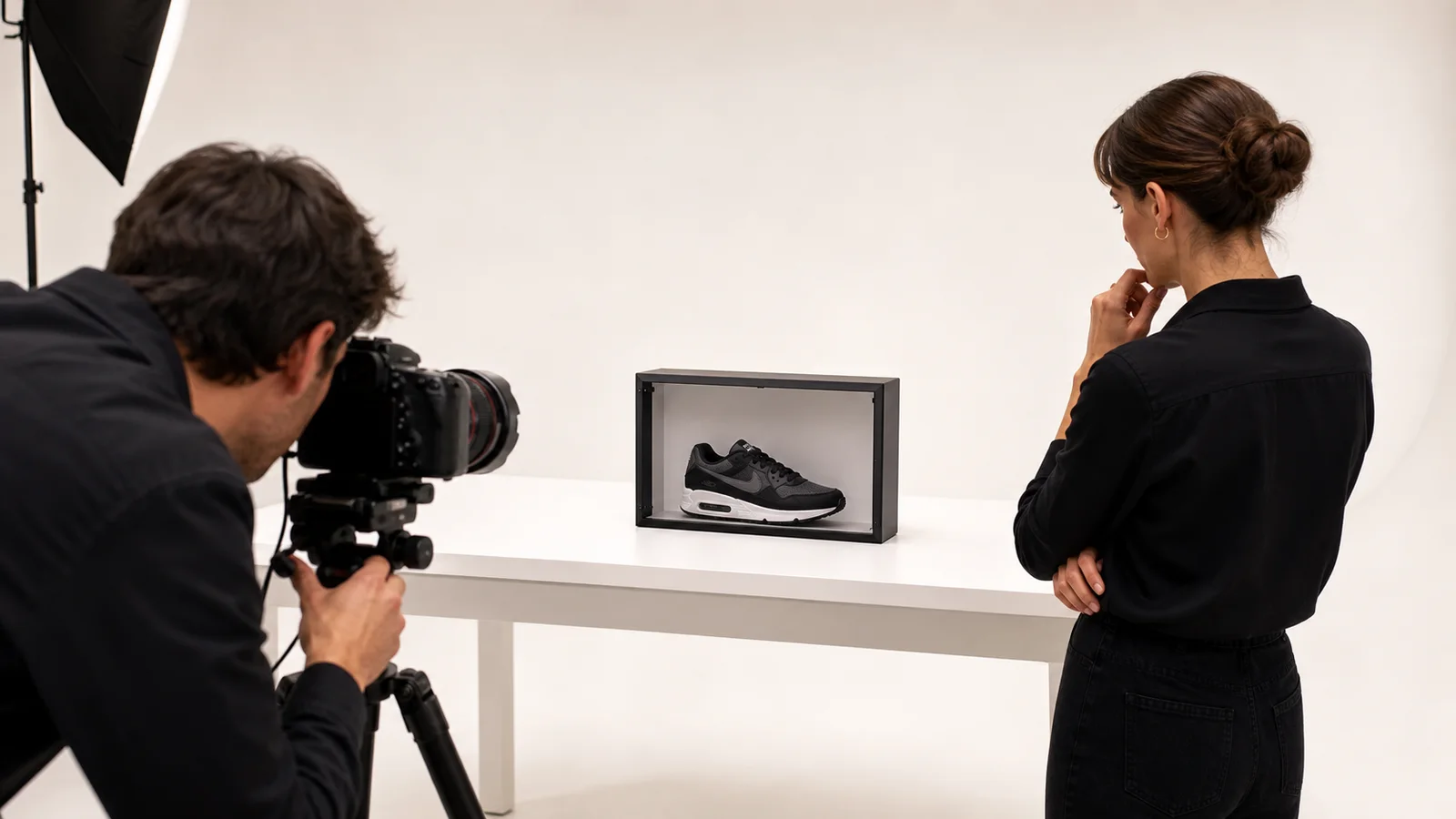
ALLSIDES already positions one scan as input for 3D models, contextual video, generative 3D and physical AI. A Reality Relay collaboration adds a physical distribution channel. The same approved twin can become an in-store product story, a trade-show demonstration, a controlled content stage or an exploded service view.
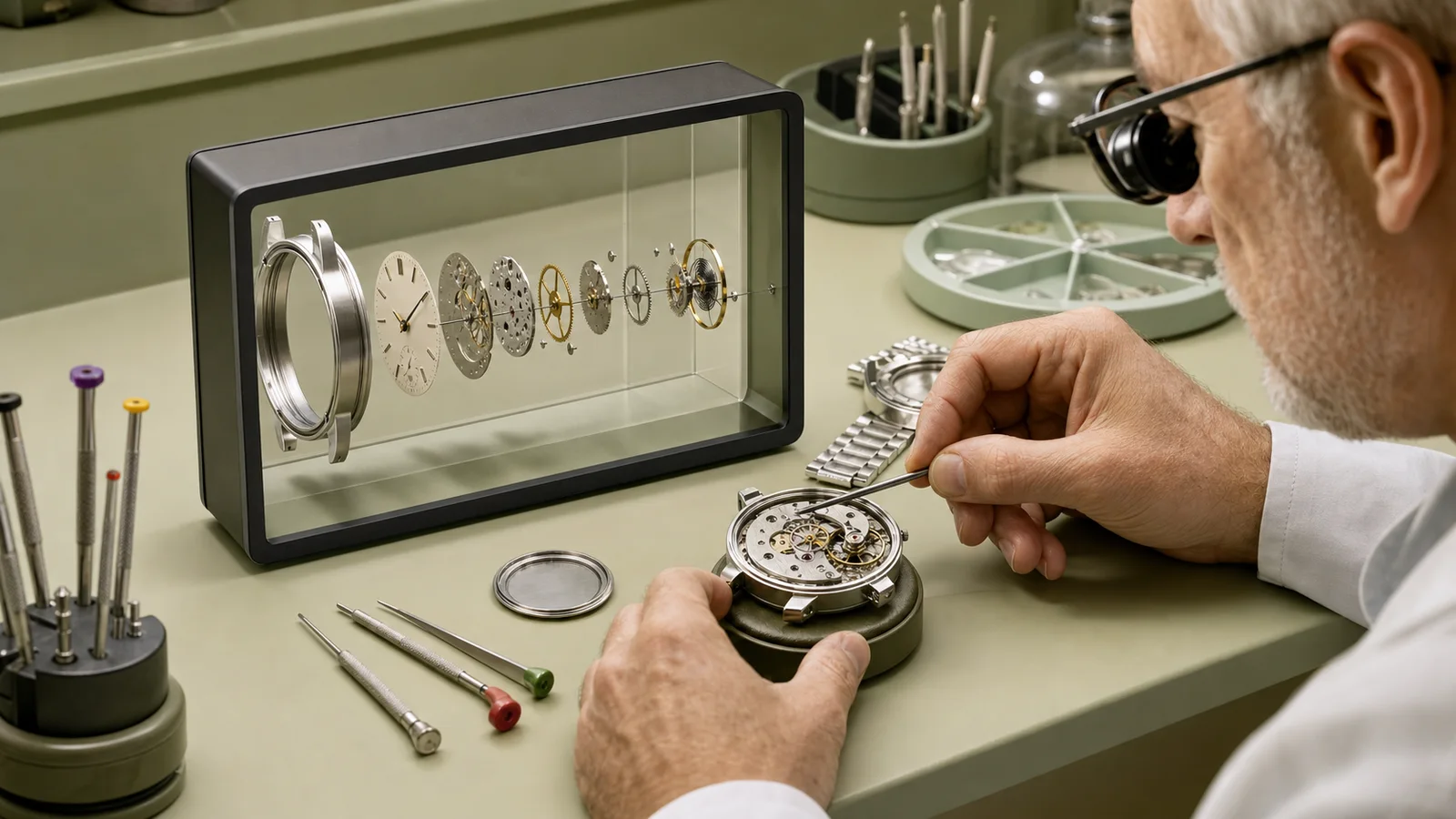
For service, an accurate twin can reveal assembly order and component relationships beside the real product. For events, products too rare, fragile or numerous to ship can still be presented at credible scale. For content teams, relightable twins can support repeatable visual production without reshooting the physical object for every setting.
Physical AI closes the loop.
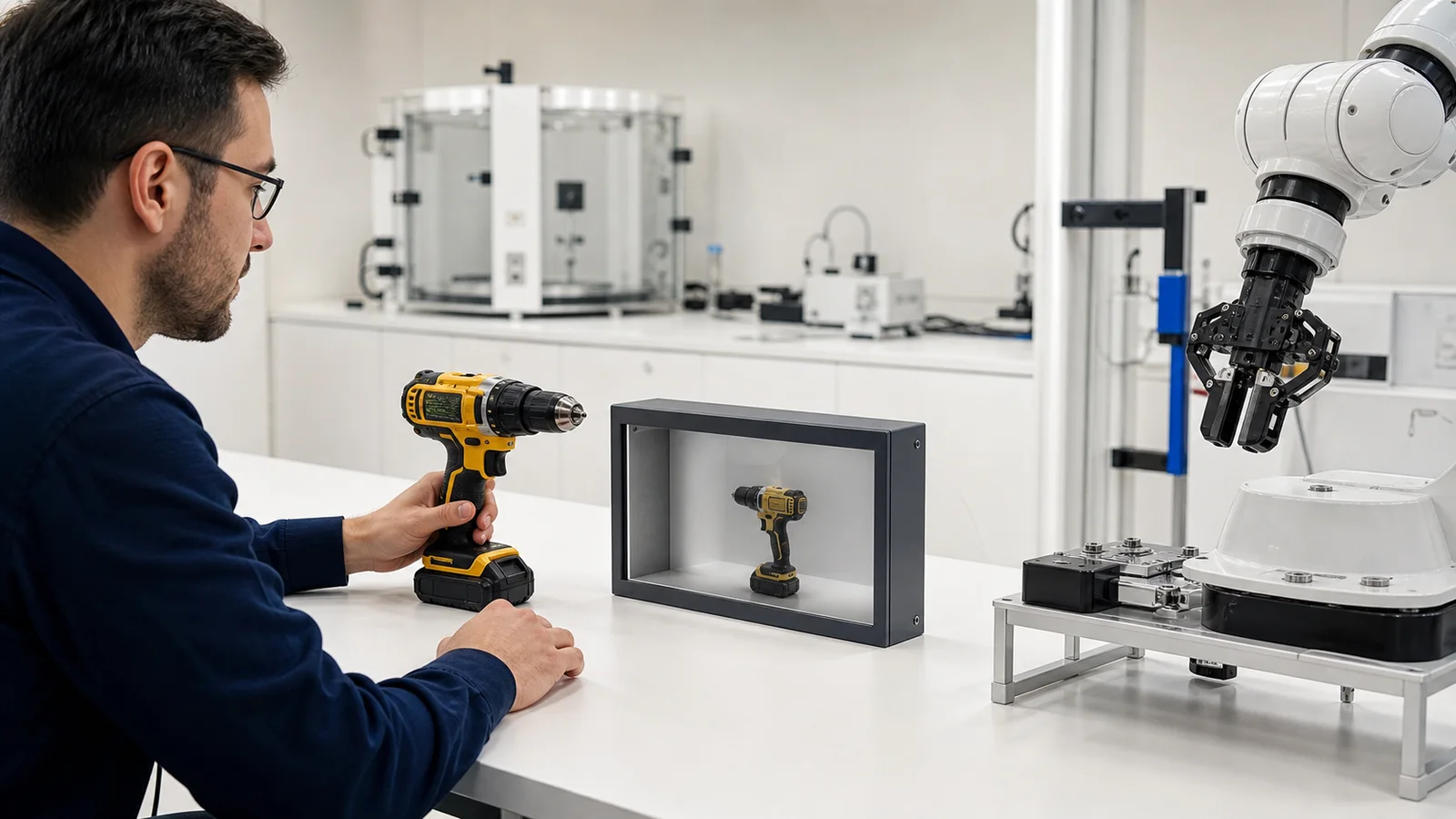
Robotics and world models need consistent information about real objects: shape, material, scale, orientation and physical properties. ALLSIDES supplies the high-quality object data. Reality Relay can become a review and supervision endpoint where engineers compare the source object, its twin and the behavior of an AI or robotic system around it.
The display is not the training pipeline itself. Its value is human legibility. Researchers can inspect what the system believes the object is, compare configurations and explain a failure around a shared dimensional reference.
A focused pilot should prove the complete loop.
Begin with twelve representative objects across footwear, soft goods, tools, consumer electronics and a mechanically complex product. Capture them through the appropriate ALLSIDES workflow, validate the masters, then prepare three Reality Relay scenes for each: product presentation, material inspection and technical explanation.
Deploy the scenes to a small set of Relay Frame 15 and Relay Frame 10 endpoints in a design studio, retail environment and event or service setting. Measure asset-preparation time, visual fidelity, update speed, product comprehension, engagement, qualified actions and operational reliability. The pilot succeeds only if one governed digital twin can move cleanly from capture to multiple useful physical contexts.
Collaboration concept
Build the capture-to-presence pilot.
Reality Relay is inviting digital-twin, retail, product and AI teams to prove how one reality-grade asset can become useful across many physical destinations.
Start a pilot conversation ↗