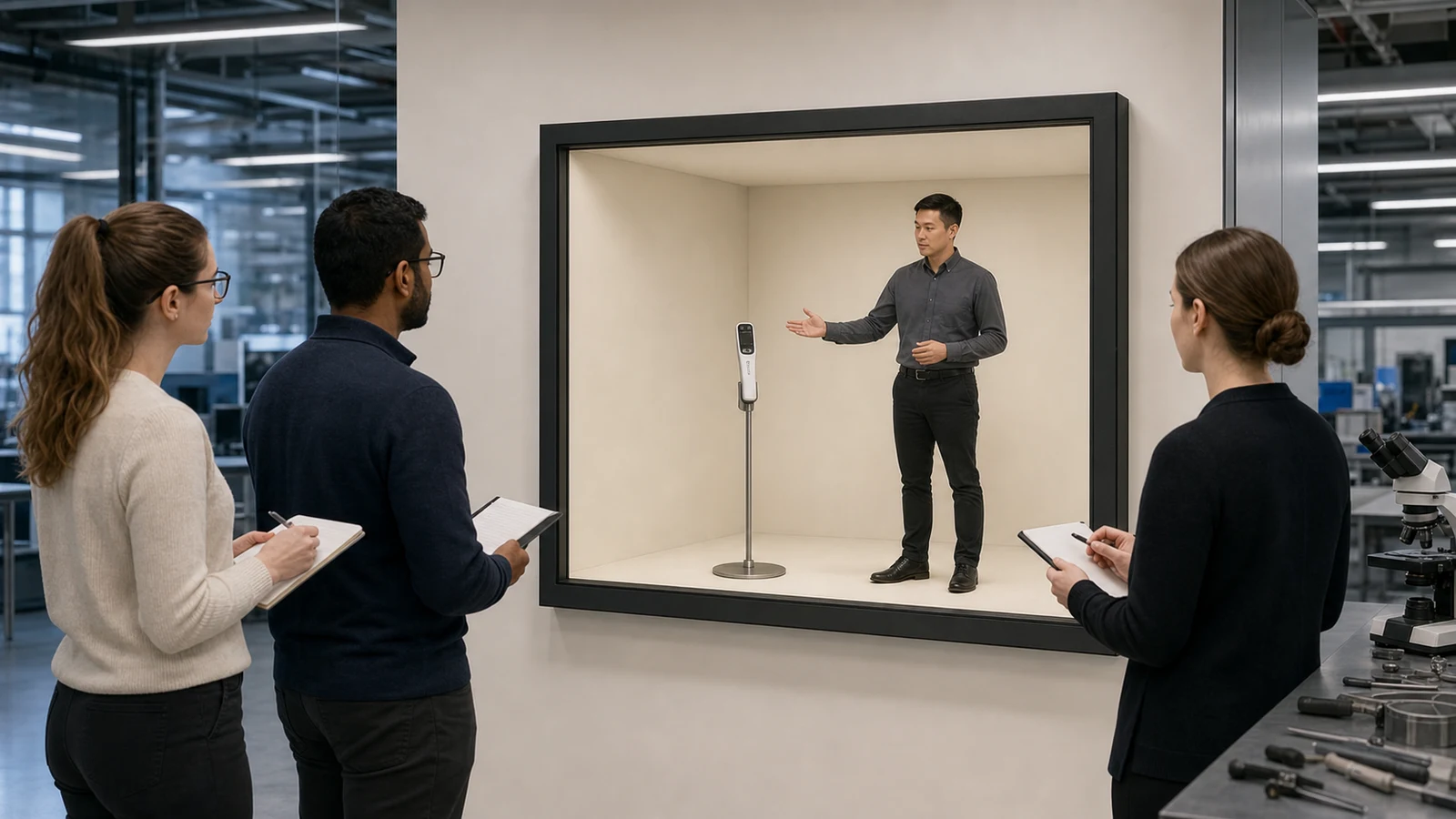
Reality Relay can give supervised education and engineering teams a bounded place where a remote expert and a dimensional model appear together. The value is not medical spectacle. It is the ability to inspect relationships, ask better questions and keep qualified human judgment attached to the workflow.
One presence layer across learning and engineering.
A calibrated endpoint can connect anatomy teaching, simulation debrief and device-development review without pretending those workflows are identical. The common layer is a bounded place where an approved model and a qualified remote expert can appear together, be discussed by a group and remain tied to an accountable operating context.
Four responsible application modes.
-
01
Professional education
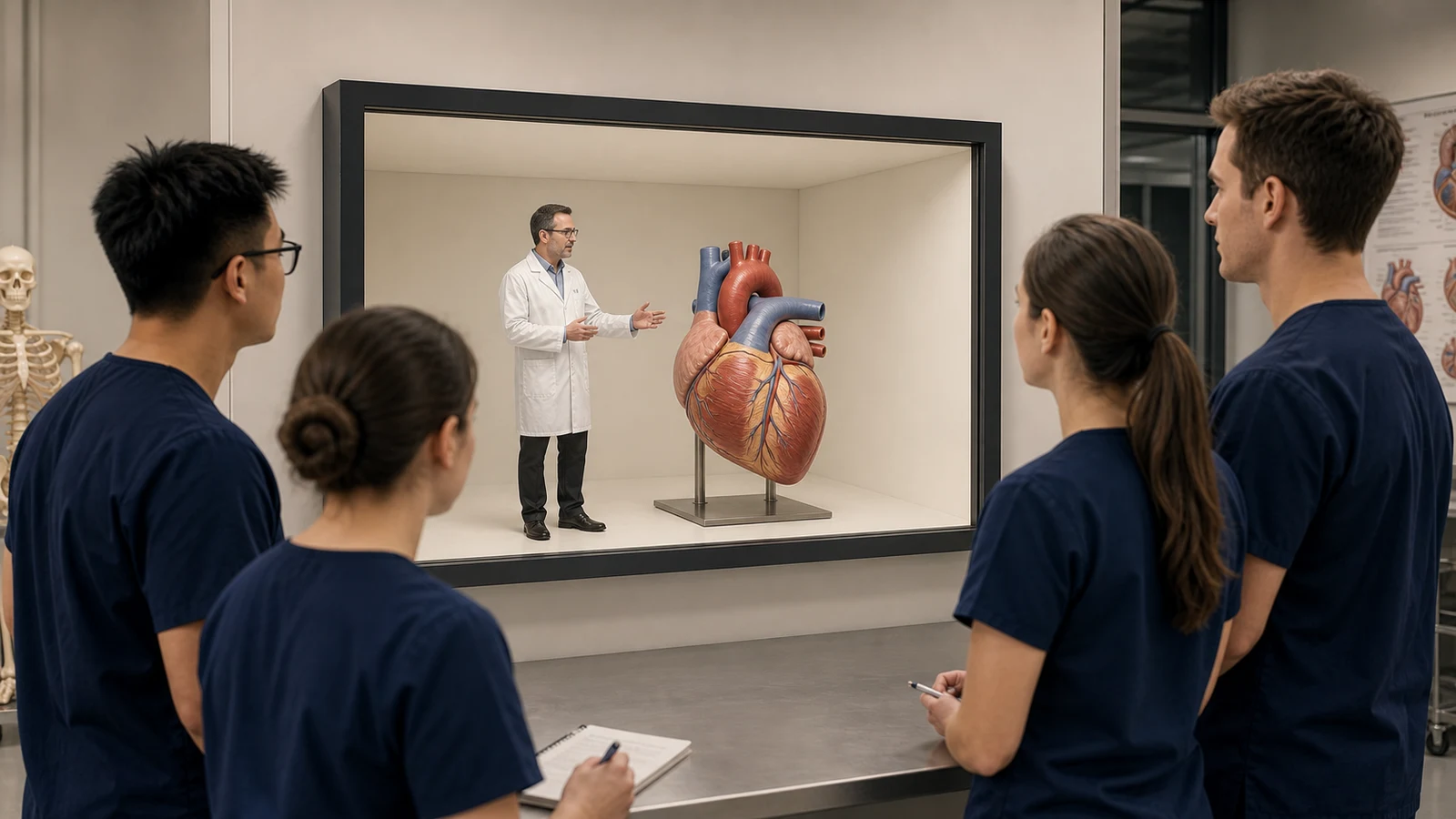
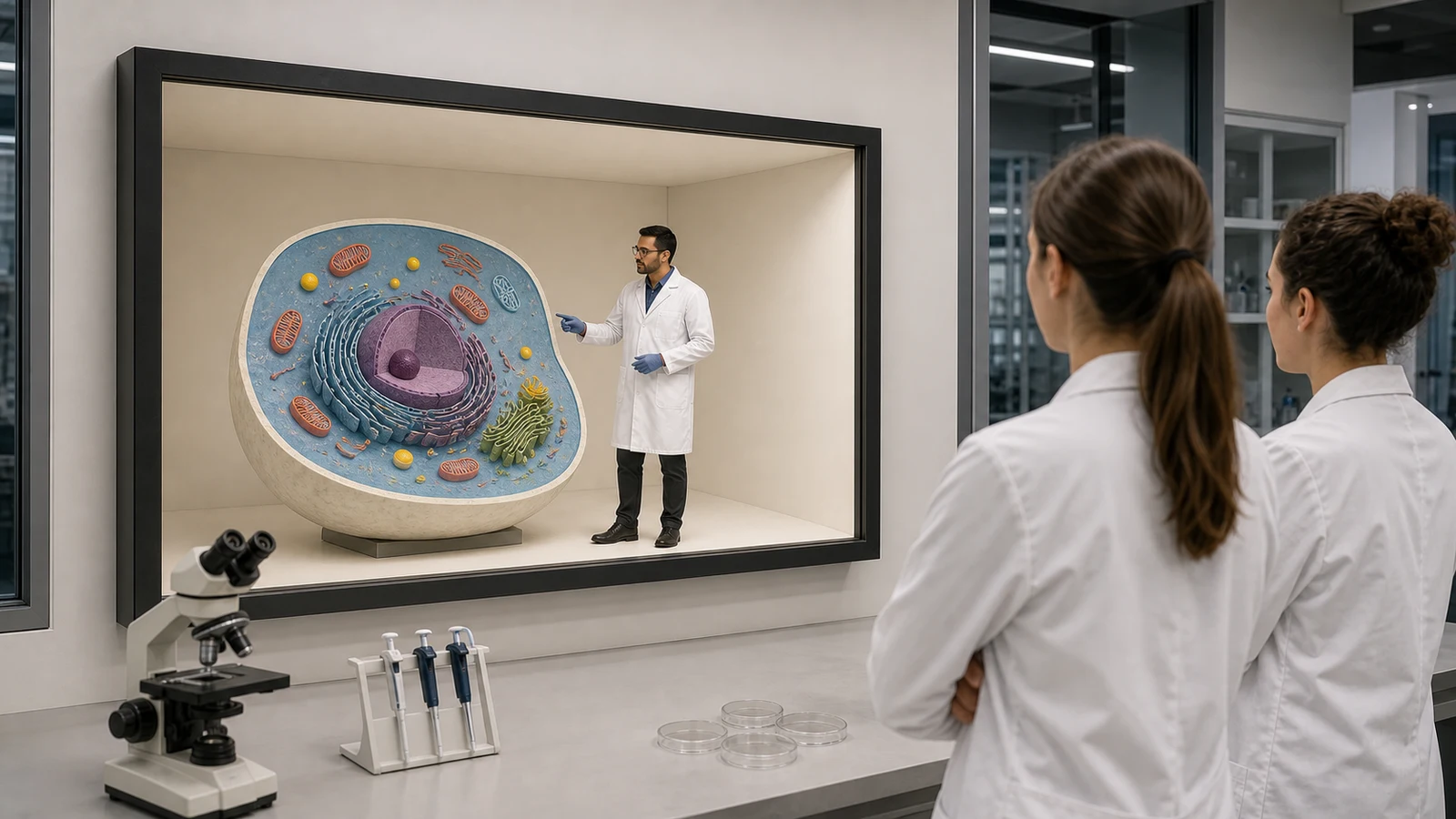
Qualified specialists can teach anatomy, procedure context and device principles through approved models in a controlled learning environment.
-
02
Simulation debrief
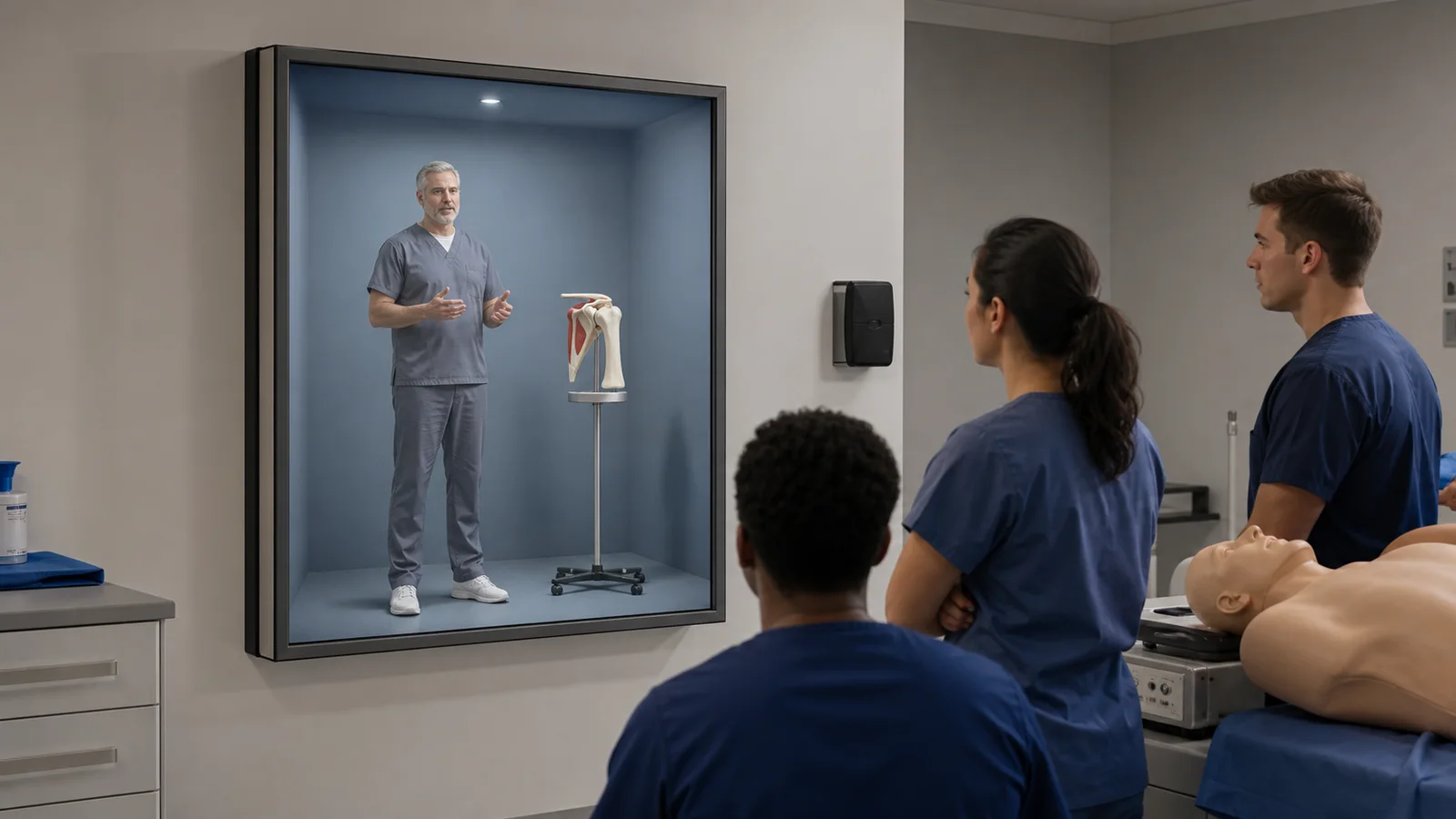
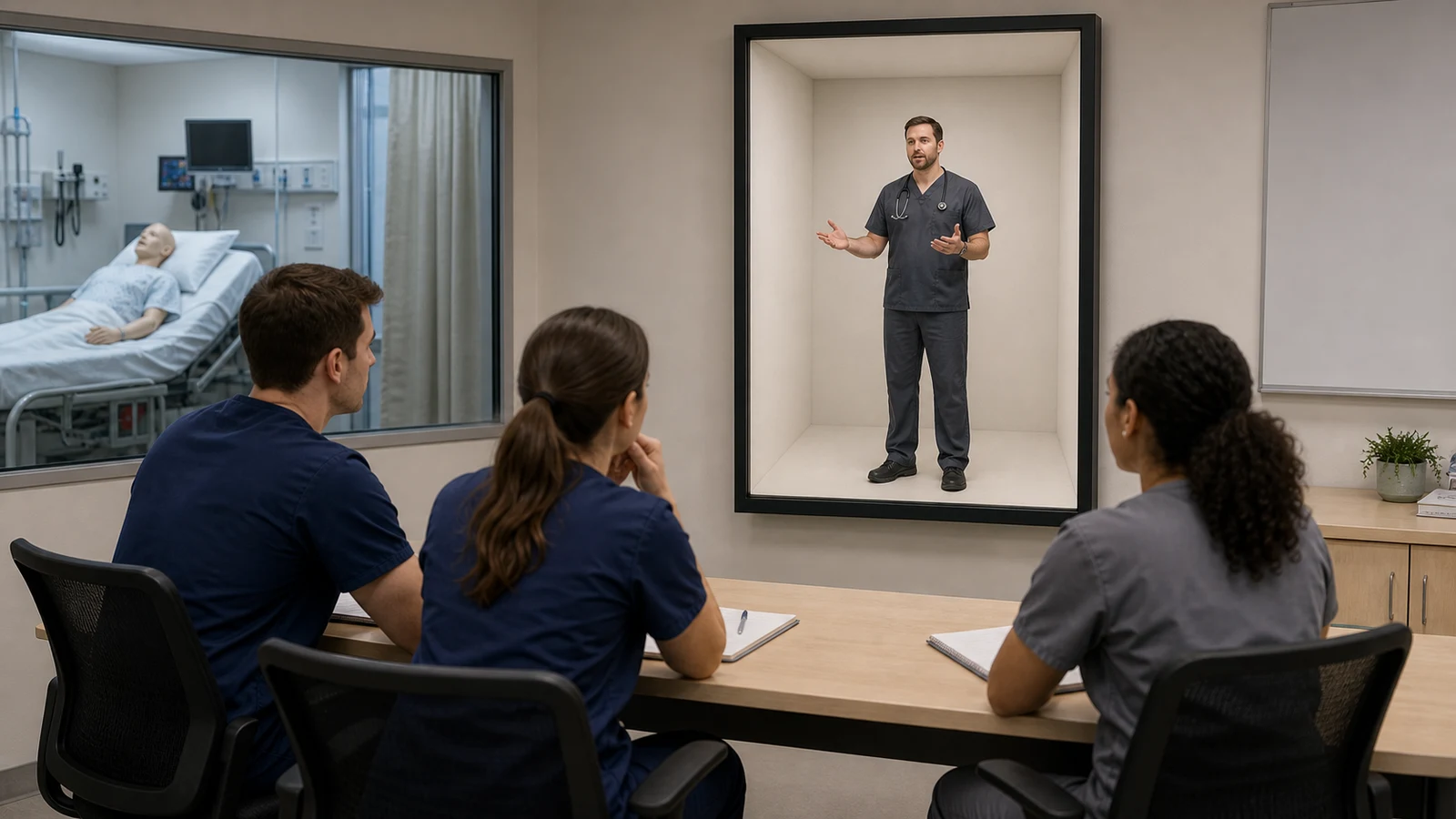
A remote educator can observe a supervised scenario and lead a structured discussion without entering live patient care.
-
03
Engineering review
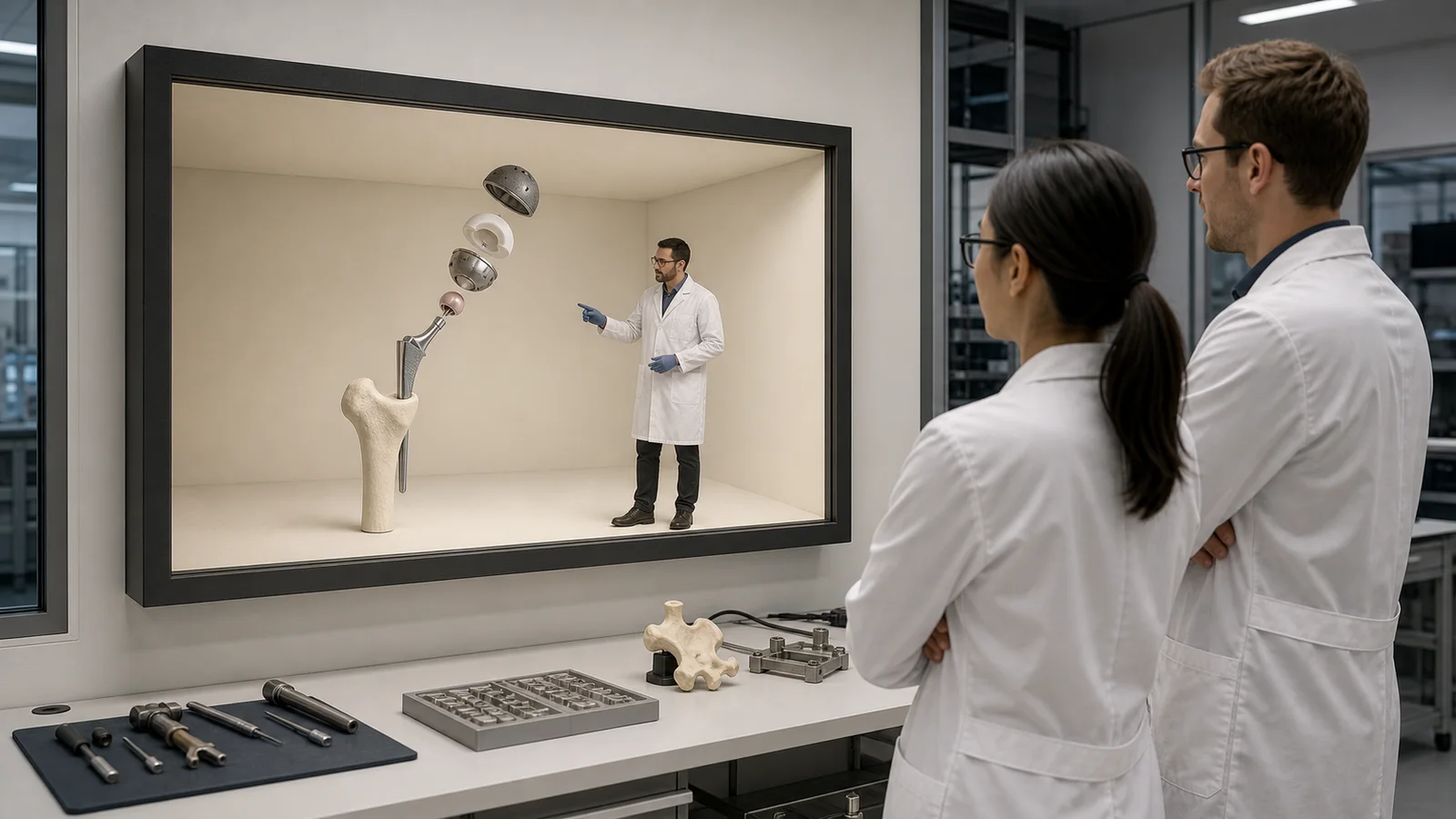
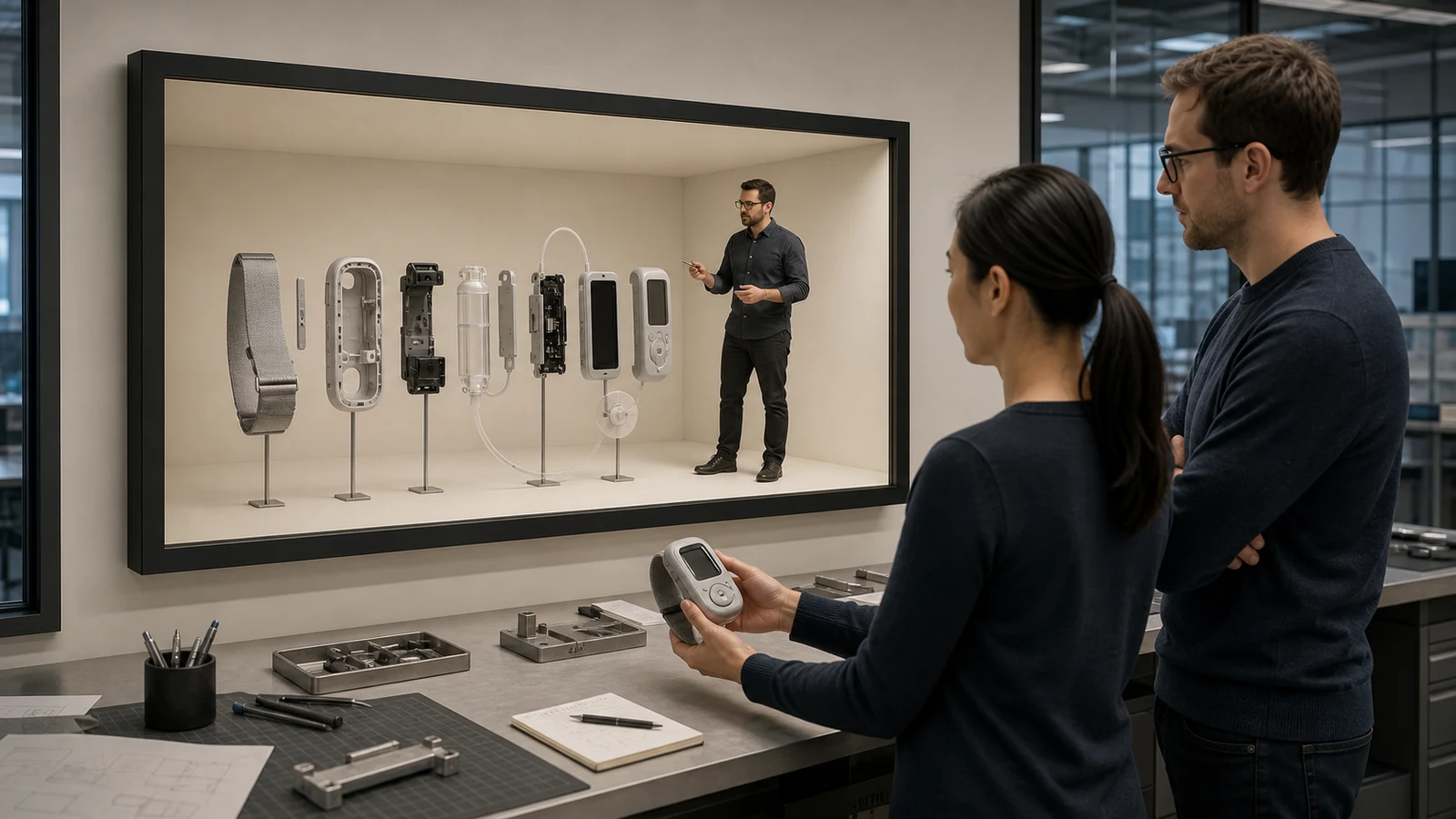
Teams can compare prototypes, exploded assemblies and material layers with a remote designer while preserving design-control records.
-
04
Human-factors evaluation
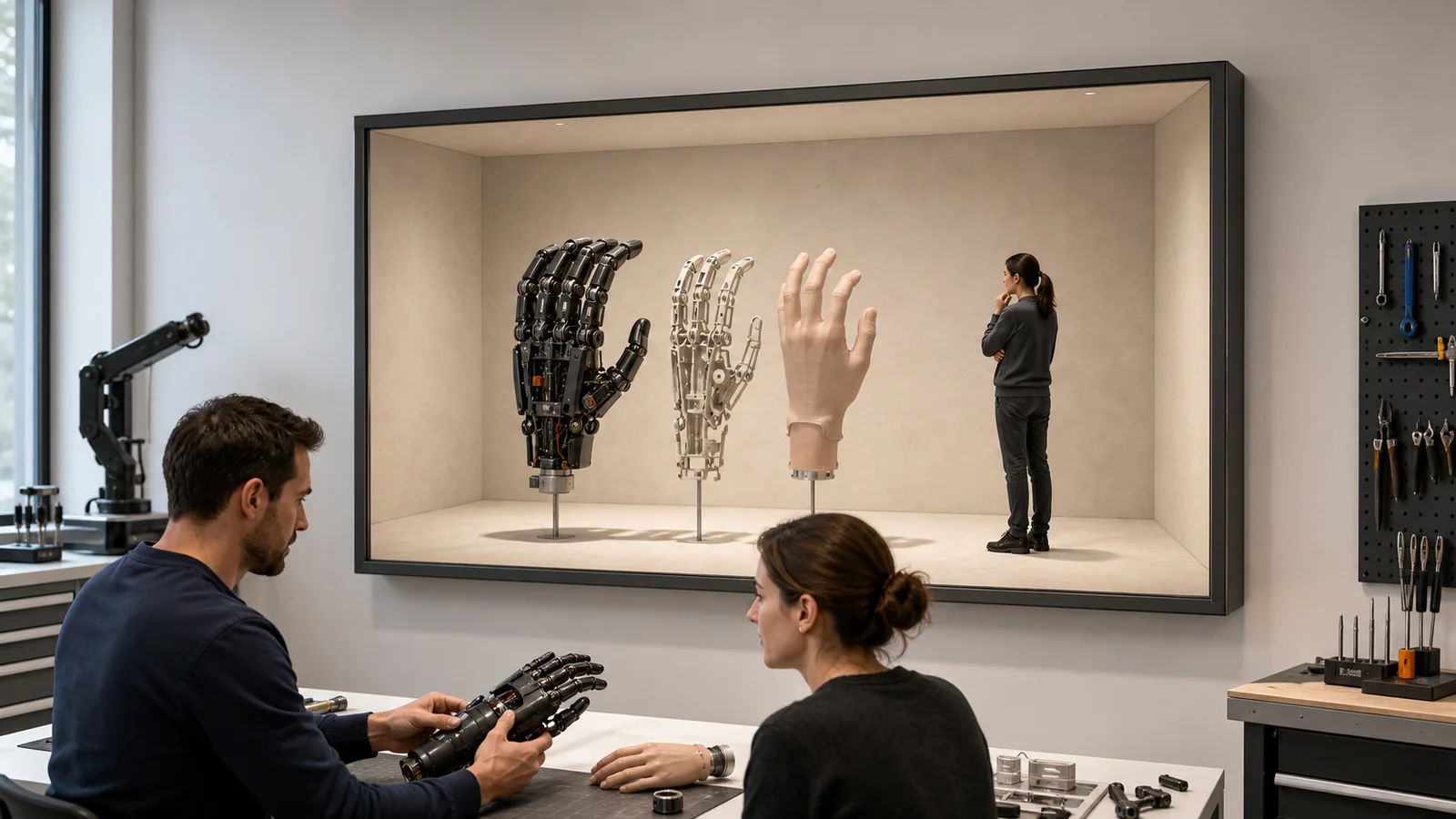
Researchers can review device concepts, task sequences and training assumptions with a remote specialist before any regulated or clinical use is considered.
Spatial explanation can clarify relationships.
Anatomy and biomedical devices are difficult to understand when important parts overlap, move or disappear inside an enclosure. A bounded scene can separate layers, compare scale and place the explanatory model beside the expert describing it. The model must be appropriate to the educational purpose and must not be mistaken for patient-specific evidence.
Remote specialists stay attached to the work.
Specialized knowledge is often concentrated in teaching hospitals, simulation centers, universities and design offices. Presence can make a qualified educator or engineer available to a distributed team without reducing the encounter to a small conference tile. Credentials, role, scope and the local person responsible for the session should remain visible in the operating workflow.
Engineering review becomes a shared inspection.
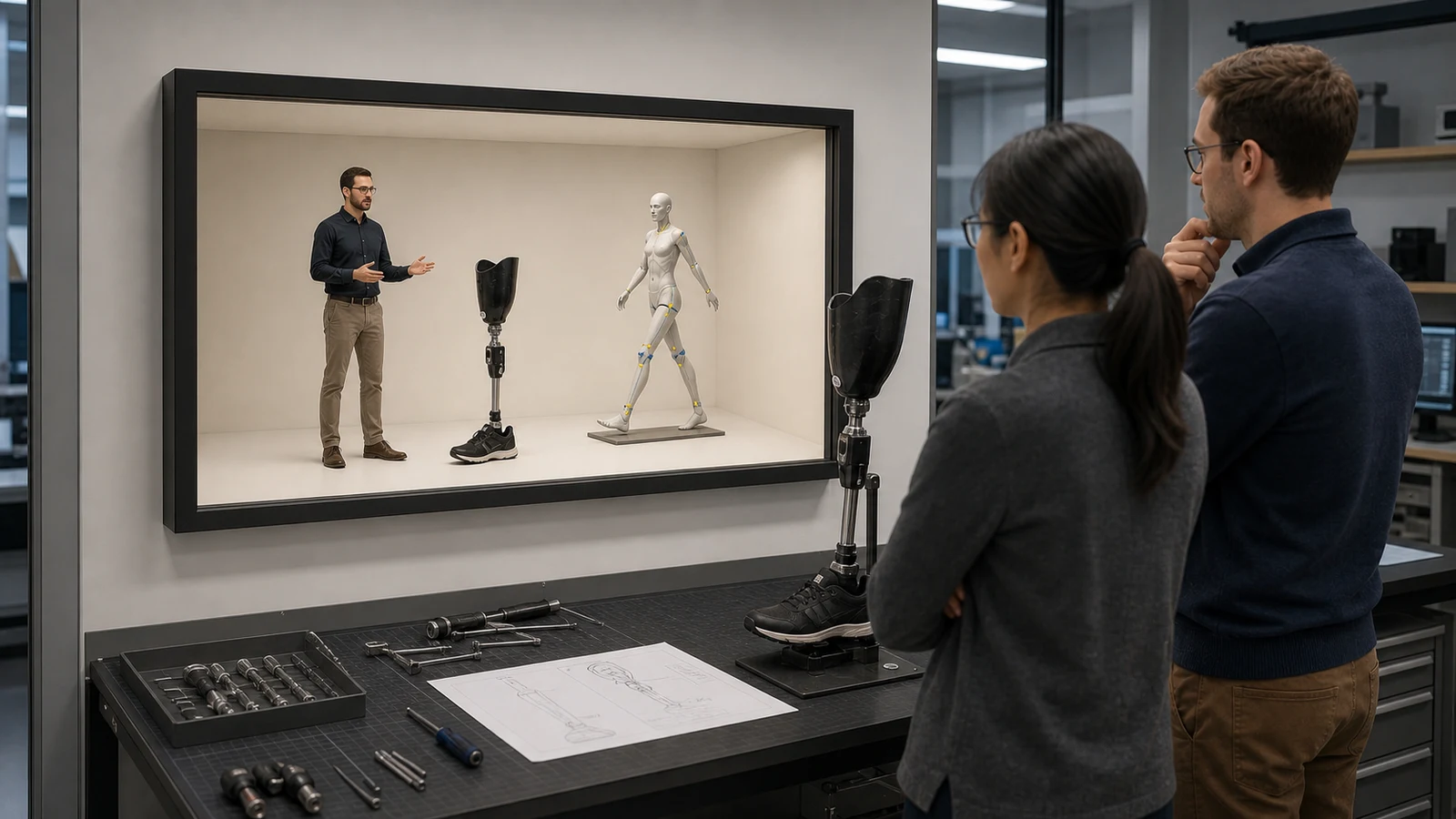
Exploded assemblies, prosthetic mechanisms and device enclosures can be examined as supported spatial models while a physical prototype remains on the table. Teams can point to the same relationship, record a decision and preserve the approved scene version used in the review. This is a collaboration tool—not a substitute for verification, bench testing or design controls.
Physical AI needs a narrow role.
AI may help retrieve approved materials, prepare a comparison, navigate an assembly or summarize a discussion. It should not infer a diagnosis, recommend treatment or present itself as a clinician. The more embodied the interface feels, the more important identity, provenance, uncertainty, human approval and auditability become.
Evidence before expansion.
A responsible pilot should begin outside clinical decision-making. It should name the content owner, operator, credential boundary, data policy and human fallback, then measure comprehension, review quality, expert utilization, operating effort and system reliability. Any later regulated use would require a separate intended-use definition, risk analysis, validation and legal pathway.
Biomedical application study
Start with one supervised learning or engineering workflow.
Reality Relay is inviting biomedical educators, simulation teams and device-development organizations to define a tightly bounded pilot.
Start a pilot conversation ↗