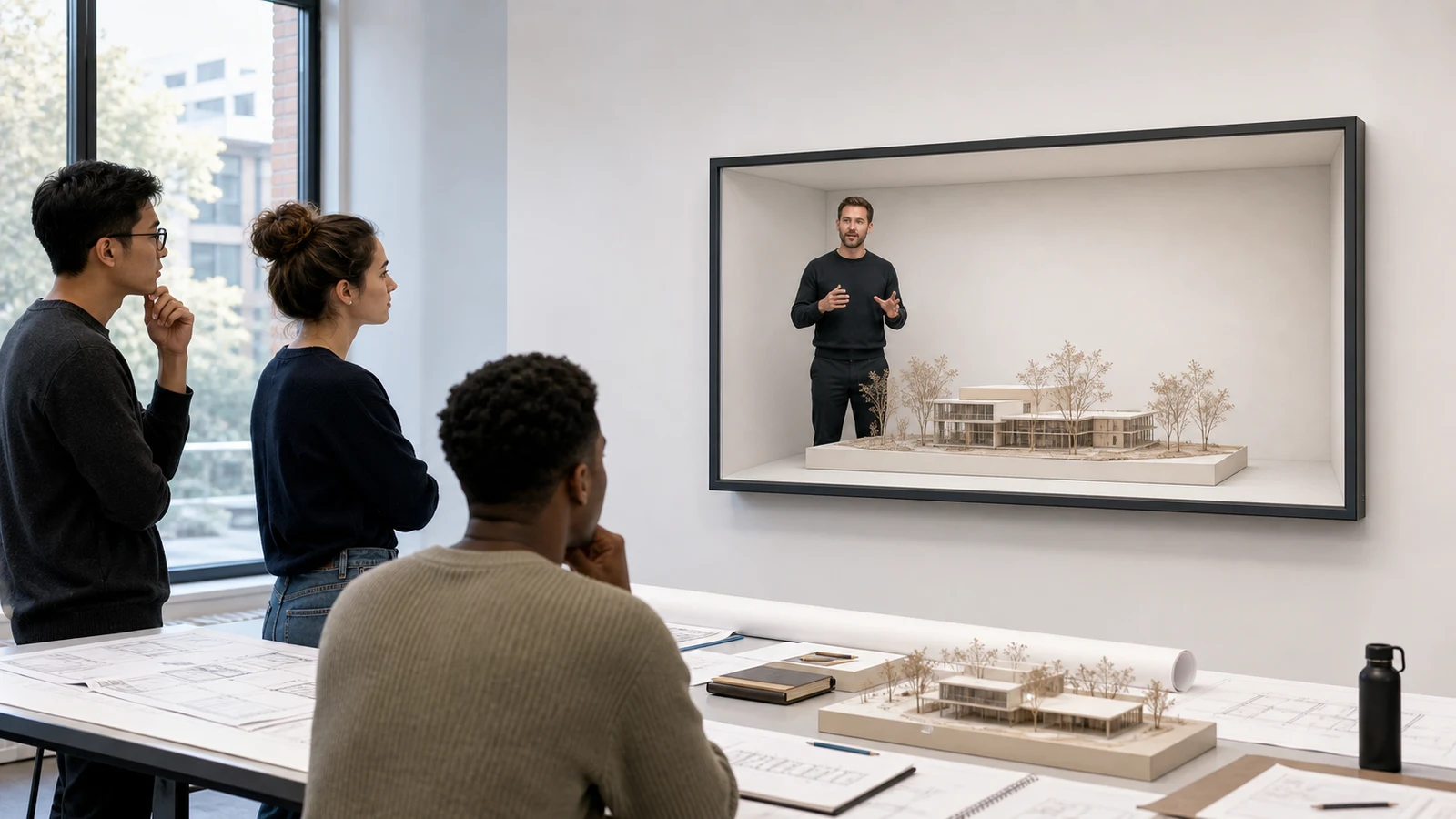
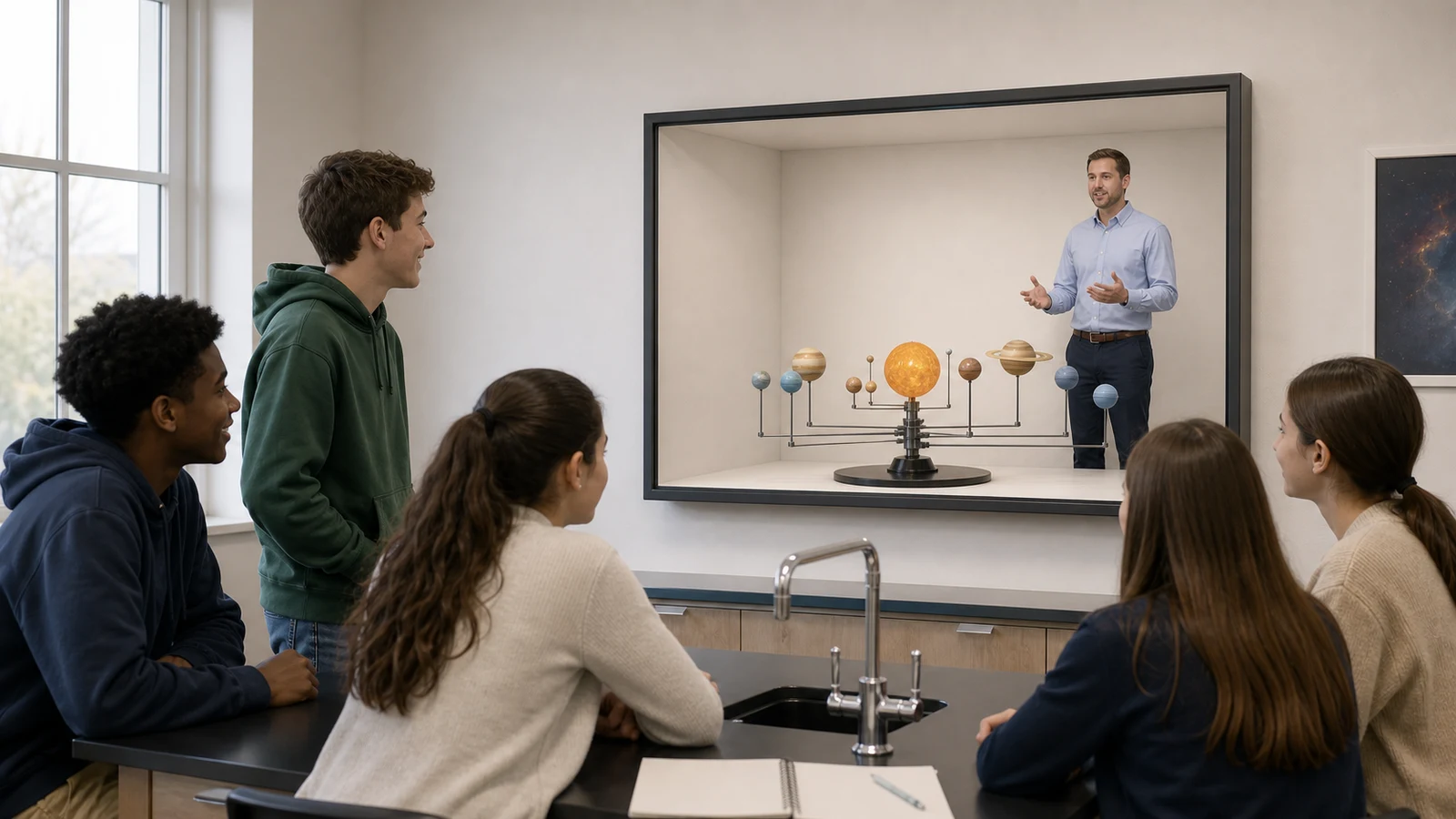
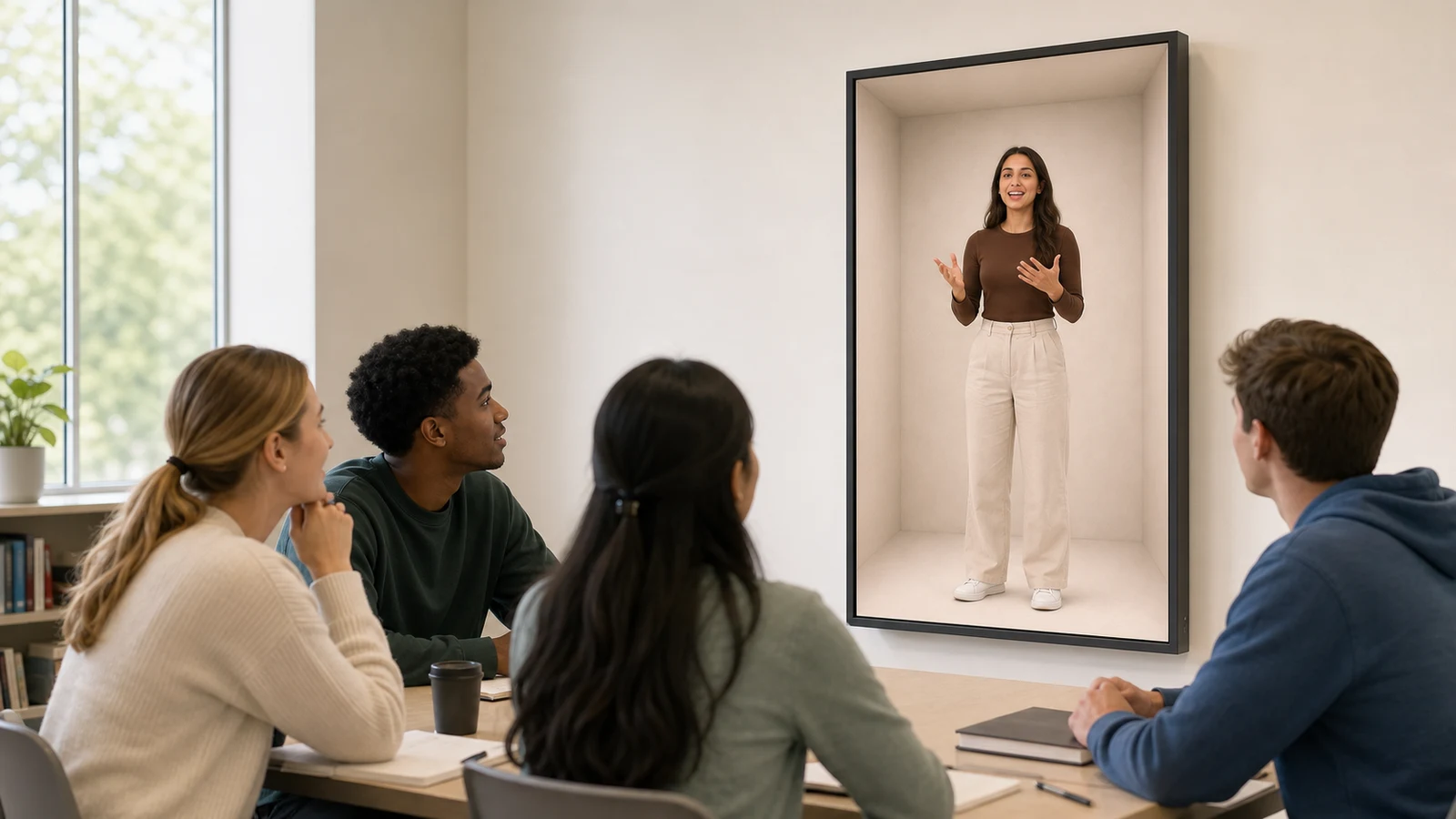
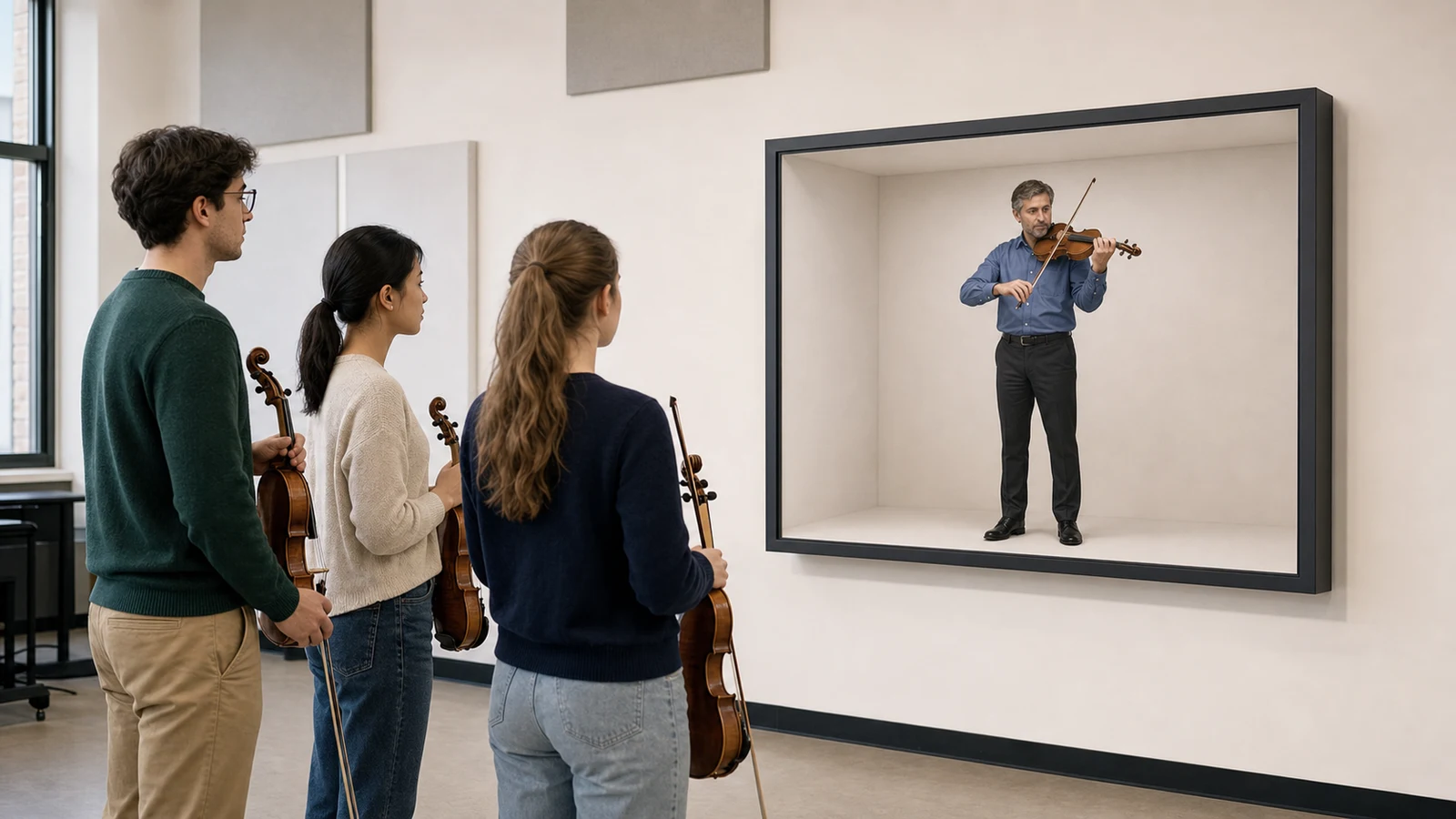
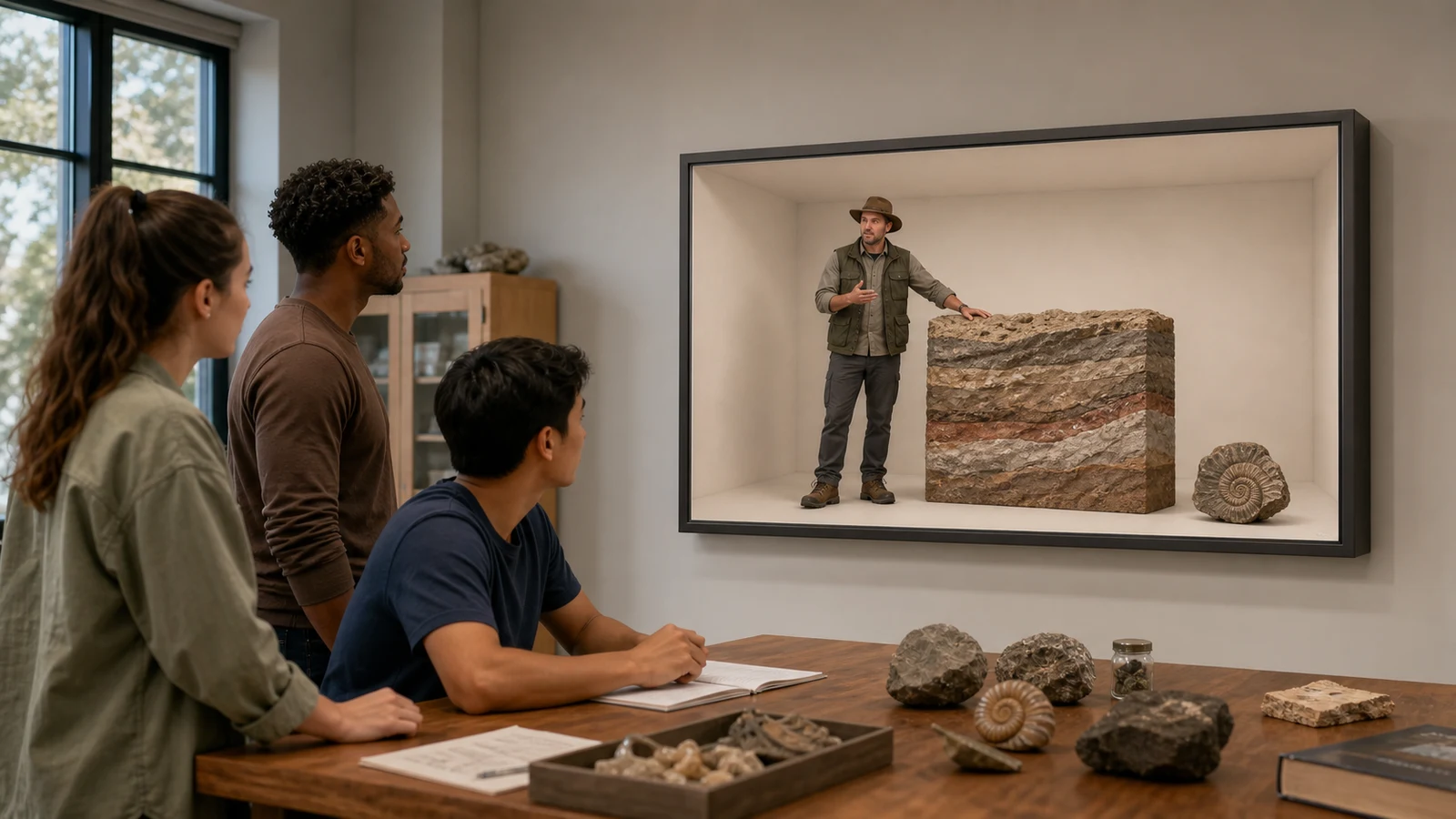
Remote learning expanded access, but the dominant interface still separates the expert from the classroom. Reality Relay proposes one stable physical endpoint where a lecturer, technical instructor or dimensional model can share the room's attention without isolating each learner behind a device.
One presence layer across the curriculum.
A calibrated endpoint can connect a seminar to a guest lecturer in the morning, support a shared science model in the afternoon and guide supervised technical practice in the evening. The platform does not replace the classroom or learning-management system. It gives people and subject matter a stable physical place inside the learning environment.
Four learning modes with practical value.
-
01
Guest expertise
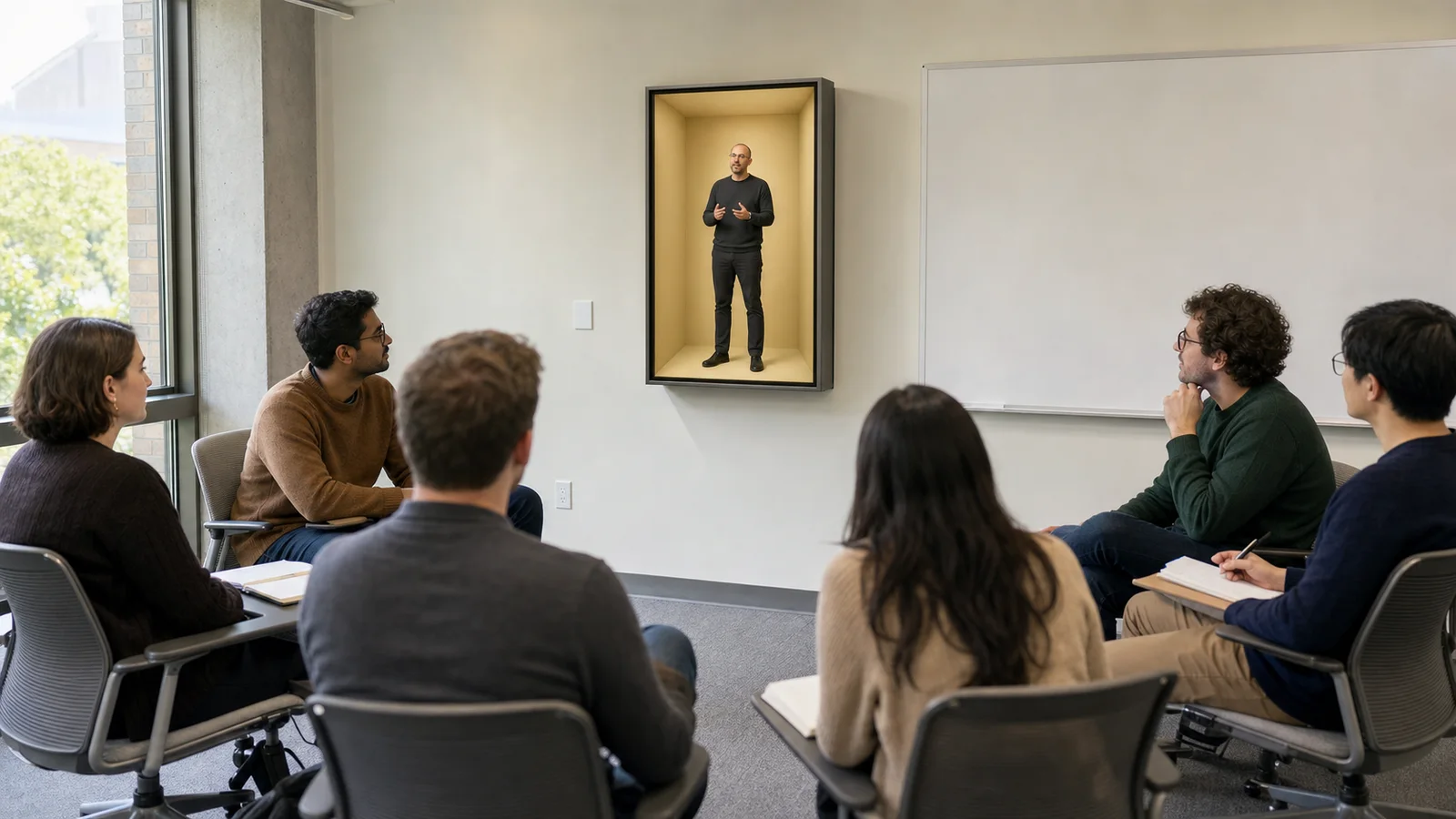
A specialist can lead discussion at conversational scale while the local instructor moderates the room and the curriculum.
-
02
Dimensional explanation
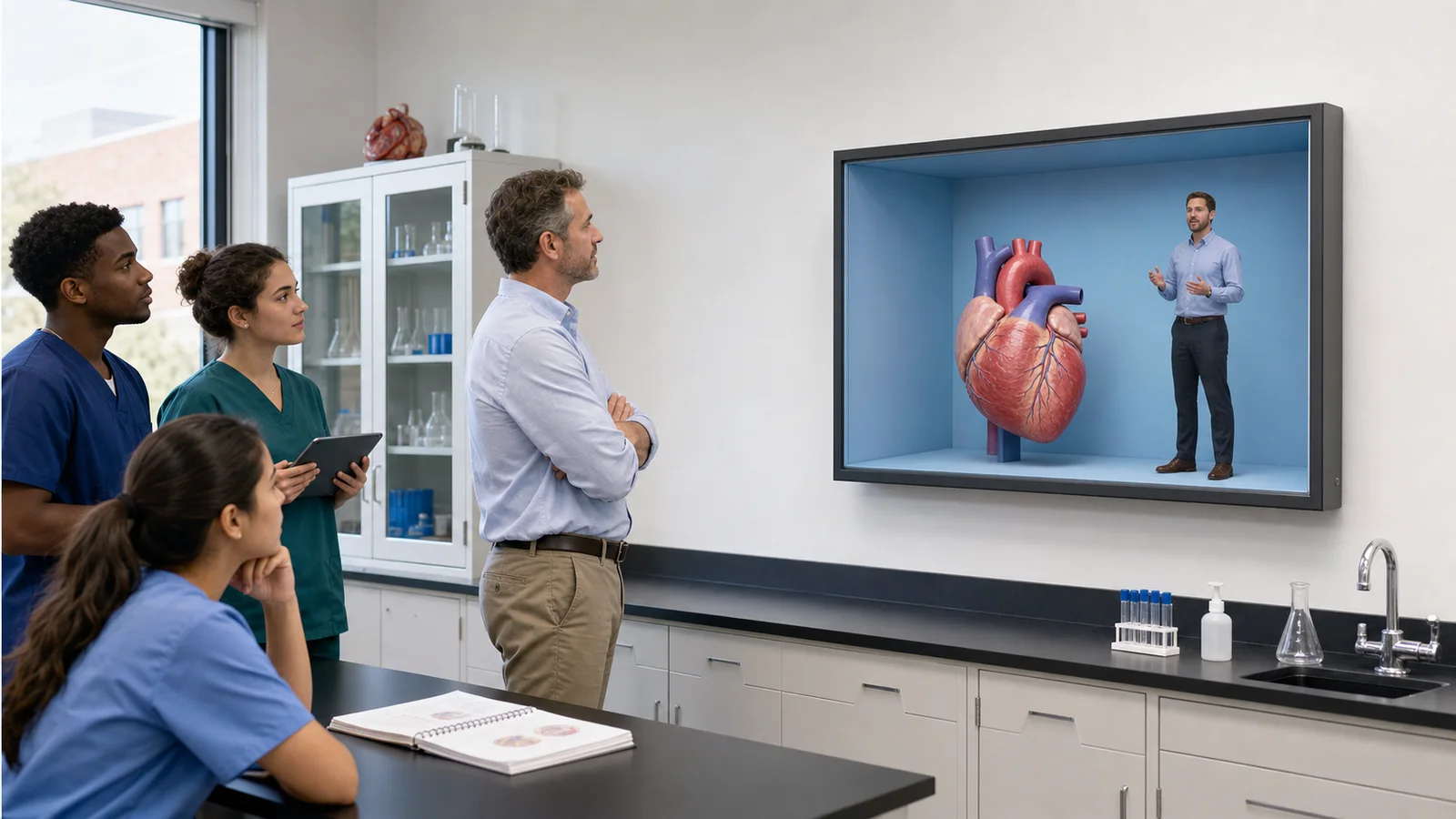
Anatomy, machinery and spatial systems can separate into understandable layers while preserving common viewing and discussion.
-
03
Supervised practice
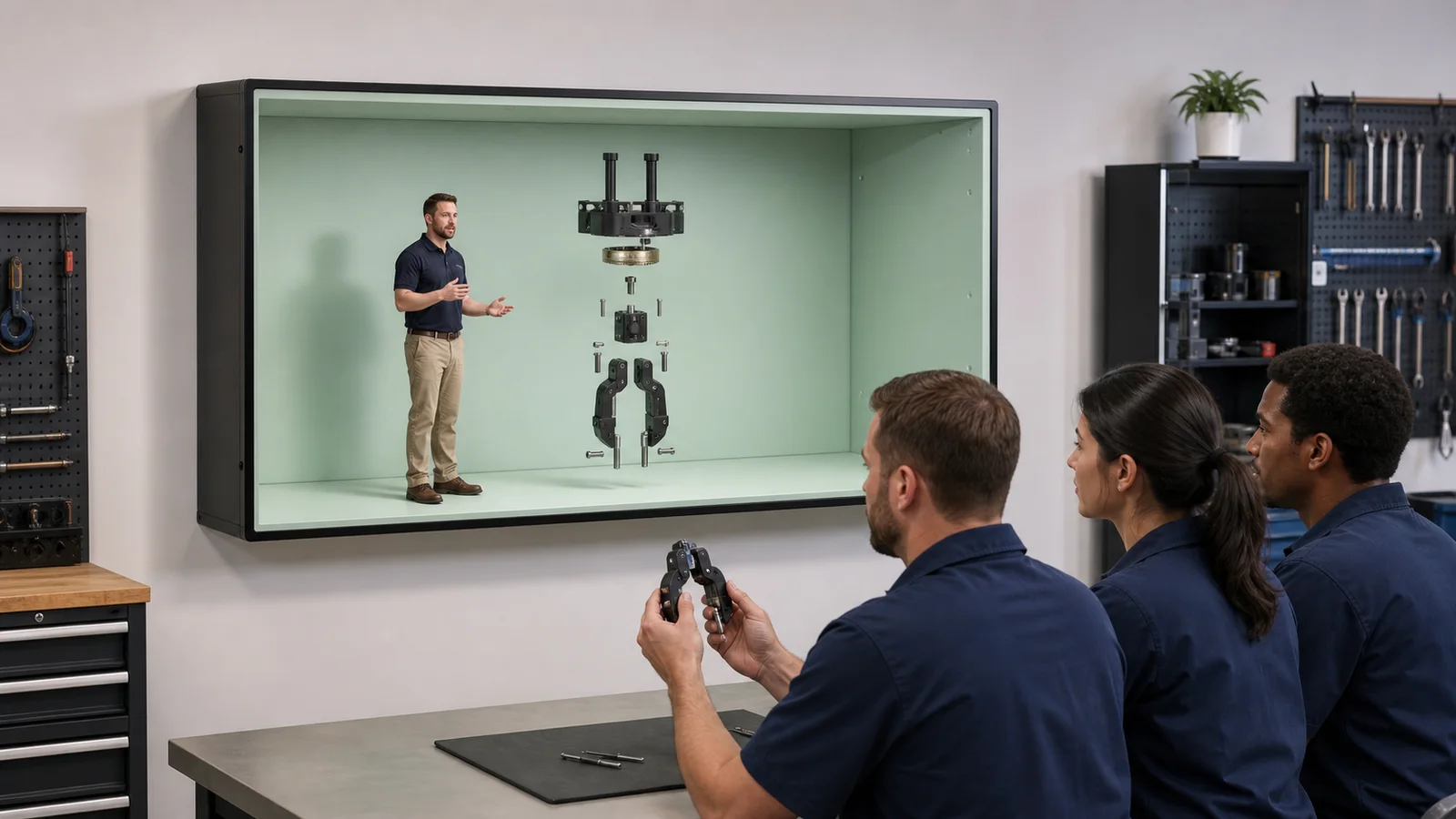
Vocational learners can compare a remote demonstration with real equipment under local safety and assessment controls.
-
04
Shared cultural exchange
Language partners, artists and peers can enter a group learning environment at conversational scale, supporting participation without isolating students behind individual screens.
Remote expertise becomes part of the room.
Access to a specialist is often constrained by geography, travel, scheduling and class size. A presence endpoint gives that specialist a consistent place to teach, demonstrate and answer questions while a local instructor still controls the session. The goal is not to imitate physical travel perfectly. It is to make scarce expertise more legible, social and useful when travel is not practical.
Dimensional explanation supports shared attention.
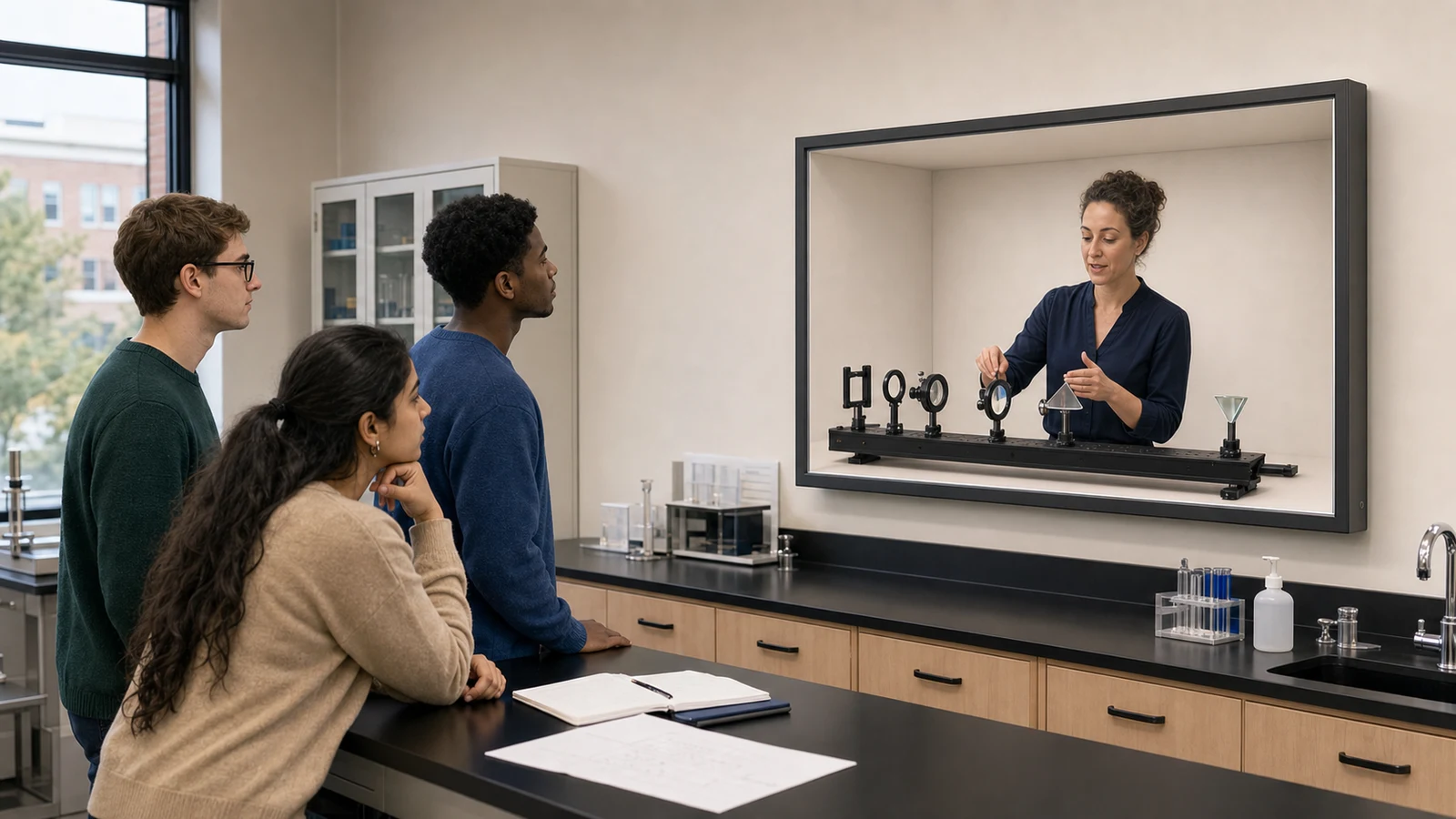
Some subjects are difficult because their important relationships are spatial: an optical path, a building section, a mechanical assembly, a geological sequence or an anatomical system. A bounded chamber can separate those relationships into visible layers while every learner sees the same scene and can discuss it with the instructor. The content must remain accurate, source-controlled and appropriate to the course level.
Practice still needs local supervision.
For laboratories, workshops and vocational learning, presence should complement—not bypass—local safety. The remote instructor can demonstrate a sequence, inspect approved evidence and answer questions, while the institution controls equipment access, protective procedures, assessment and emergency response. The system should make responsibility clearer, not blur it.
Physical AI should remain accountable.
An AI tutor could retrieve approved course material, adapt pacing, select a model or prepare a student for a human session. It should identify itself, cite its sources, preserve instructor controls and escalate uncertainty. The chamber makes the interaction more embodied; it does not make the underlying answer automatically correct.
The pilot begins with a learning objective.
The first test should not ask whether students find the display impressive. It should ask whether one defined concept becomes easier to explain, discuss or practice. Measure knowledge gain, quality of questions, completion, instructor reach, accessibility, attendance and the operational effort needed to author and run the experience. Compare it with the institution's existing method rather than with novelty alone.
Education application study
Choose one lesson that is difficult to teach flat.
Reality Relay is inviting universities, training organizations and curriculum teams to design a measurable presence pilot.
Start a pilot conversation ↗