
E-commerce made products searchable. Mobile made information immediate. Yet physical retail still has a structural gap: the best knowledge, most persuasive stories and most qualified specialists are rarely available beside every product at the exact moment a customer needs them.
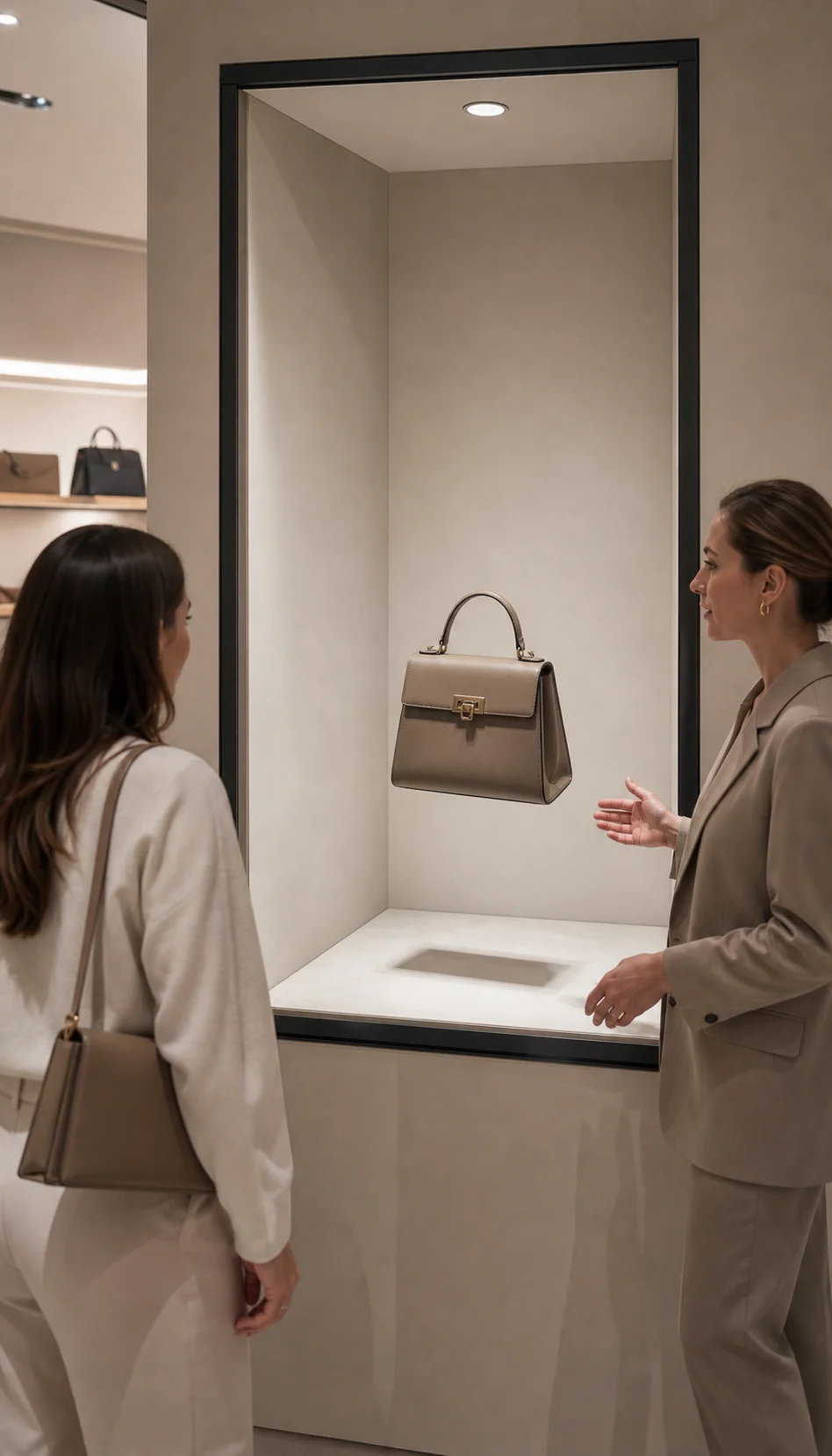
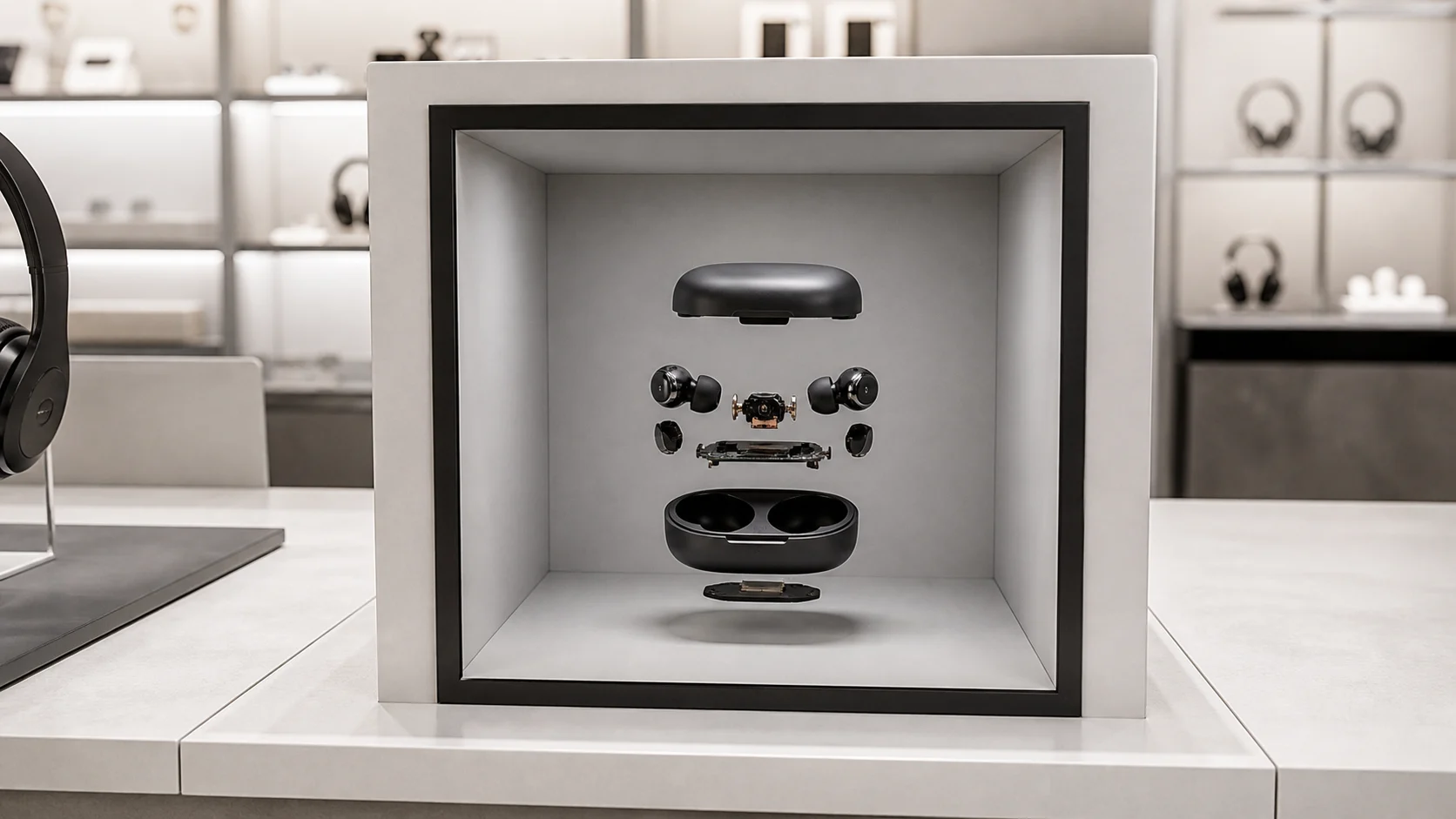
Reality Relay proposes a store-wide presence layer. Relay Frame creates a bounded place for a remote person, embodied AI or dimensional scene. Relay Box brings the same visual language to counters, shelves and product tables. Reality Relay Platform manages content, sessions, identity, calibration and operations across every endpoint.
From digital signage to situated assistance.
Most store screens broadcast the same message to everyone. A presence endpoint can behave differently. It can recognize a customer’s explicit request, present the right comparison, connect a qualified specialist and preserve the context of the conversation. The interface is not another menu. It is a bounded place where the product, explanation or person can become visually legible.
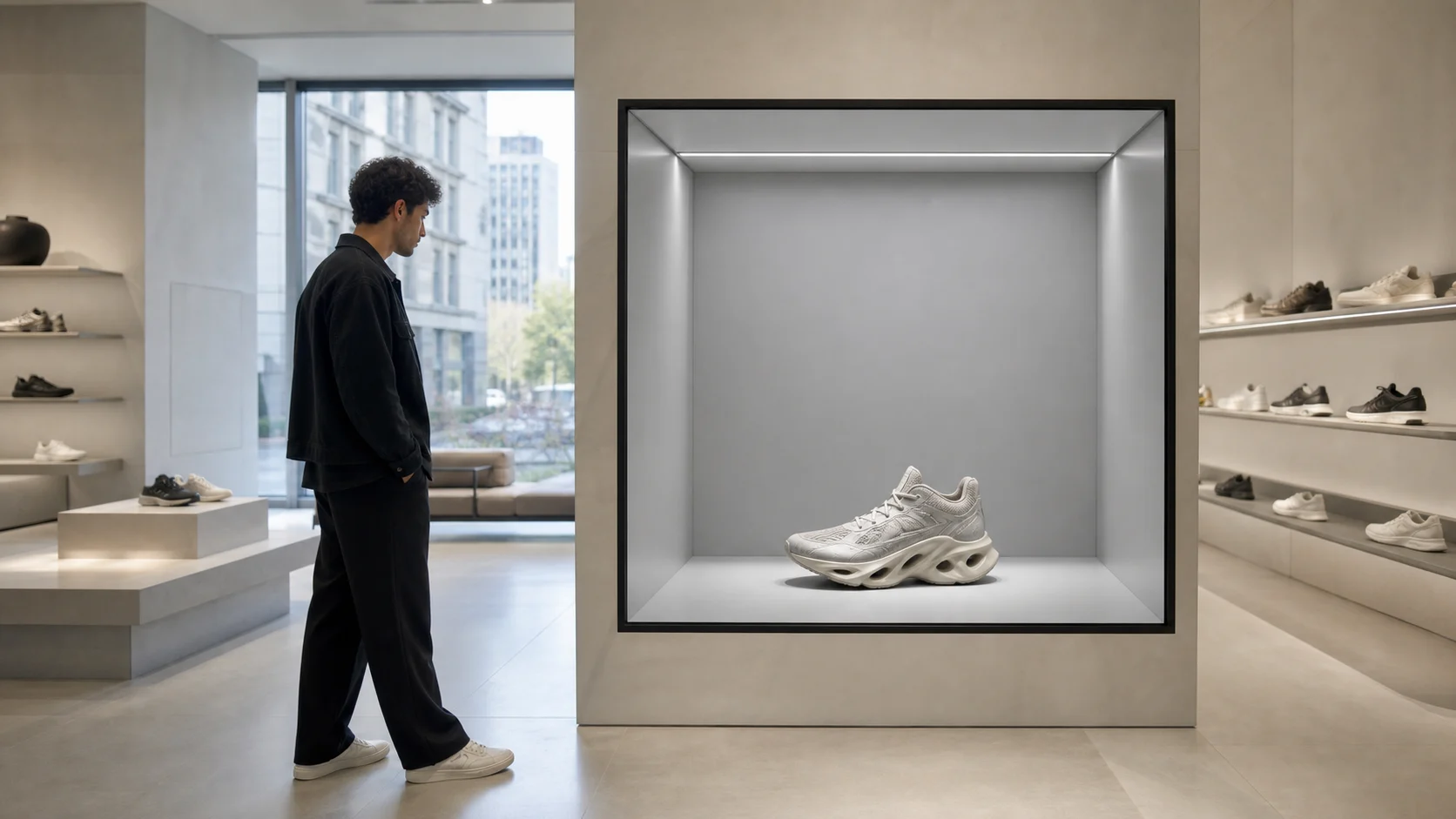
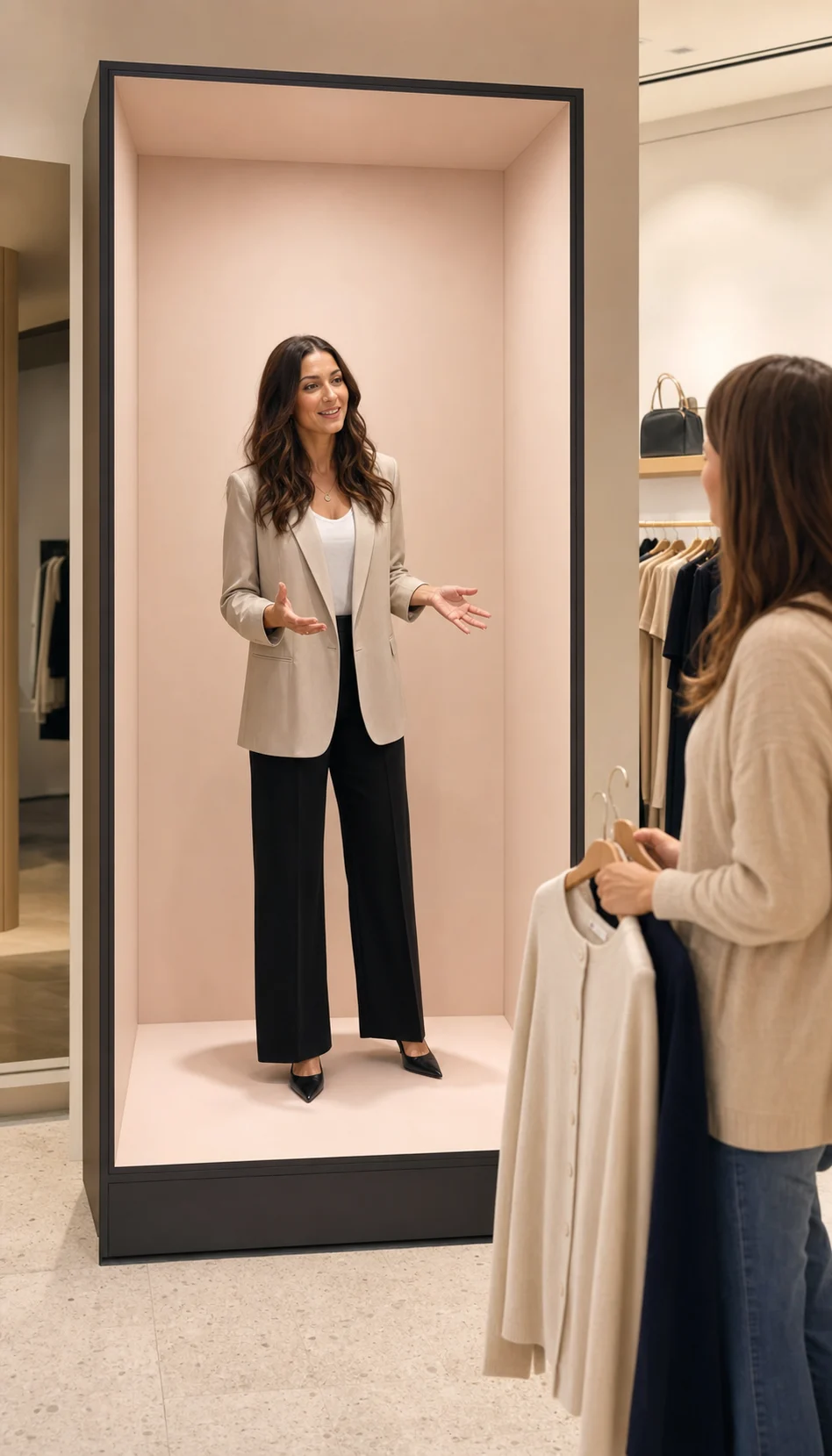
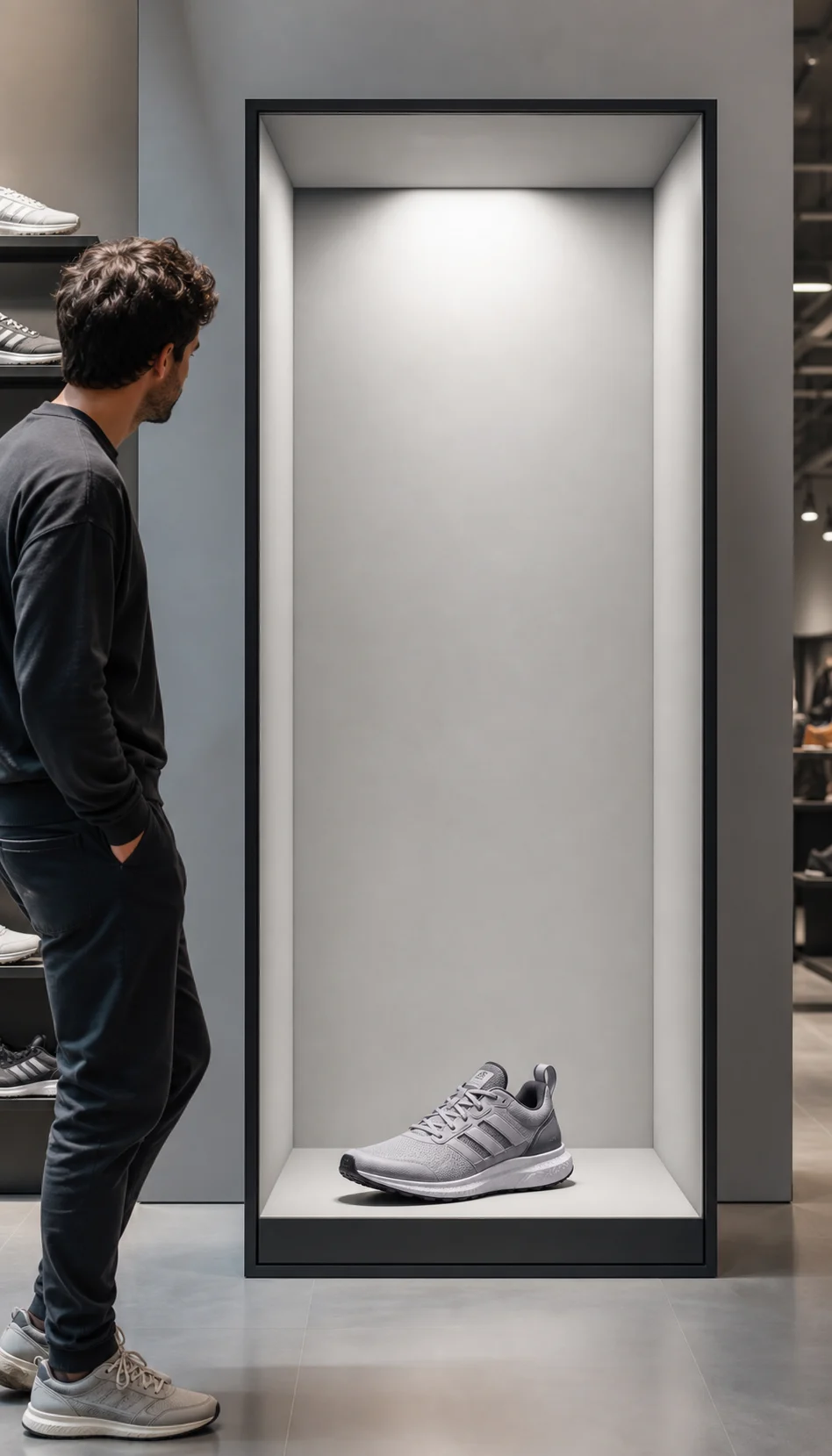
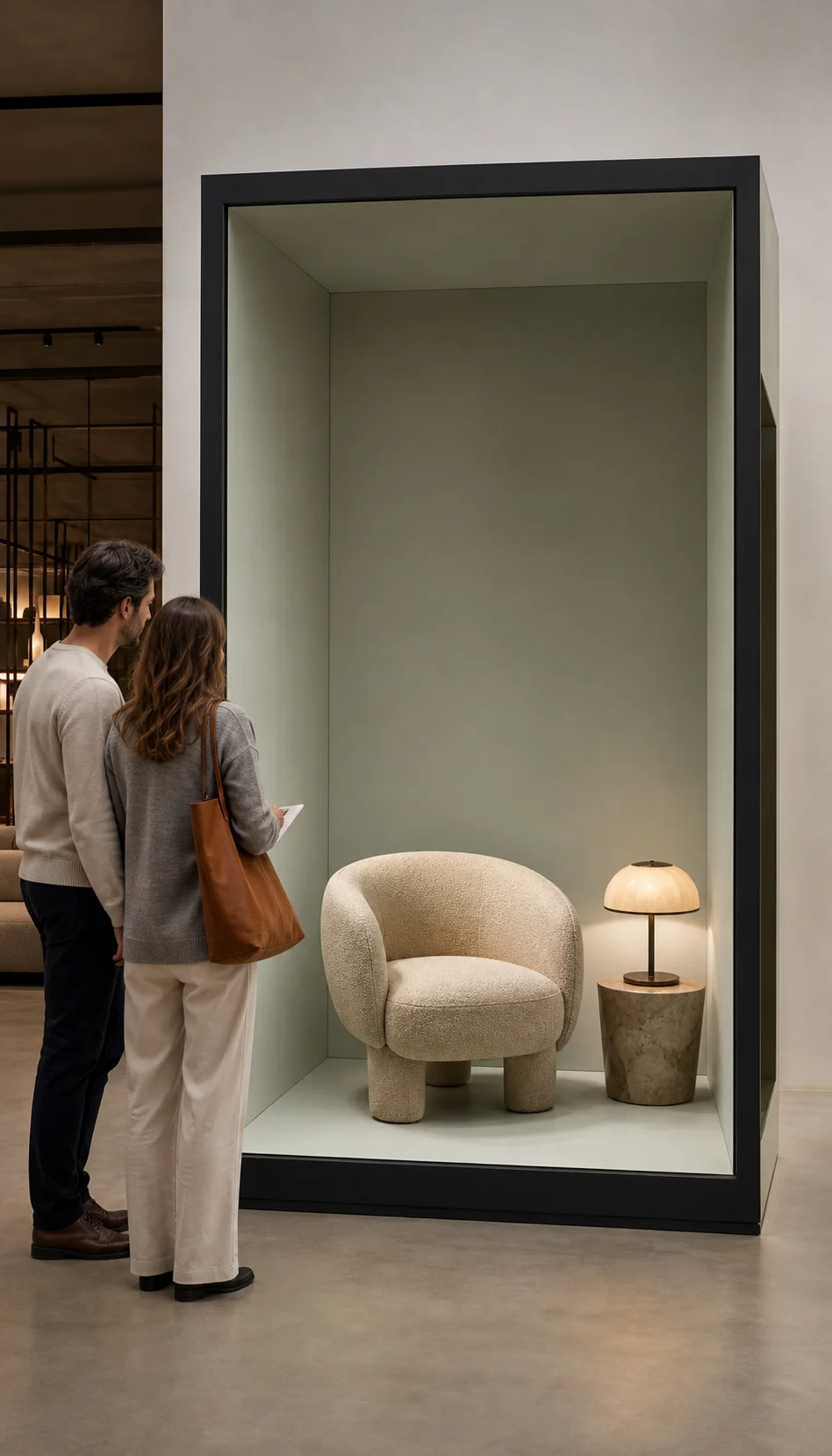
A footwear shopper can examine construction at a scale larger than the physical shoe. A beauty customer can connect to a specialist who is not staffed at that location. A furniture shopper can compare a complete vignette without requiring every finish on the floor. A luxury client can move from an object story to a live appointment without changing channels.
The store stops behaving like a shelf with screens and starts behaving like a network of knowledgeable places.
Five moments where presence changes the journey.
- 01
Attraction
Window and entrance scenes make one product feel dimensional and deliberate rather than adding more visual noise.
- 02
Discovery
Customers explore materials, construction, variations and fit through spatial demonstrations attached to the real category.
- 03
Expertise
Remote associates, designers and category specialists can serve several locations without becoming a conventional video call.
- 04
Decision
Comparisons become concrete: side-by-side configurations, interior views and product stories occupy one calibrated visual space.
- 05
Continuity
With consent, a session can continue to appointment booking, fulfillment, support or a later digital touchpoint.
Large presence and compact product intelligence.
Relay Frame supports moments where a person, full product or room-scale vignette needs visual authority. The compact format supports focused interactions close to inventory: ingredients beside fragrance, construction beside jewelry, shades beside cosmetics or internal components beside electronics.



A platform, not a collection of one-off displays.
The commercial value increases when endpoints share an operating layer. Retailers need scheduled campaigns, product-data connections, content approvals, localization, remote-expert routing, device health, accessibility modes and privacy controls. Reality Relay Platform is designed to coordinate those requirements while each physical space remains calibrated to its environment.
Physical AI can add responsiveness, but it should not impersonate expertise or make unsupported claims. The useful role is controlled orchestration: selecting approved scenes, answering within a verified knowledge boundary, escalating to a human and recording only the consented operational data needed to improve service.
What a credible retail pilot should prove.
A first pilot should test a small number of high-value moments rather than cover an entire chain. A balanced program could include one entrance experience, one human-expertise station and two compact product endpoints. It should measure engagement, qualified conversations, assisted conversion, appointment creation, service time, content comprehension and operational reliability.
The test must also answer practical questions: where customers naturally stop, how sound behaves, how content changes through the day, how accessibility is handled, what happens when no expert is available and how staff take control. Presence succeeds when it supports the store’s work—not when it becomes another display to maintain.
The store becomes a network of moments.
The strategic opportunity is larger than a more impressive product visualization. Reality Relay can give every important retail moment access to people, intelligence and dimensional content. A specialist can arrive without traveling. A product can reveal what the physical sample cannot. A small location can offer the depth of a flagship.
Retail application study
Design the first four-endpoint pilot.
Reality Relay is inviting retailers, brands and experience teams to test where spatial presence creates measurable customer value.
Start a pilot conversation