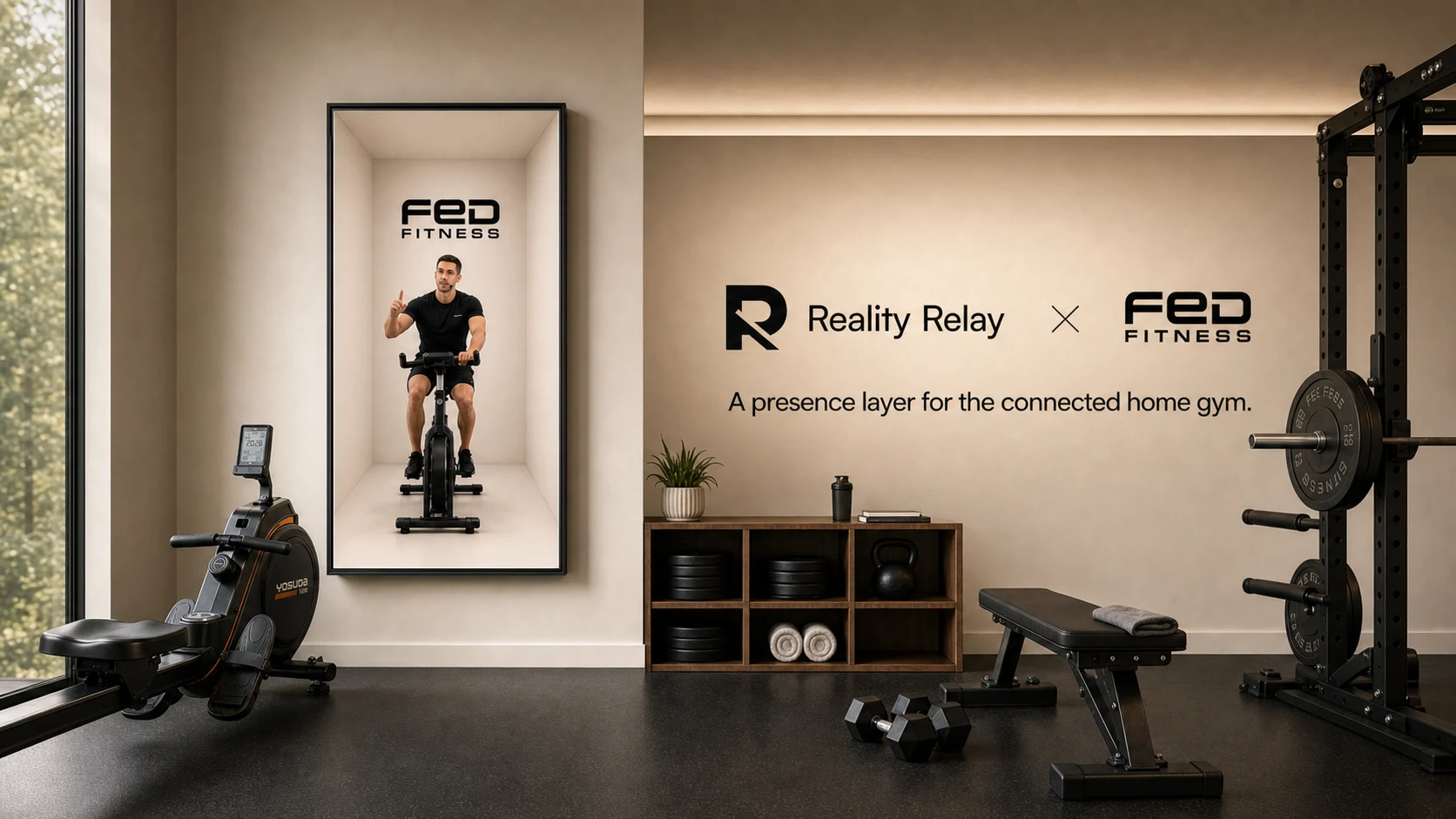
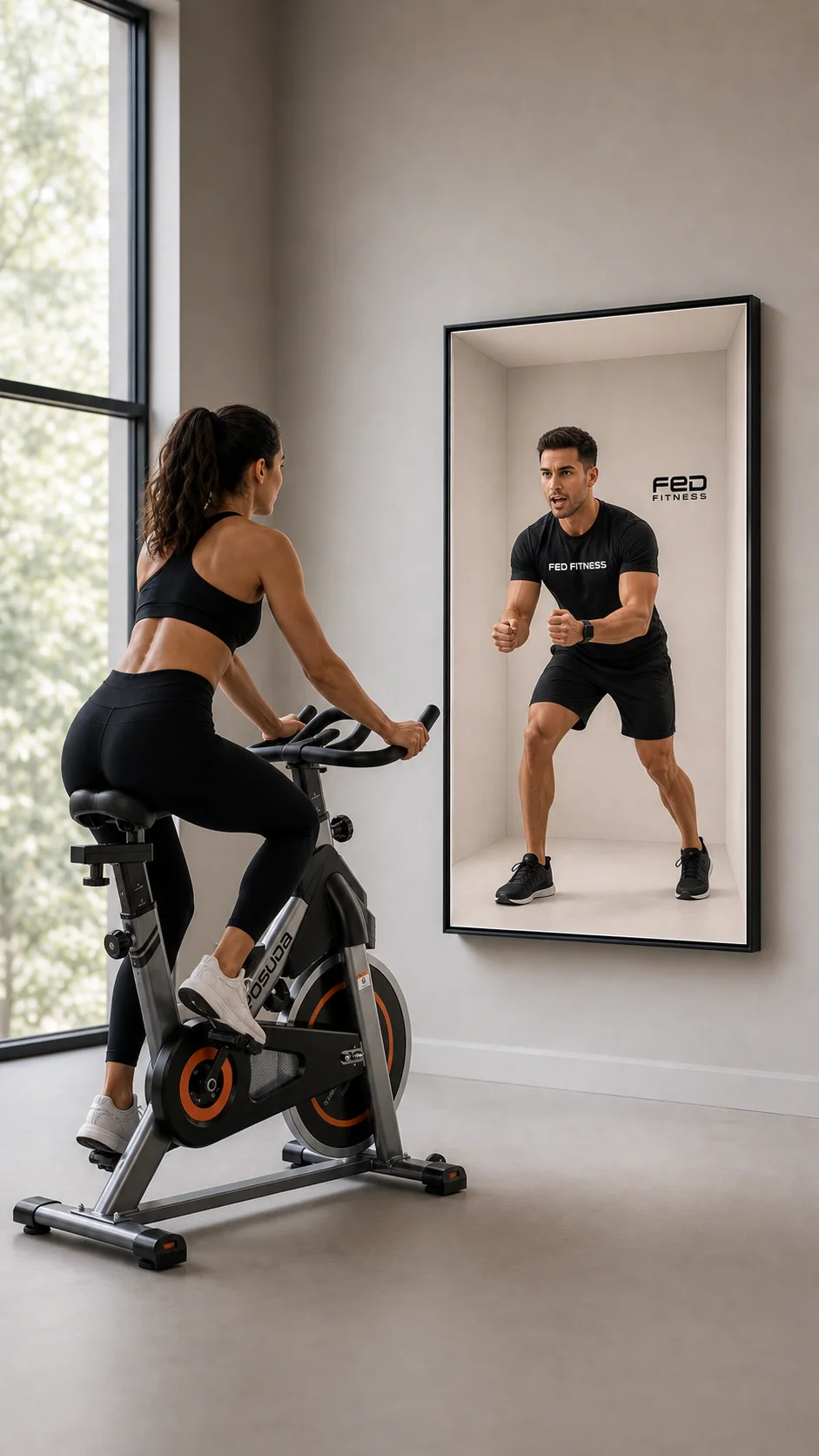
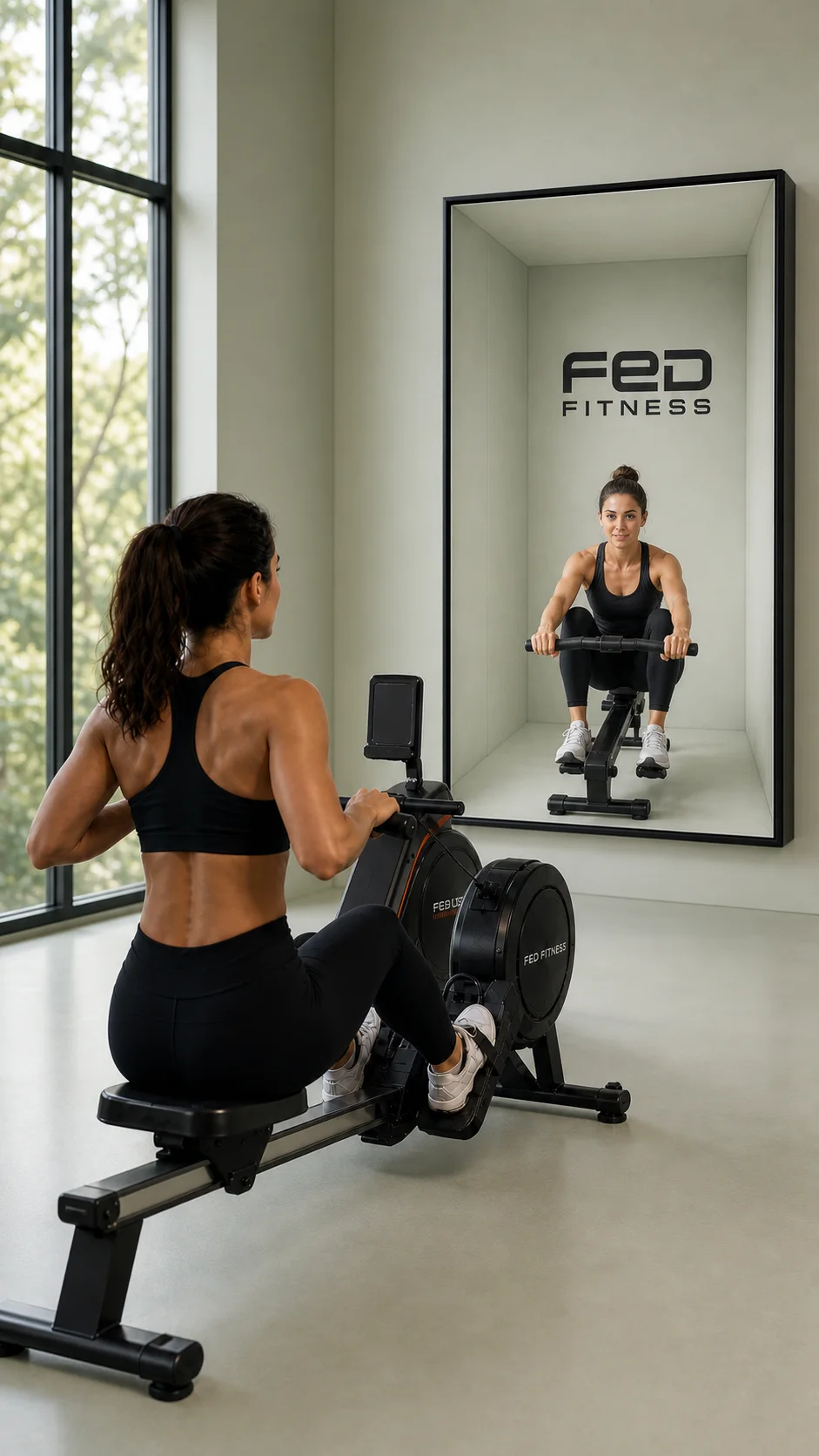
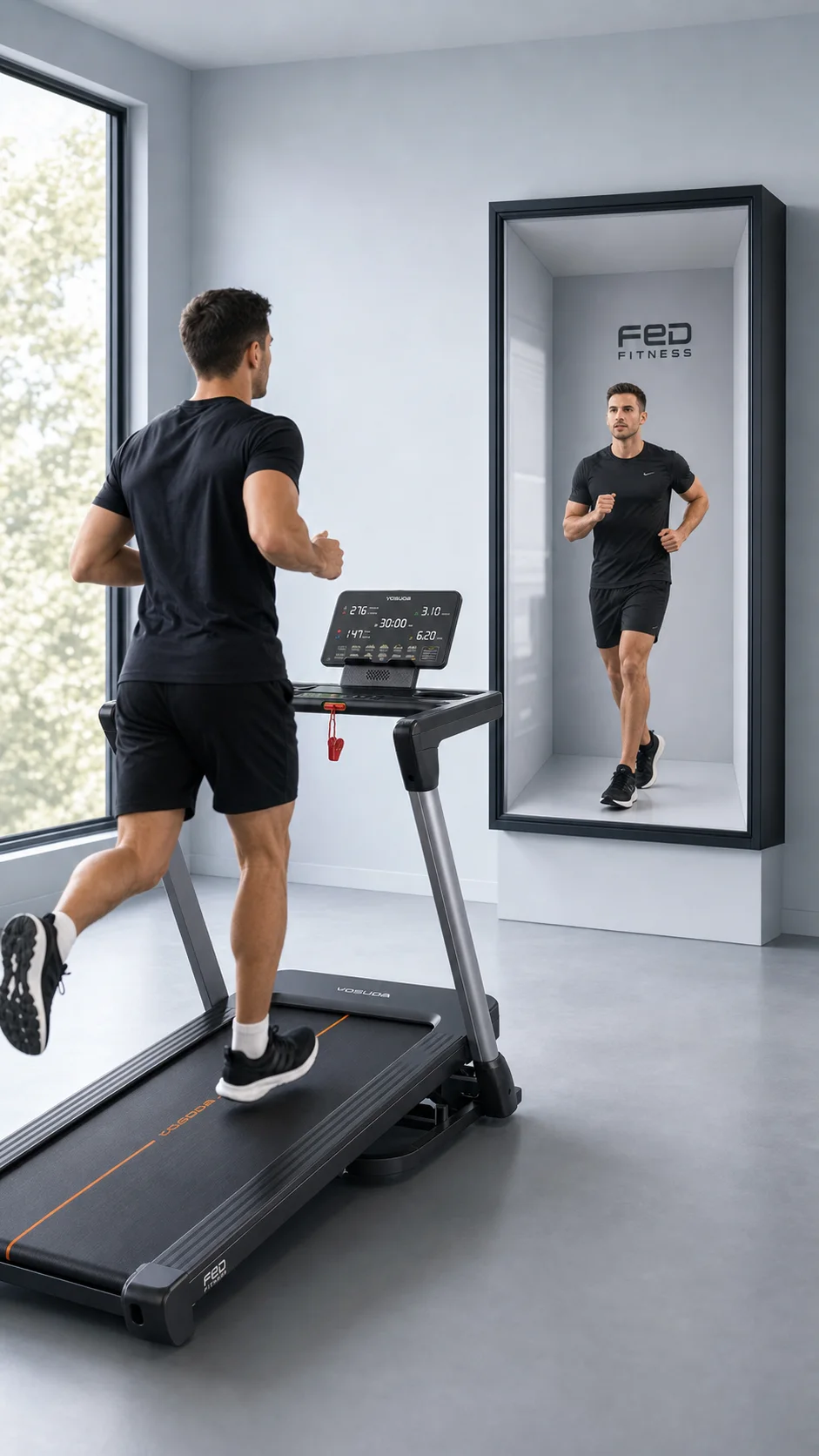
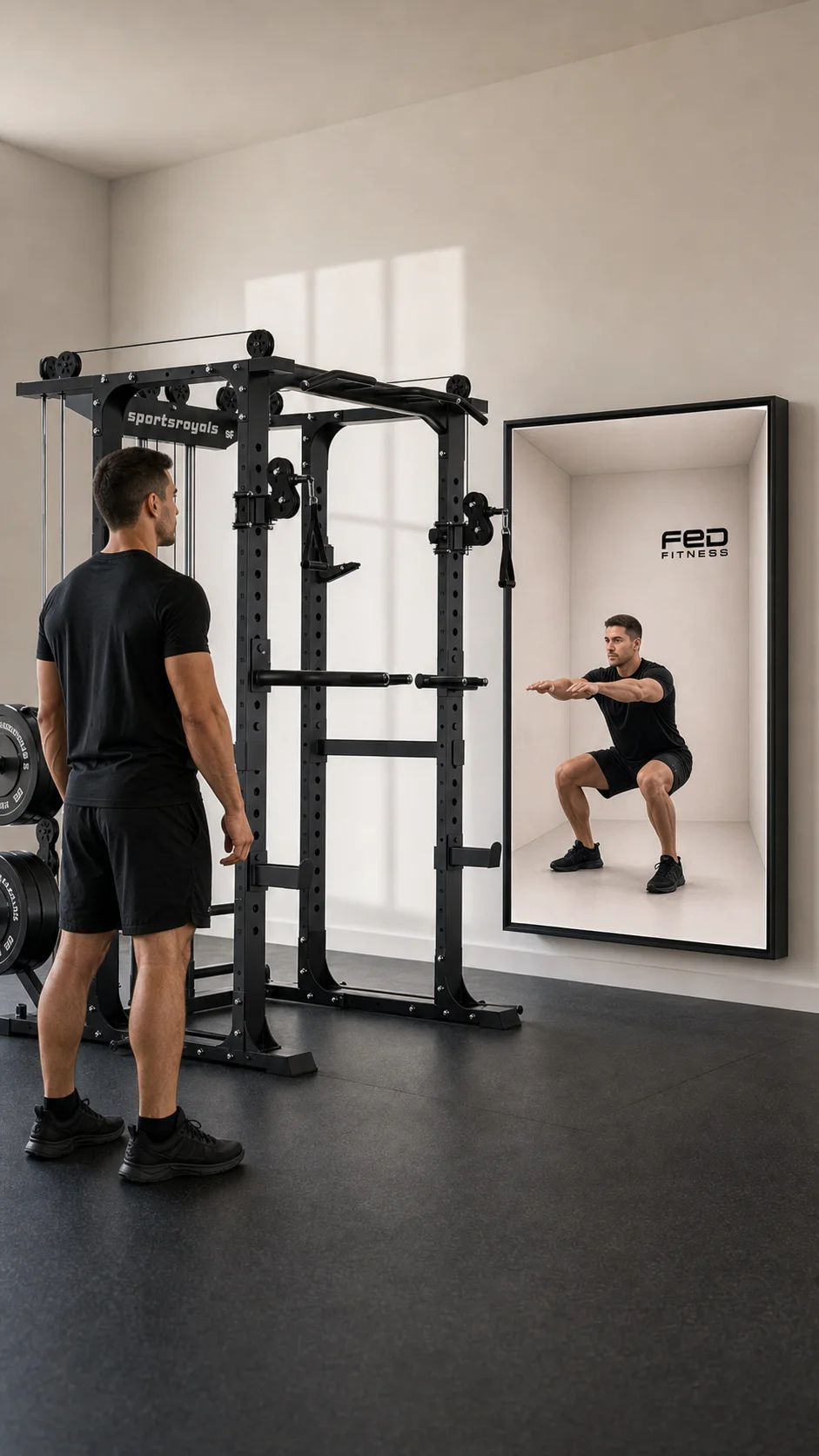
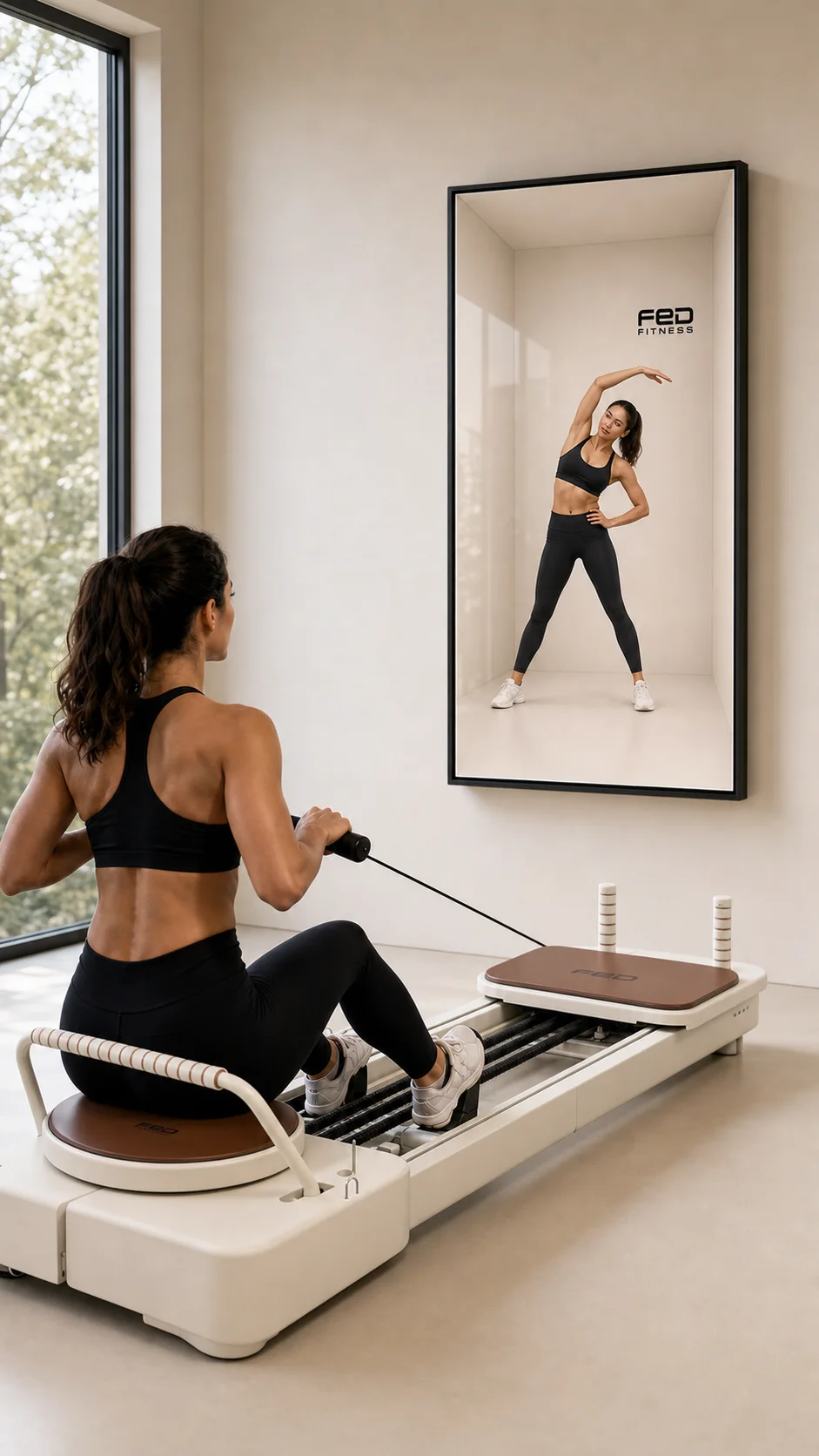
The first era of connected fitness put content on equipment. Reality Relay proposes a different next step: make expertise feel physically situated around it. Relay Frame 46 brings a full-body presence into the room. Relay Frame 10 keeps focused guidance close to the machine. Together, they create one continuous operating layer rather than another collection of disconnected screens.
The screen solved access. Presence can solve continuity.
Streaming made elite instruction available anywhere. Sensors made repetitions, pace and output measurable. Apps made programs portable. Yet the experience is still fragmented: the instructor is trapped in a rectangle, the machine knows only part of the session, and the member repeatedly rebuilds context as they move from warm-up to strength, conditioning and recovery.
Spatial presence changes the organizing idea. The valuable unit is no longer a video attached to one machine. It is a coaching relationship that can arrive at different scales, retain the logic of the session and adapt to the physical task in front of the member.
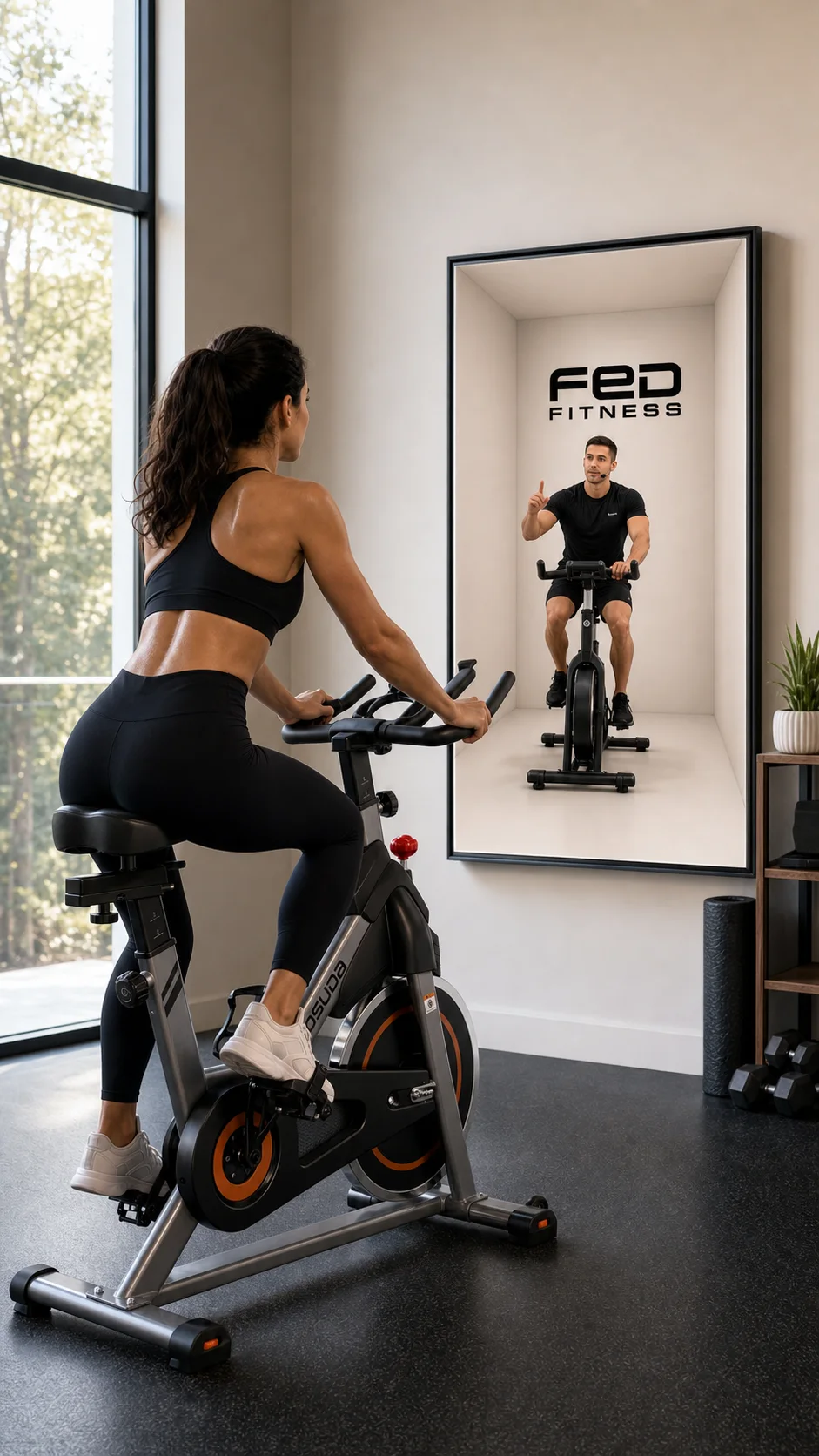
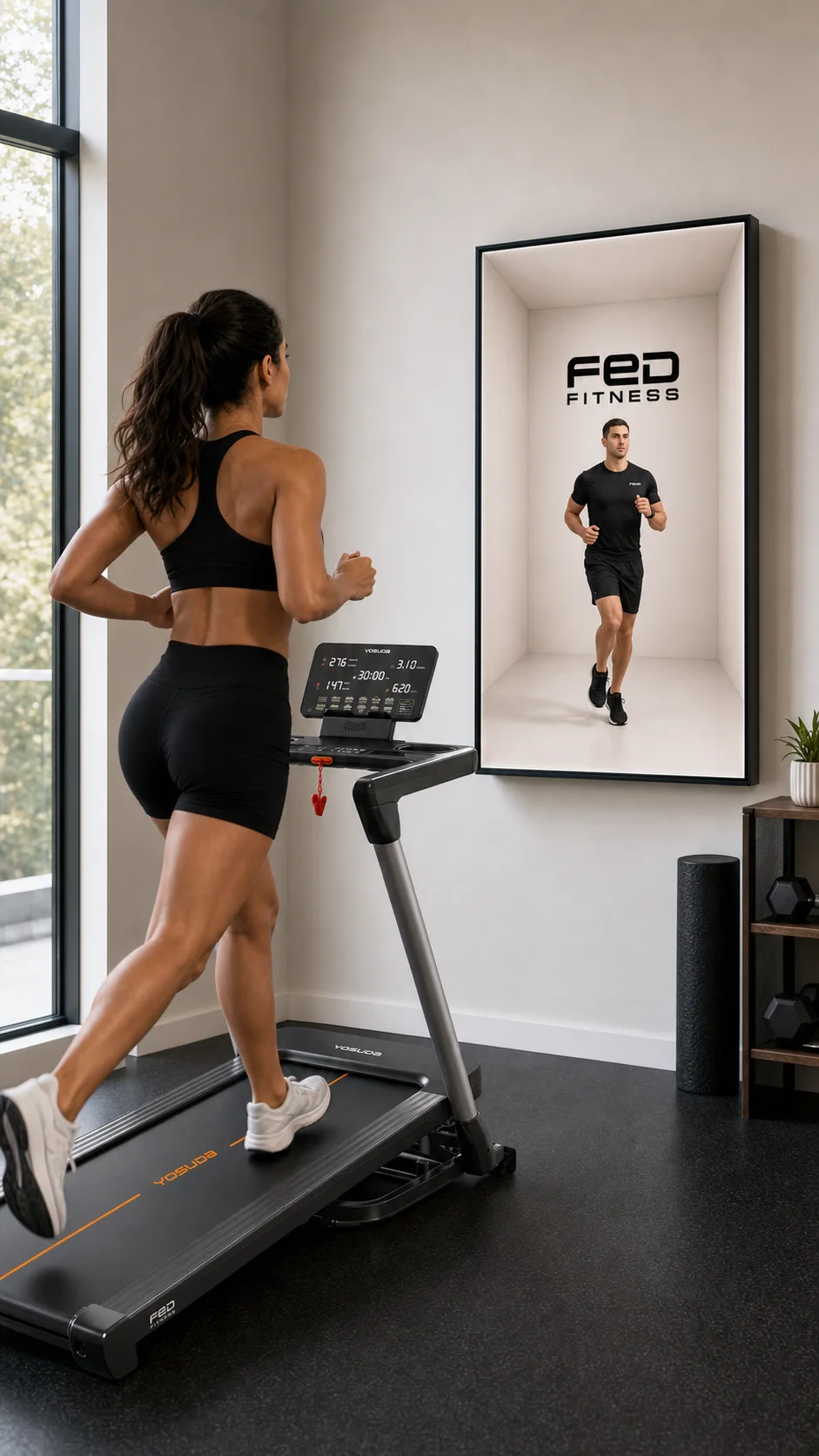
Two clear formats, one system
- 01
Relay Frame 46
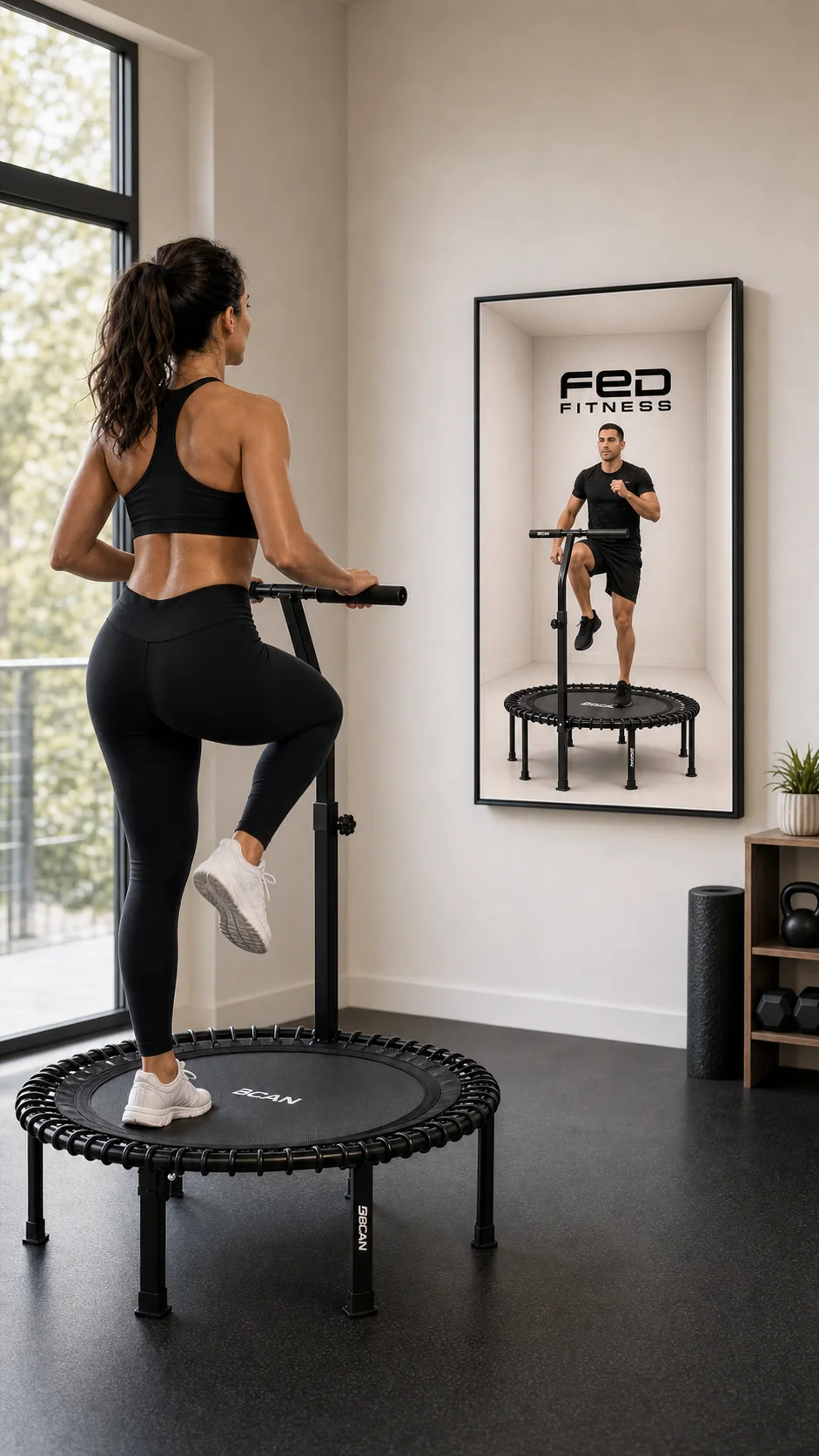
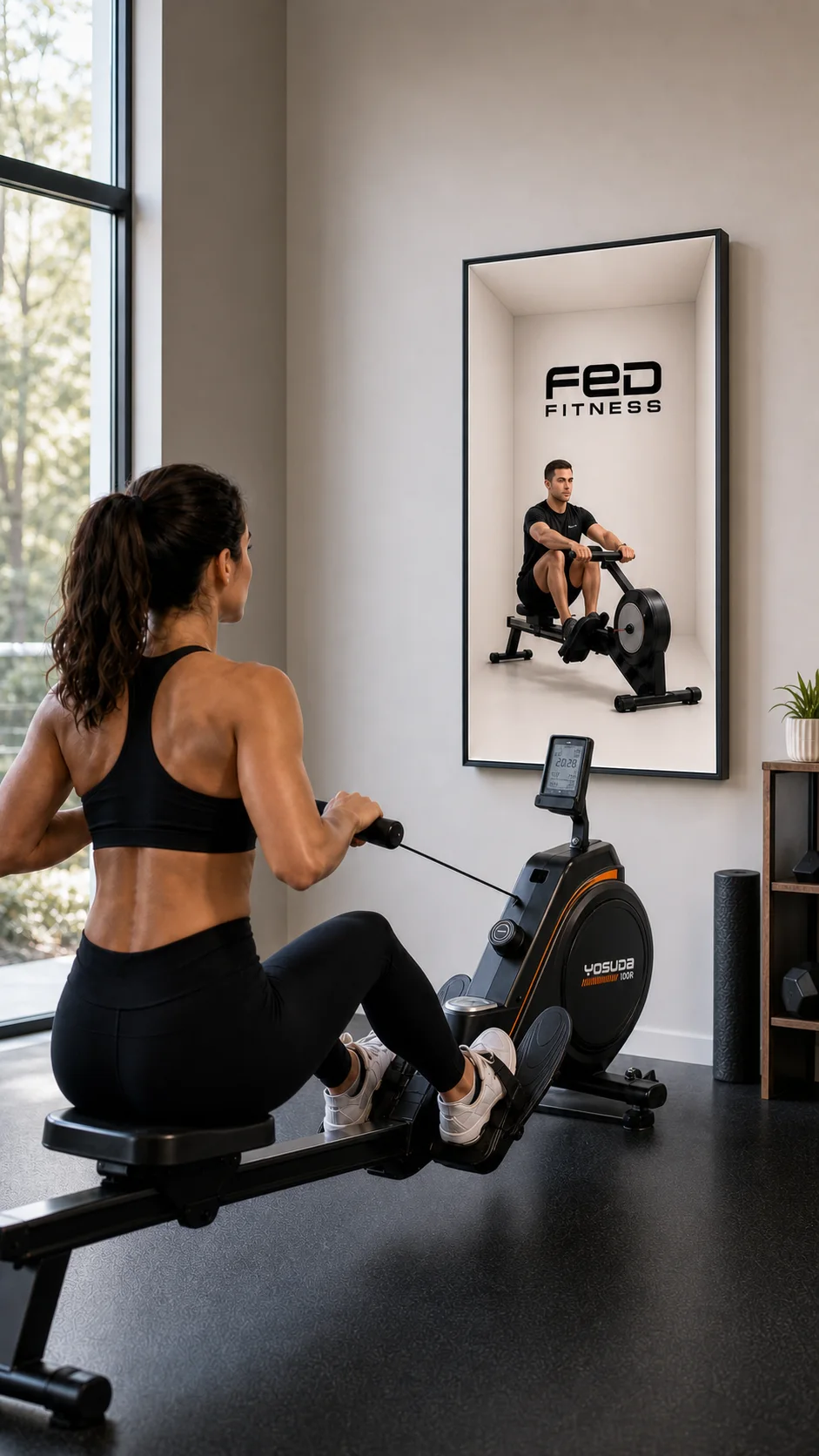
The room-scale presence space situates a full-body coach, class leader, remote specialist or physical AI guide near the equipment. It is designed for movement demonstrations, shared sessions and moments when posture, whole-body form and social energy matter.
- 02
Relay Frame 10
The compact machine-mounted presence space keeps a coach's face, focused movement detail or AI guidance at the user's natural sightline. It supports immediate instruction without pretending to be a life-size person.
The names describe two deliberate products, not an open-ended range of screen sizes. Relay Frame 46 creates the encounter in the room. Relay Frame 10 maintains proximity at the equipment. The Reality Relay Platform connects identity, scenes, calibration, permissions and operations across both.
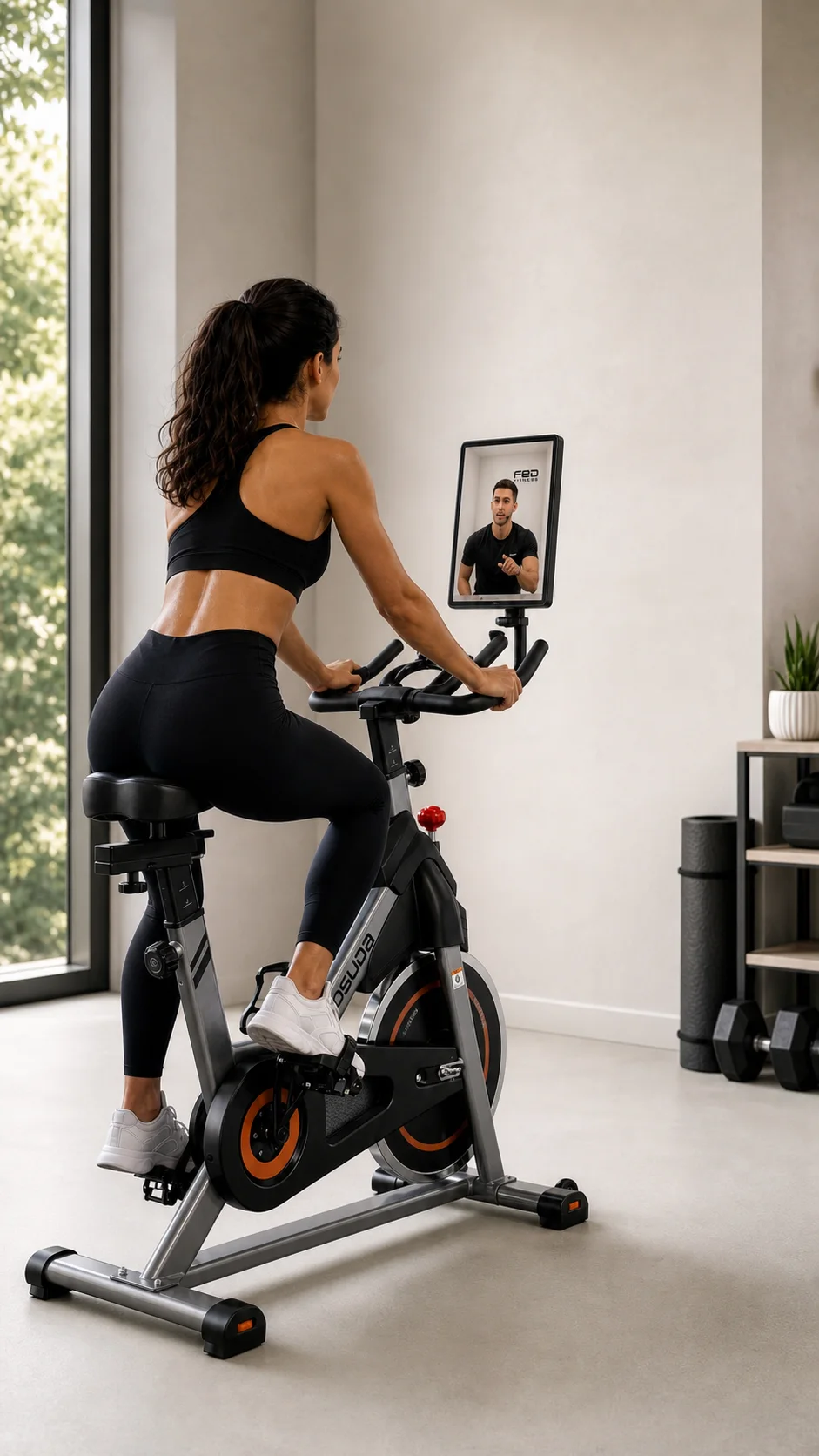
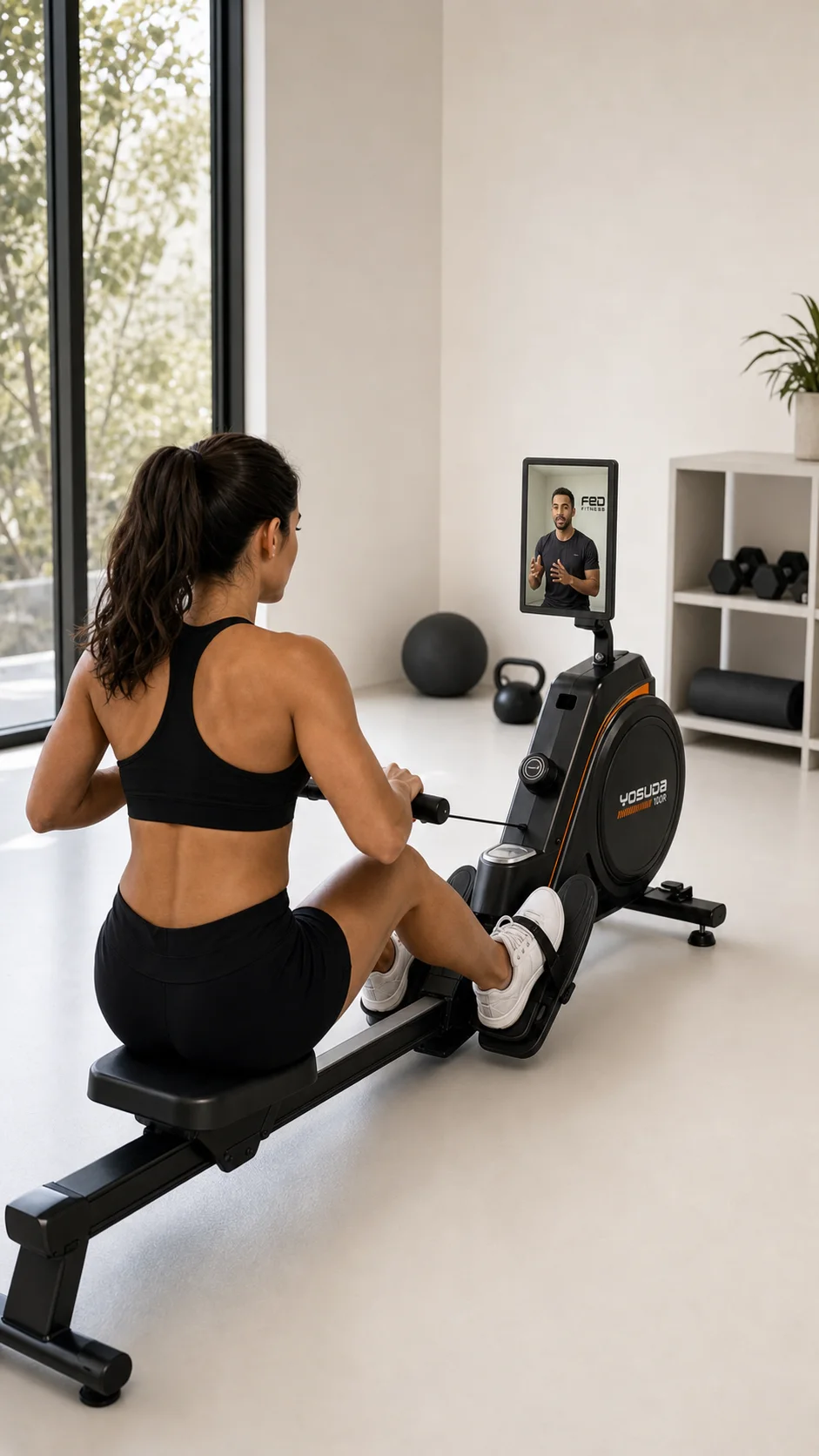
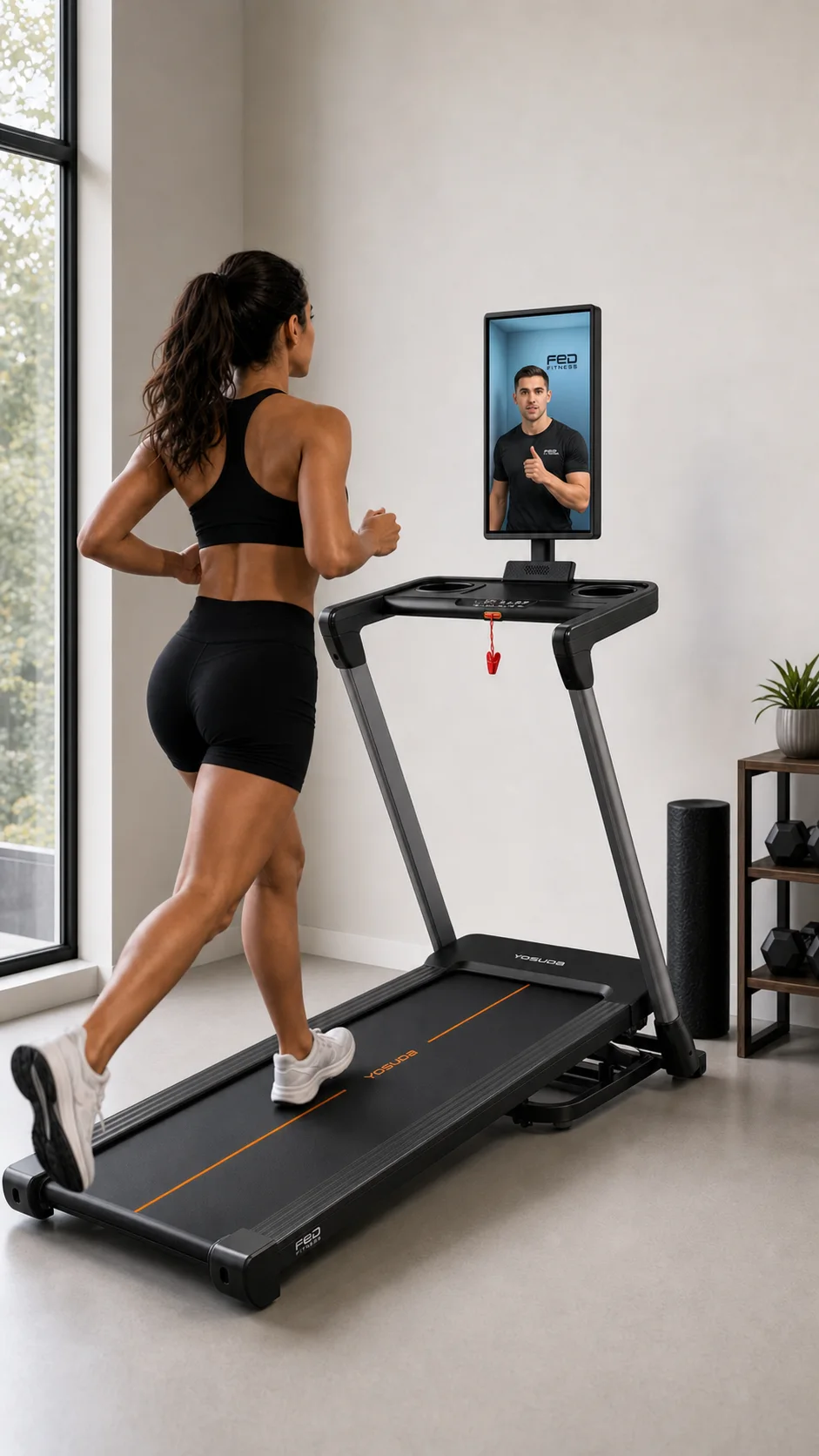
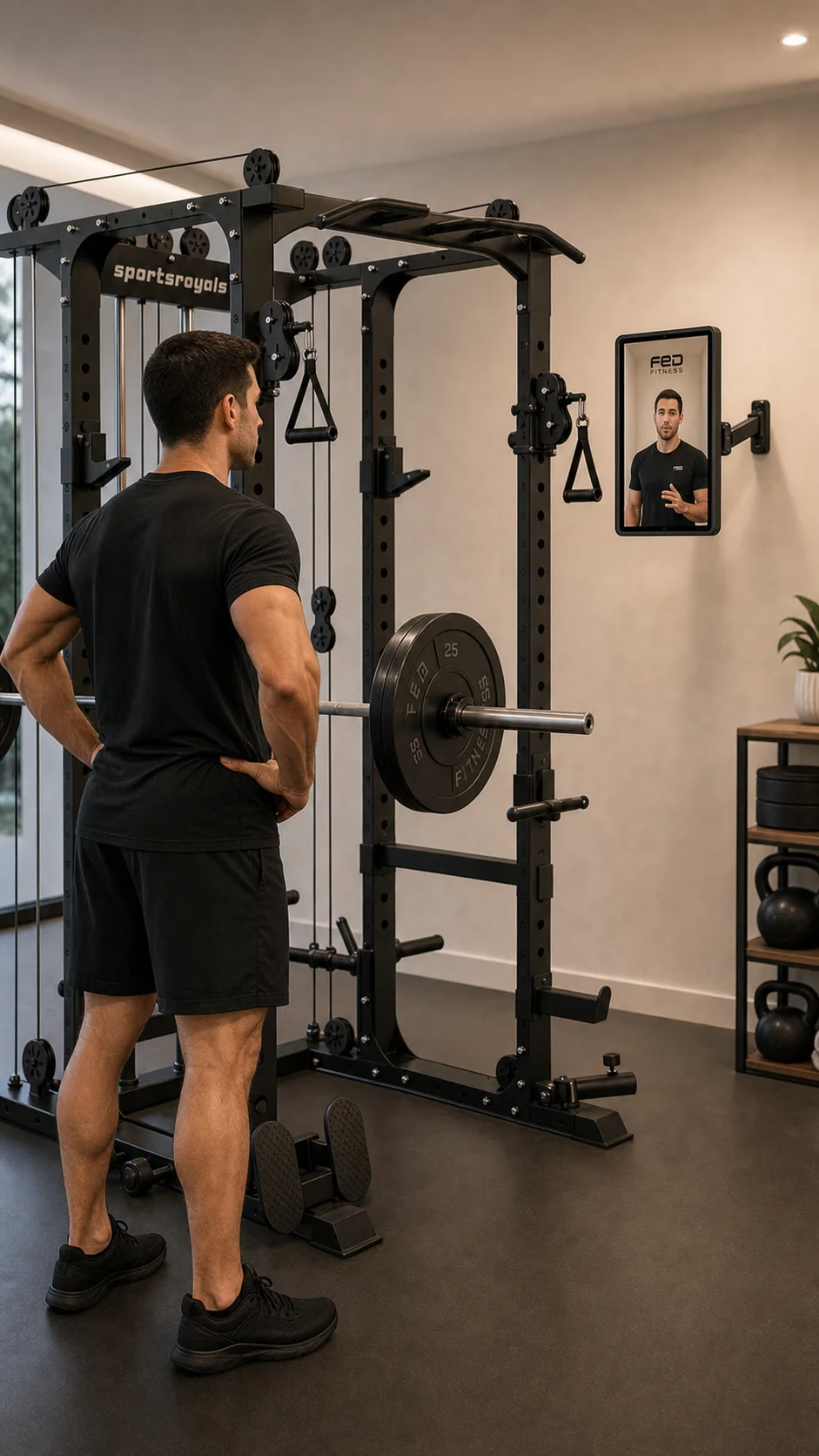
The opportunity is not to add more screens to fitness. It is to make coaching coherent across the room.
Every equipment category becomes a different spatial scene
Cardio, strength and guided movement require different relationships between person, machine and coach. A credible system respects those differences instead of forcing the same interface everywhere.
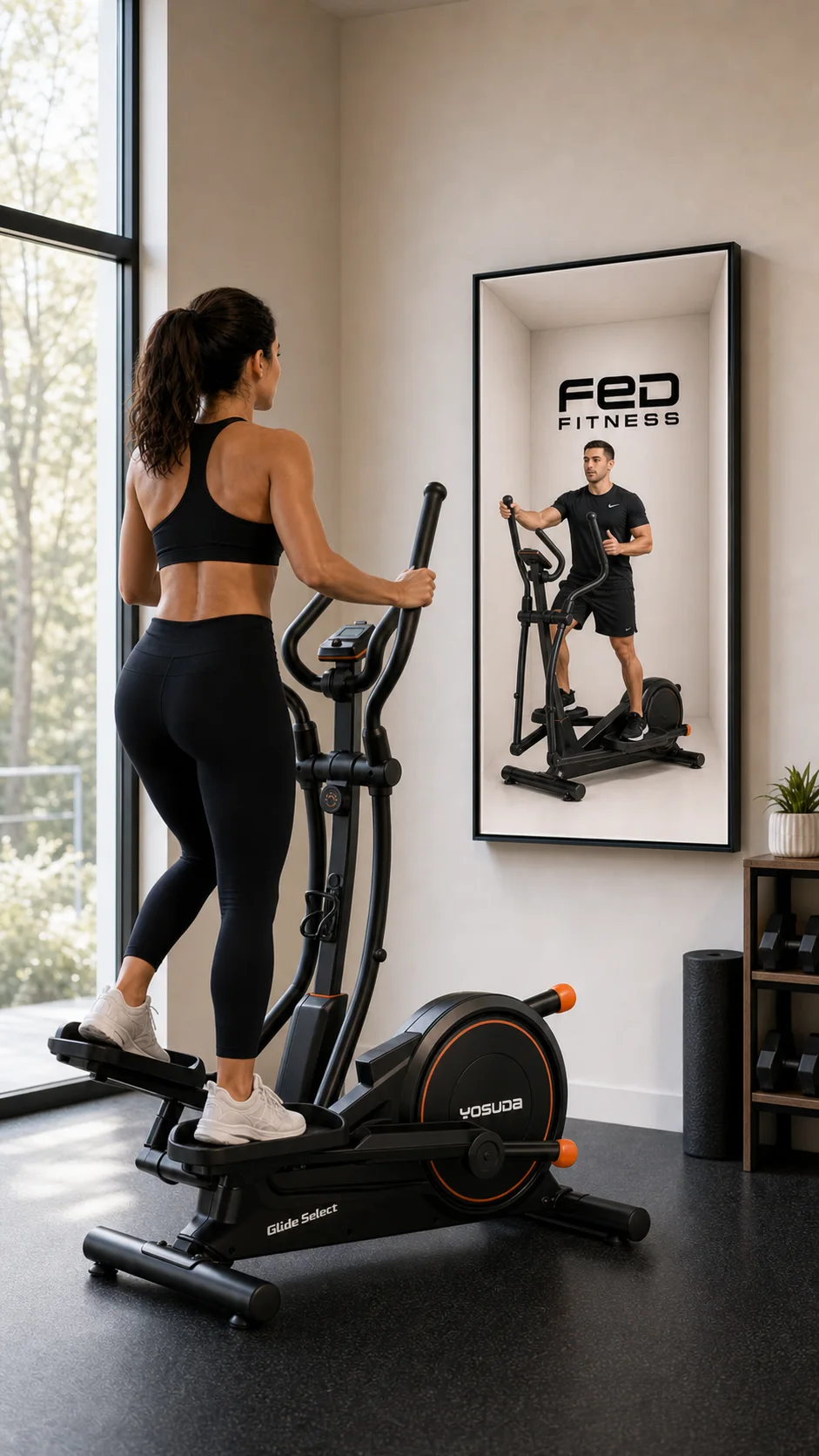
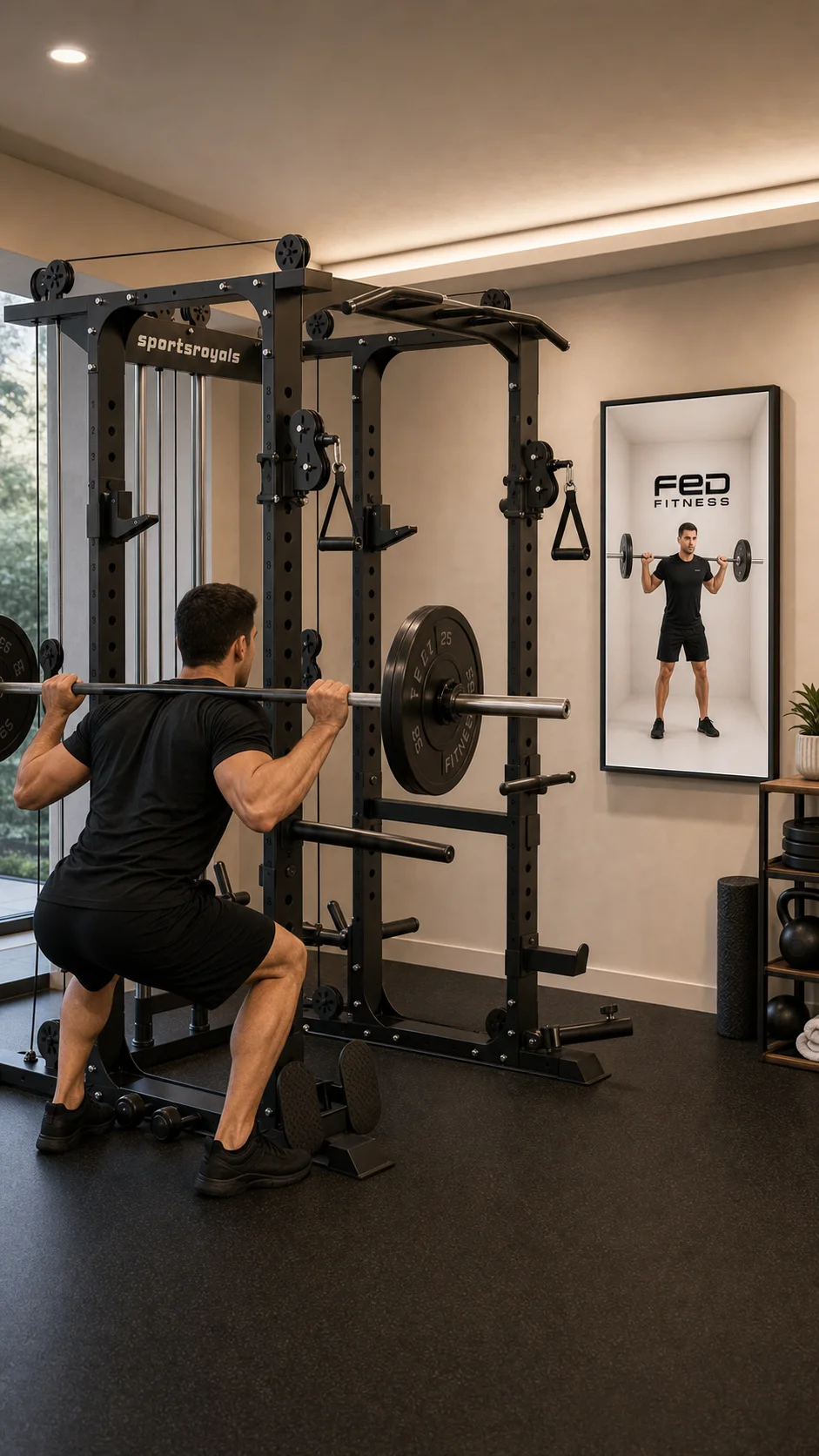
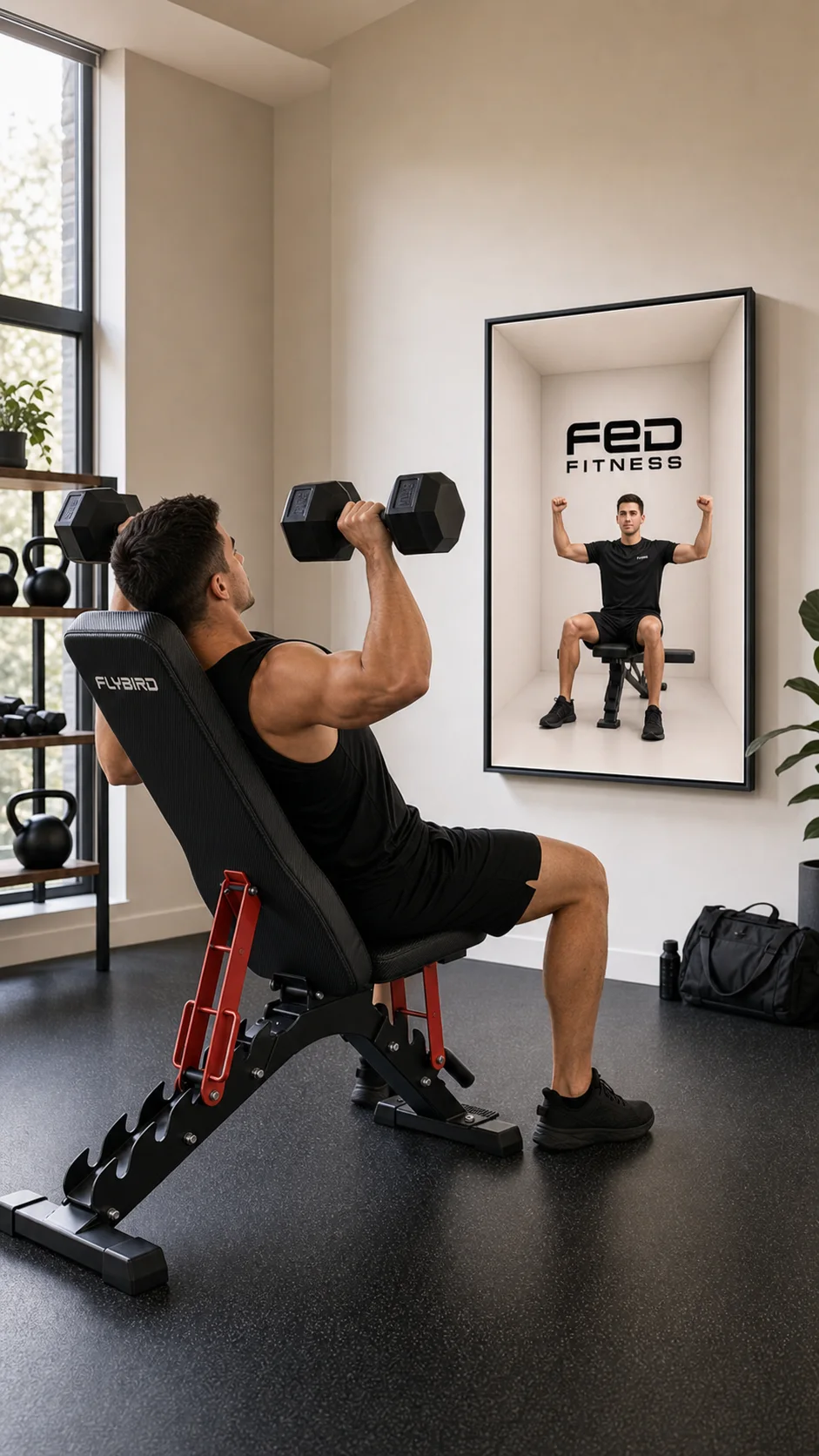
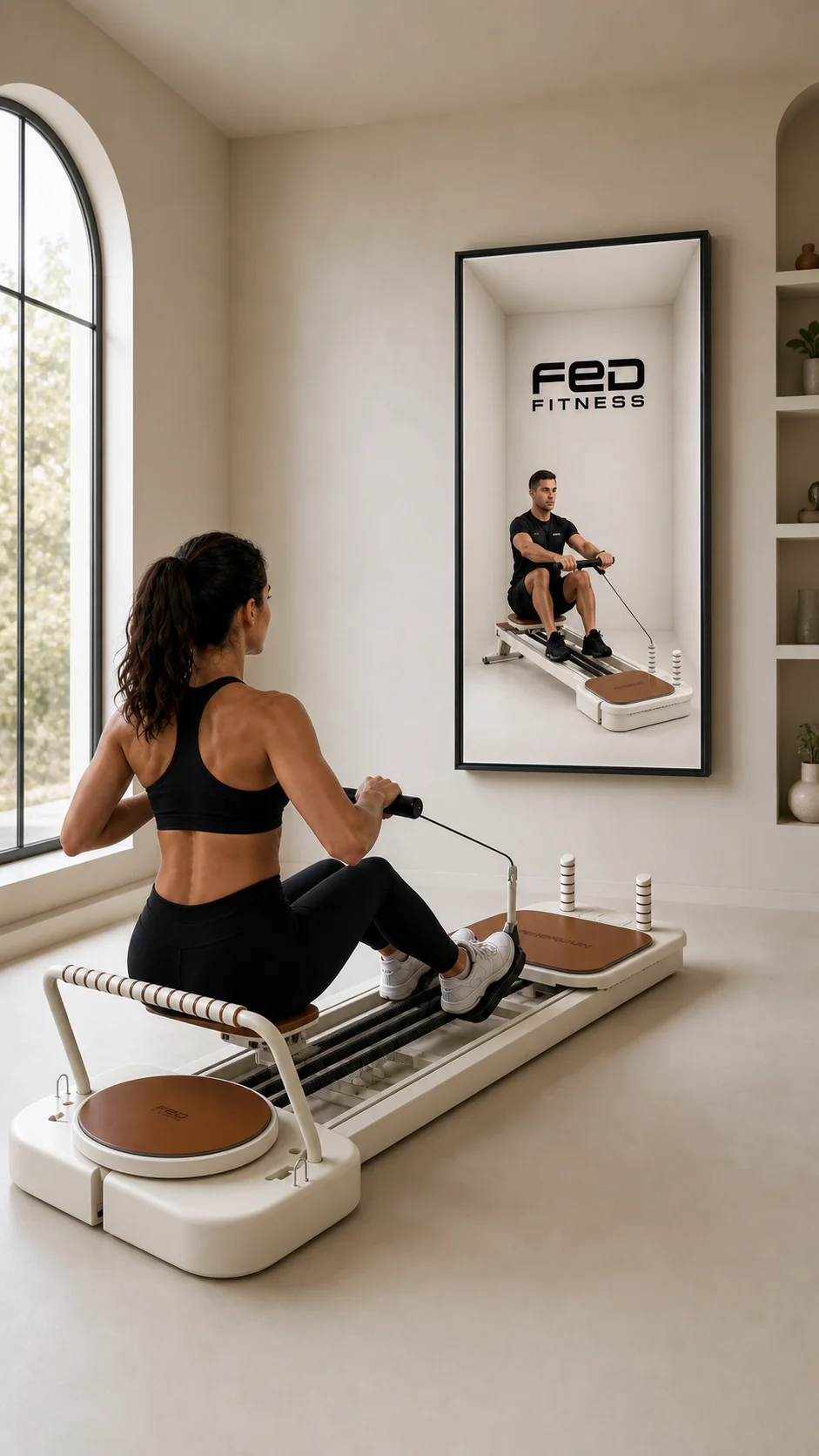
On a treadmill or elliptical, attention is forward and the coaching rhythm is continuous. On a rower, the sightline changes through the stroke and the guide must remain readable without interfering with motion. At a rack or bench, the most useful moments may happen before and after a set: setup, explanation, rest, review and program transition. In Pilates or rebound training, the spatial guide may need to show an entire movement sequence with calm, legible pacing.
Physical AI gains a bounded, understandable role
AI can already summarize workouts, adapt plans and answer questions. A spatial endpoint gives that intelligence a visible place and a clearer social contract. Members know where to look, whether the system is listening, and which equipment or movement the guidance applies to.
The safest near-term role is not unrestricted autonomy. It is bounded assistance: explain a movement, prepare the next interval, translate a coach's program, provide equipment onboarding, or hand the interaction to a human when judgment is required. The system should never be presented as a physical spotter, medical professional or substitute for qualified supervision.
Trainers can be present in more places
For coaches, the network creates a new delivery model. A trainer could lead a live human-scale session, appear for a short form review, leave a structured program for machine-level guidance and return at a scheduled checkpoint. Their expertise becomes more accessible without reducing the relationship to a generic video library.
This does not eliminate the value of in-person coaching. It creates a ladder of presence: asynchronous programs, AI-supported guidance, scheduled remote sessions and premium physical appointments can coexist. The member gets continuity; the coach gains reach; the operator gains a service model that extends beyond equipment ownership.
Equipment companies can become service platforms
When an equipment portfolio shares one presence layer, the manufacturer can design a journey across machines rather than sell isolated units. Setup knowledge, coach programming, AI services, remote support and content operations become part of a recurring relationship with the owner or facility.
The defensible layer is not the display alone. It is the system that understands which endpoint is available, which scene fits the task, how the content is calibrated, how identity and permissions travel, and how the experience continues when the member moves. That software and network layer can become more valuable as the installed base grows.
The gym becomes an addressable media environment
Once endpoints are networked, a training room can host more than workouts. A brand can launch a guided product story beside relevant equipment. A physiotherapist or specialist can join a scheduled consultation. A club can introduce a new class through a human-scale demonstration. A manufacturer can provide live onboarding without flying staff to every location.
The principle is relevance, not interruption. Presence earns its place when it helps the member complete a task, understand an option or connect with expertise. Turning every surface into advertising would weaken the experience; using the network selectively can increase the value of the room.
Accessibility should be designed into the system
A spatial coaching platform can support multiple languages, adjustable pacing, repeatable demonstrations, captions, remote human assistance and experiences tailored to different abilities. But fitness, rehabilitation and wellness claims require careful boundaries. The platform can communicate and guide; qualified professionals remain responsible for diagnosis, treatment and clinical decisions.
Good accessibility is not a separate mode added later. It begins with clear sightlines, readable composition, understandable state, safe equipment placement and a reliable way to reach a person when the software is not enough.
What the first credible deployment must prove
The industry will not change because a visualization looks impressive. A real deployment has to prove that the experience is useful, safe and operationally repeatable.
- 01
Placement
Each endpoint must respect movement paths, controls, emergency stops, folding mechanisms and maintenance access.
- 02
Continuity
A member's coach, program and permissions should follow the session without repeated setup.
- 03
Legibility
People must understand whether they are seeing a live person, recorded scene or AI-generated guide.
- 04
Reliability
Calibration, networking, content fallback and remote operations must work beyond a staged demonstration.
- 05
Value
The system should improve onboarding, adherence, coaching access, service delivery or another outcome the operator can measure.
The long-term category is presence, not hardware
Relay Frame 46 and Relay Frame 10 are two physical expressions of a larger idea: expertise should be able to arrive where the work happens. In fitness, that means the coach is no longer confined to a studio recording, a phone or a single branded machine.
If identity, intelligence, content and operation can move coherently across a connected equipment portfolio, the gym becomes a networked environment. Hardware remains essential, but the compounding value shifts toward the platform that brings people and intelligence into the room—at the right scale, at the right moment, with the right boundaries.
Application study
Reality Relay × FED Fitness
Explore the equipment portfolio study, validation scenes and proposed path from an eight-machine pilot to a broader presence ecosystem.
Open the application study