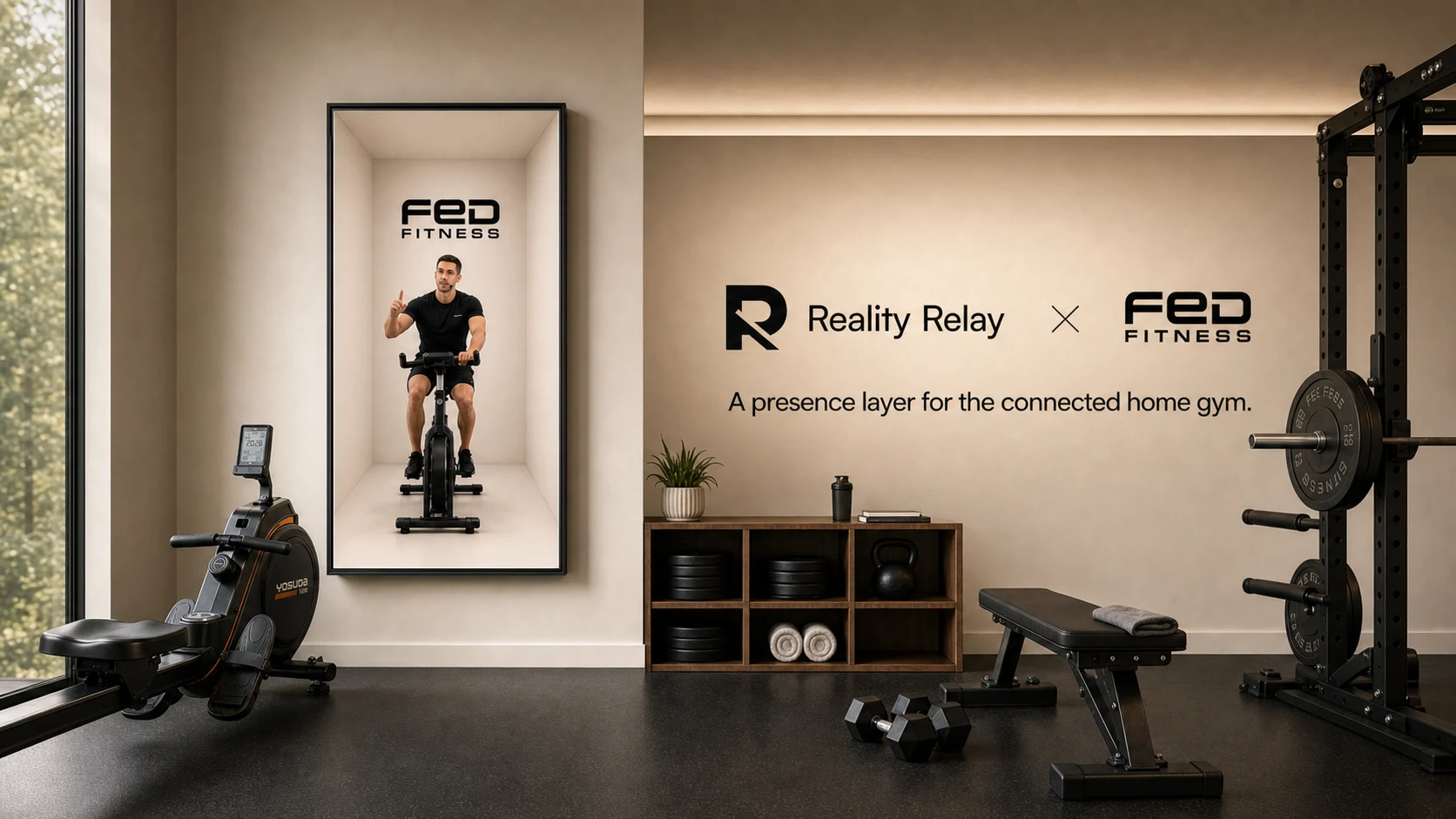
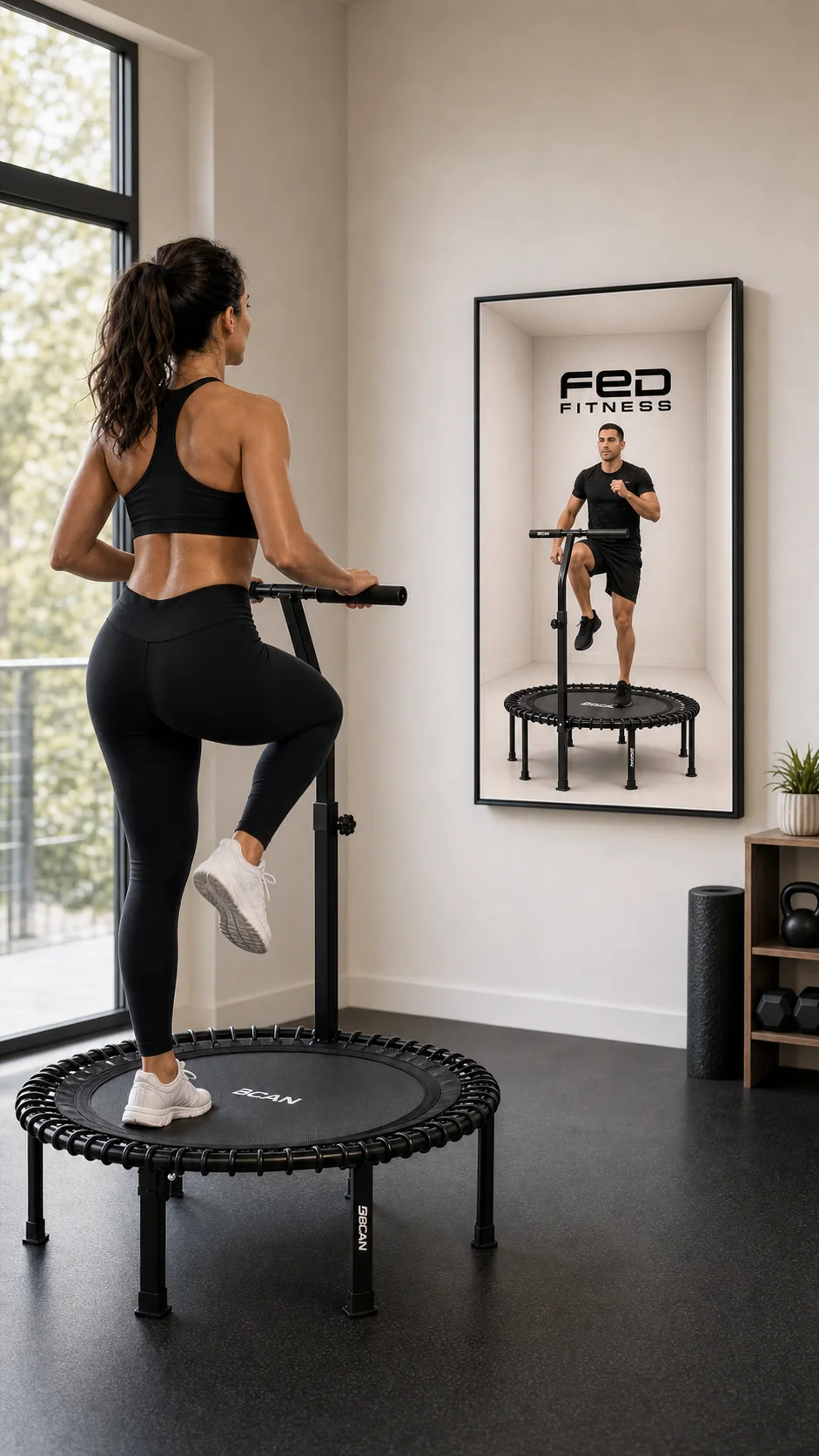
The connected home gym still has a presence problem. Equipment can measure movement. Apps can stream instruction. A phone or tablet can show a trainer. But the expertise remains trapped in a small rectangle, visually separate from the body and machine it is meant to guide.
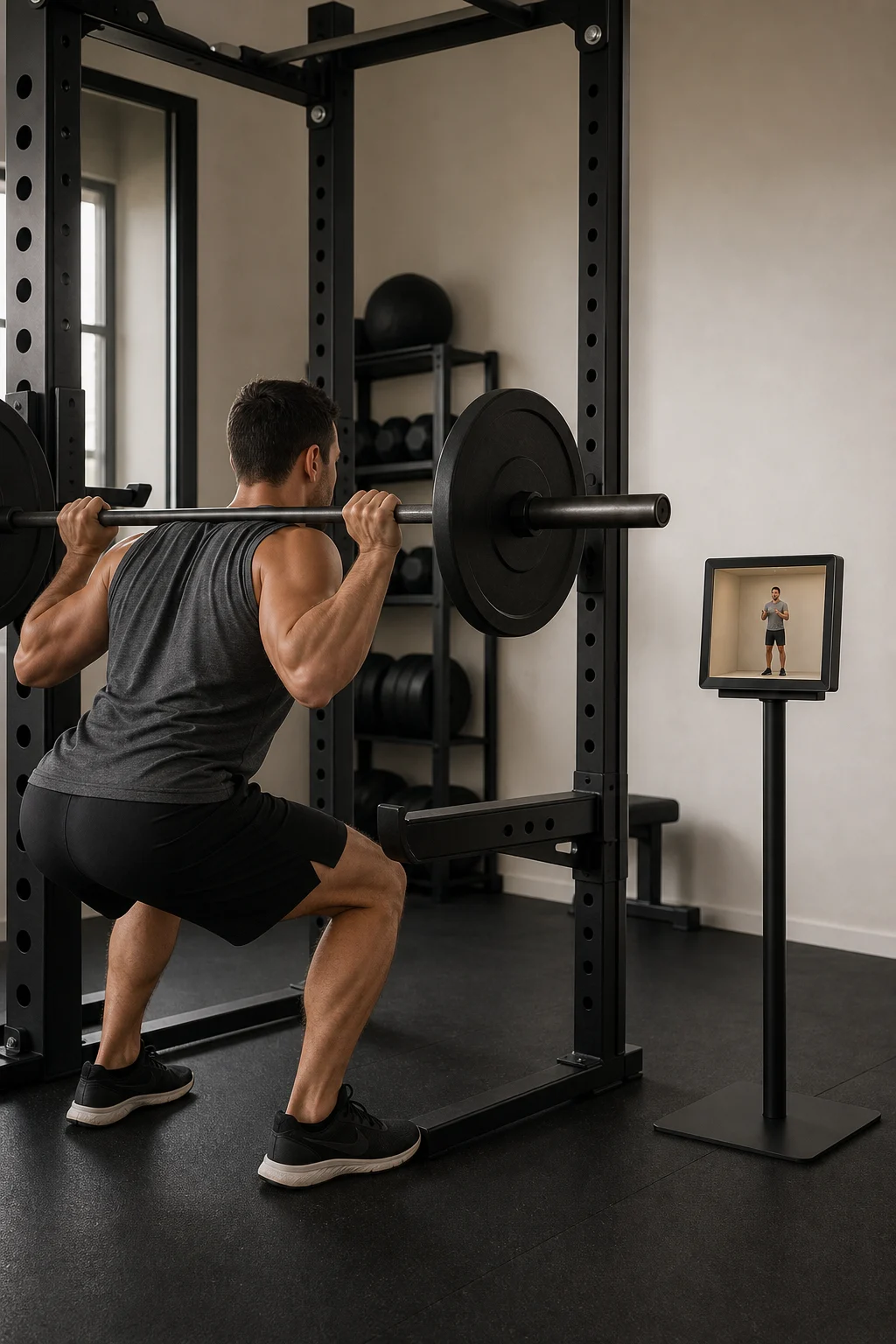
Reality Relay proposes a different relationship between hardware and instruction: a calibrated vertical presence space placed at the natural sightline of the athlete. A remote trainer, embodied AI coach or synchronized class appears inside a bounded optical chamber, at useful scale, with enough spatial grounding to feel situated in the room rather than pasted onto a conventional display.
Industry analysis
How presence could transform the gym.
Read the deeper Reality Relay perspective on Relay Frame 46, Relay Frame 10, physical AI, remote coaching and the service-platform opportunity around connected fitness.
Read the full analysisOne presence layer across an equipment ecosystem.
FED Fitness describes its direction as a complete home-fitness ecosystem combining equipment, training content and health data. Reality Relay can add the missing spatial interface: the place where that content and intelligence becomes a coach the user can look toward, respond to and train beside.
Our review of the current United States catalog identified 64 exercise machines and training platforms suitable for this model: 27 cardio products, 26 strength products and 11 Pilates or family-movement products. Accessories, replacement parts, mats, free weights and service items were excluded. The opportunity is not one special screen bundled with one special machine. It is a consistent presence endpoint that can serve the portfolio.
The equipment gives the body resistance. The presence layer gives the workout intelligence, attention and human connection.
Why Relay Frame 46 is vertical.
Fitness instruction is fundamentally human-shaped. A portrait chamber can hold the complete coach—from head position through foot placement—without reducing the person to a talking head. It makes demonstrations of stance, alignment, reach, balance and tempo easier to understand. It also occupies less wall width in a home and can sit beside larger equipment without competing with it.
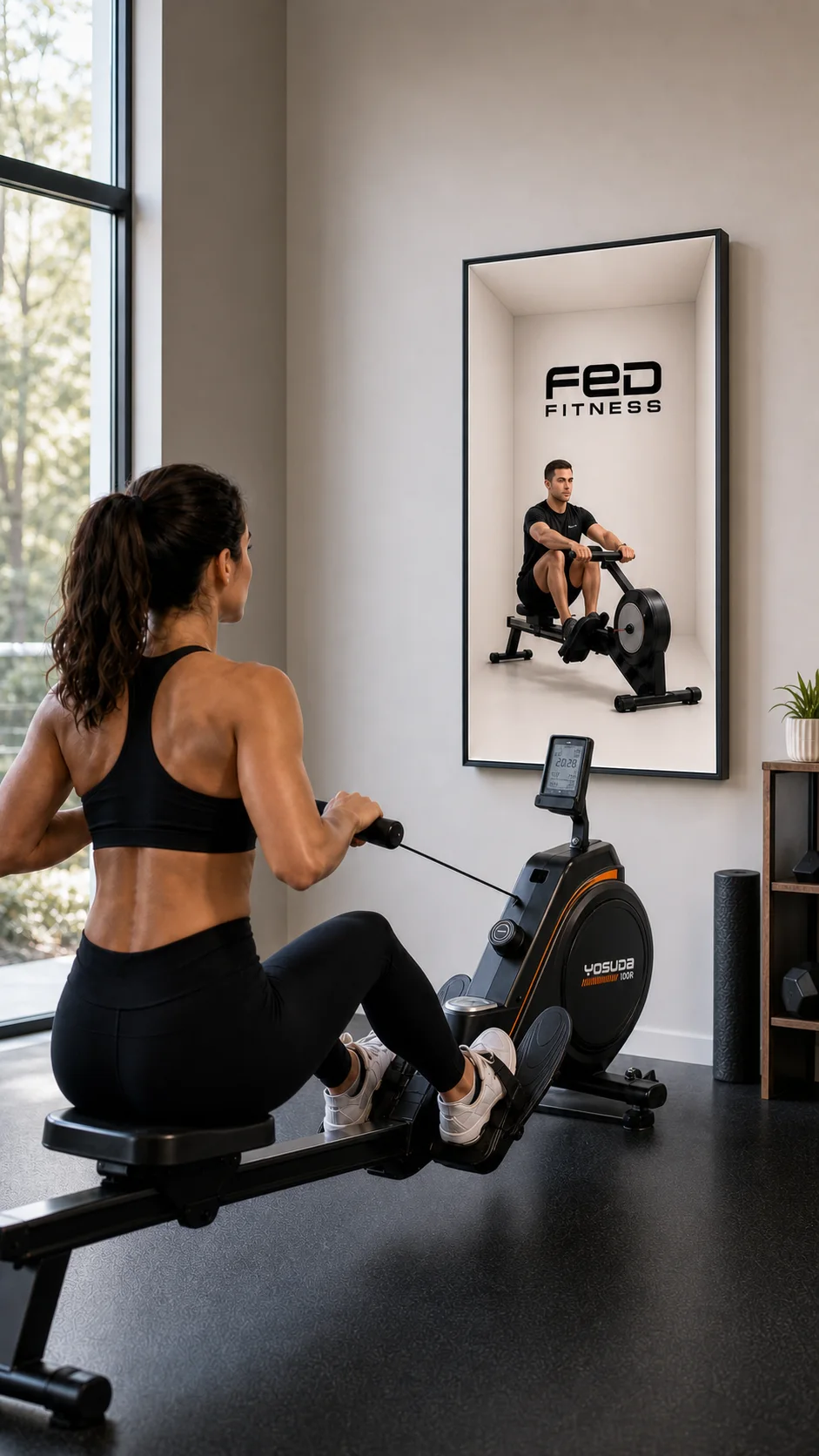
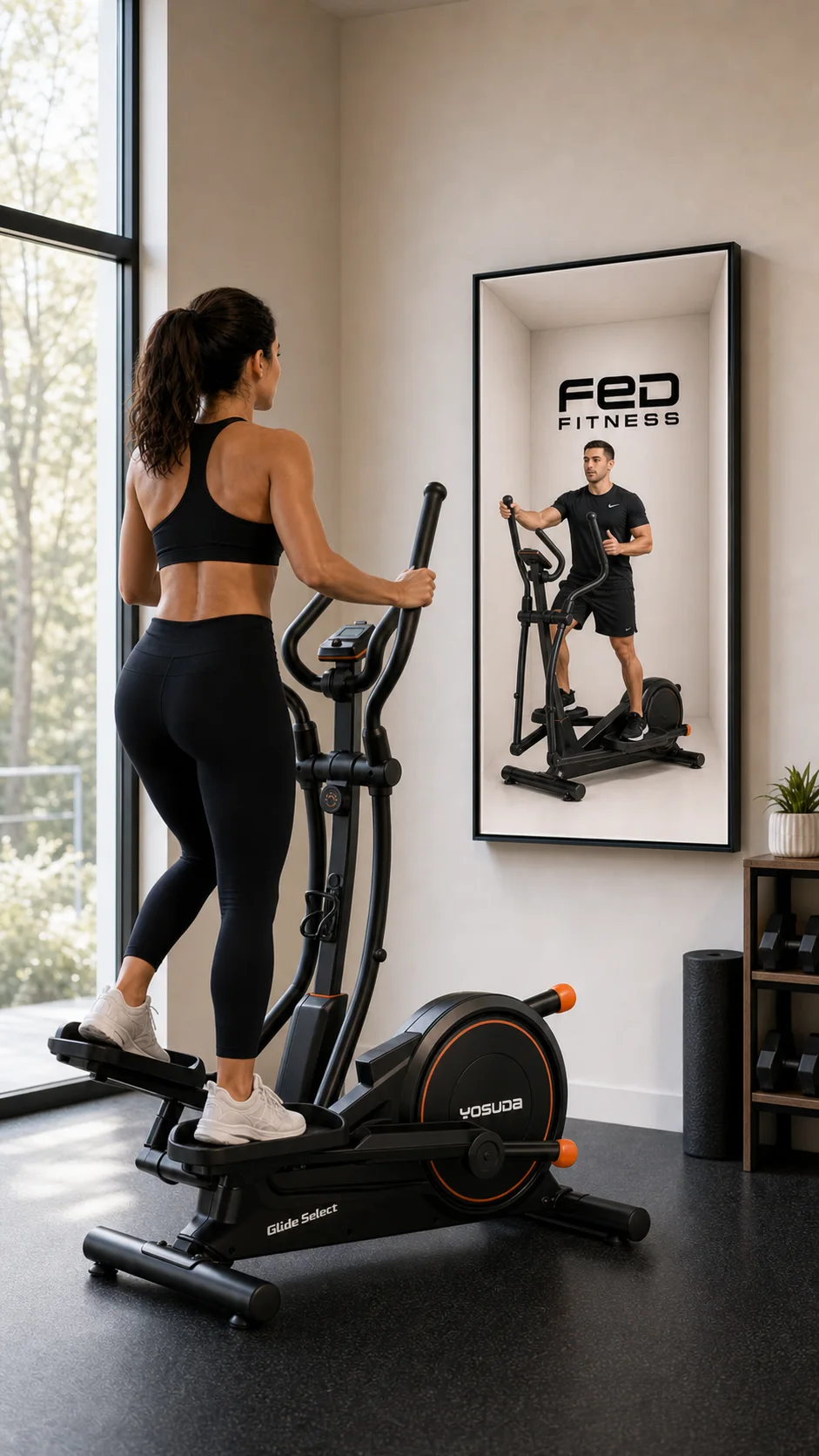
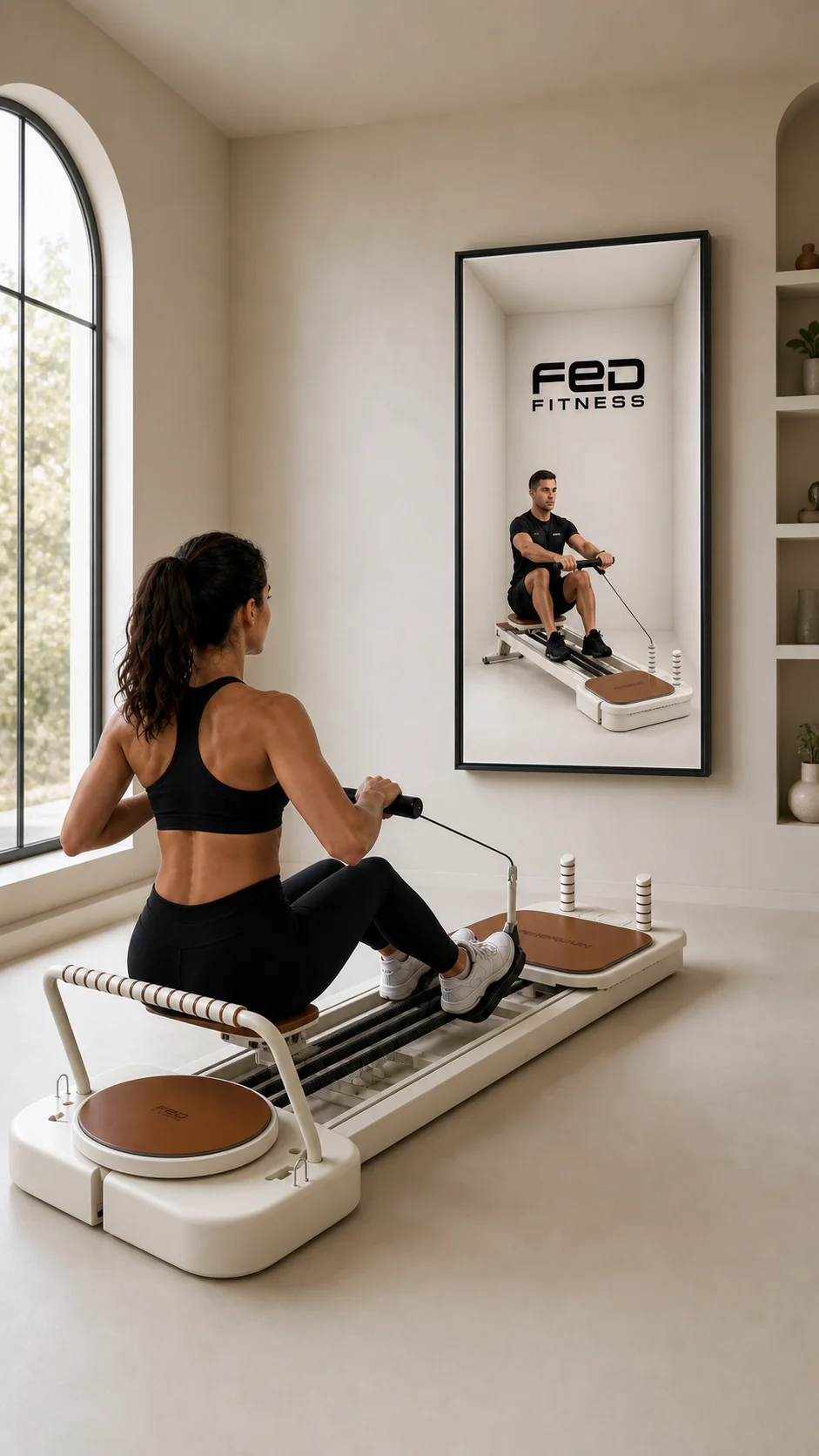
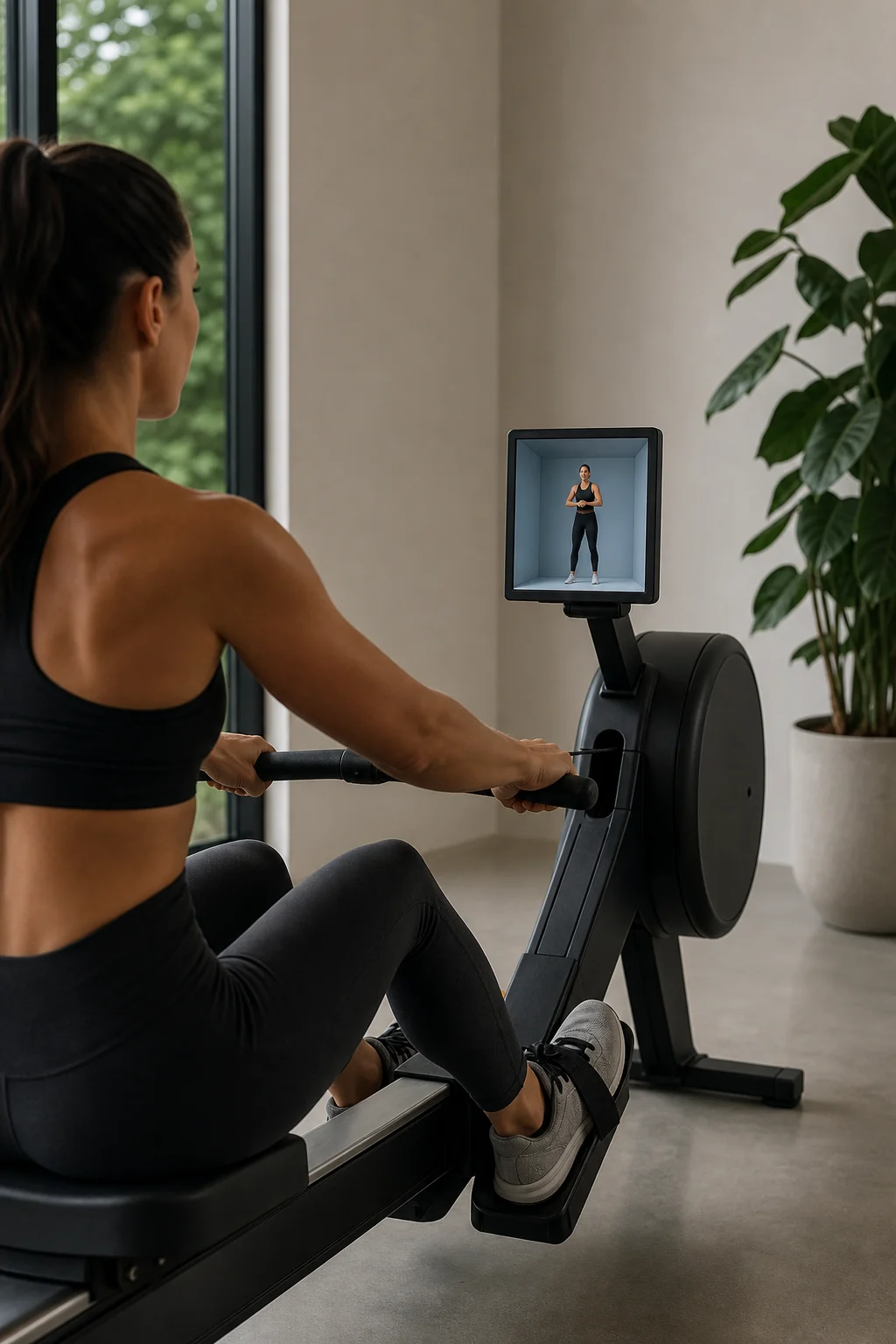
Relay Frame 46 remains compact and architectural, never a room-sized portal. Long machines such as rowers and reformers stay in the physical room. The vertical chamber is placed ahead or diagonally beside them so the coach remains readable while the user’s equipment keeps its natural footprint.
One platform, two useful scales.
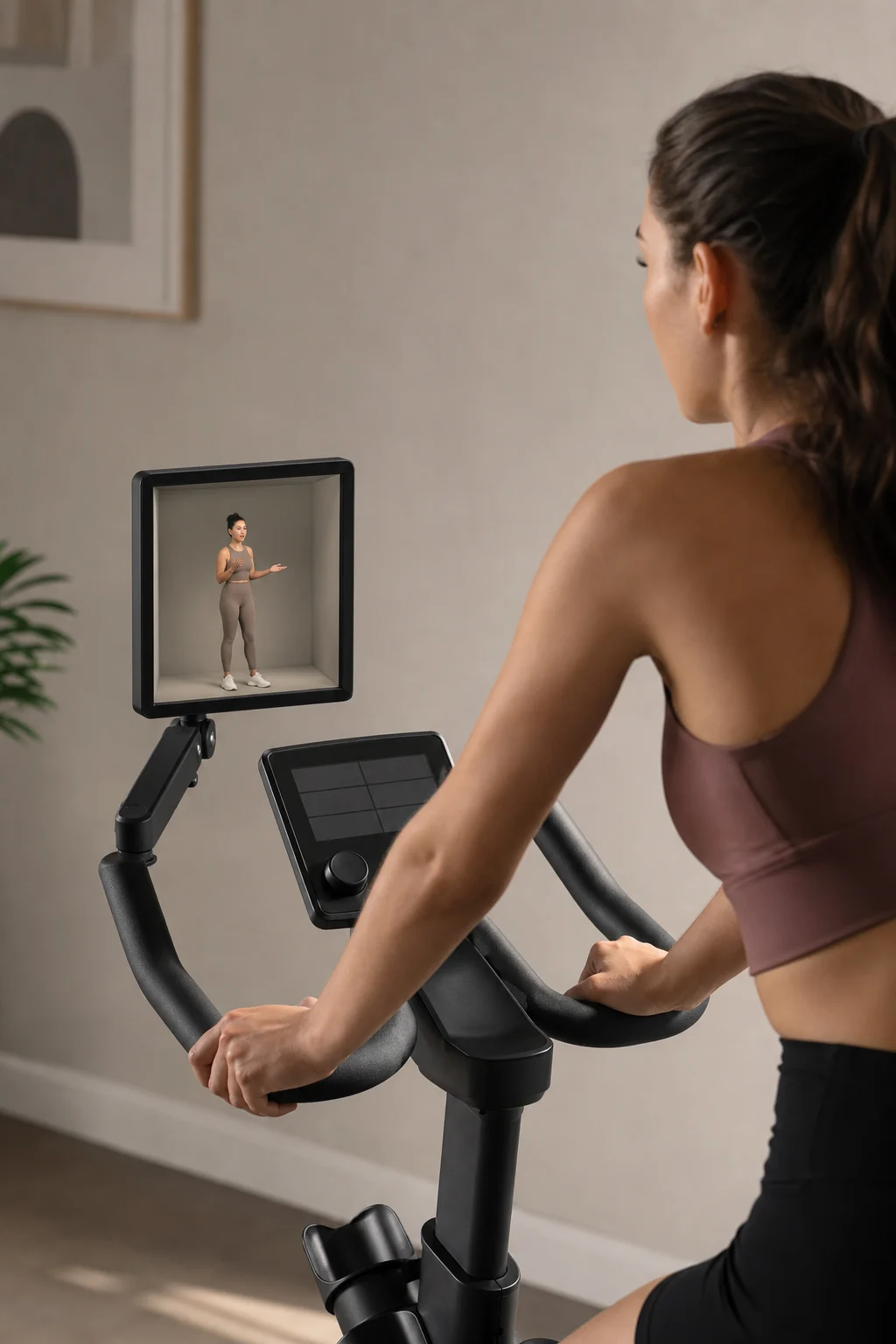
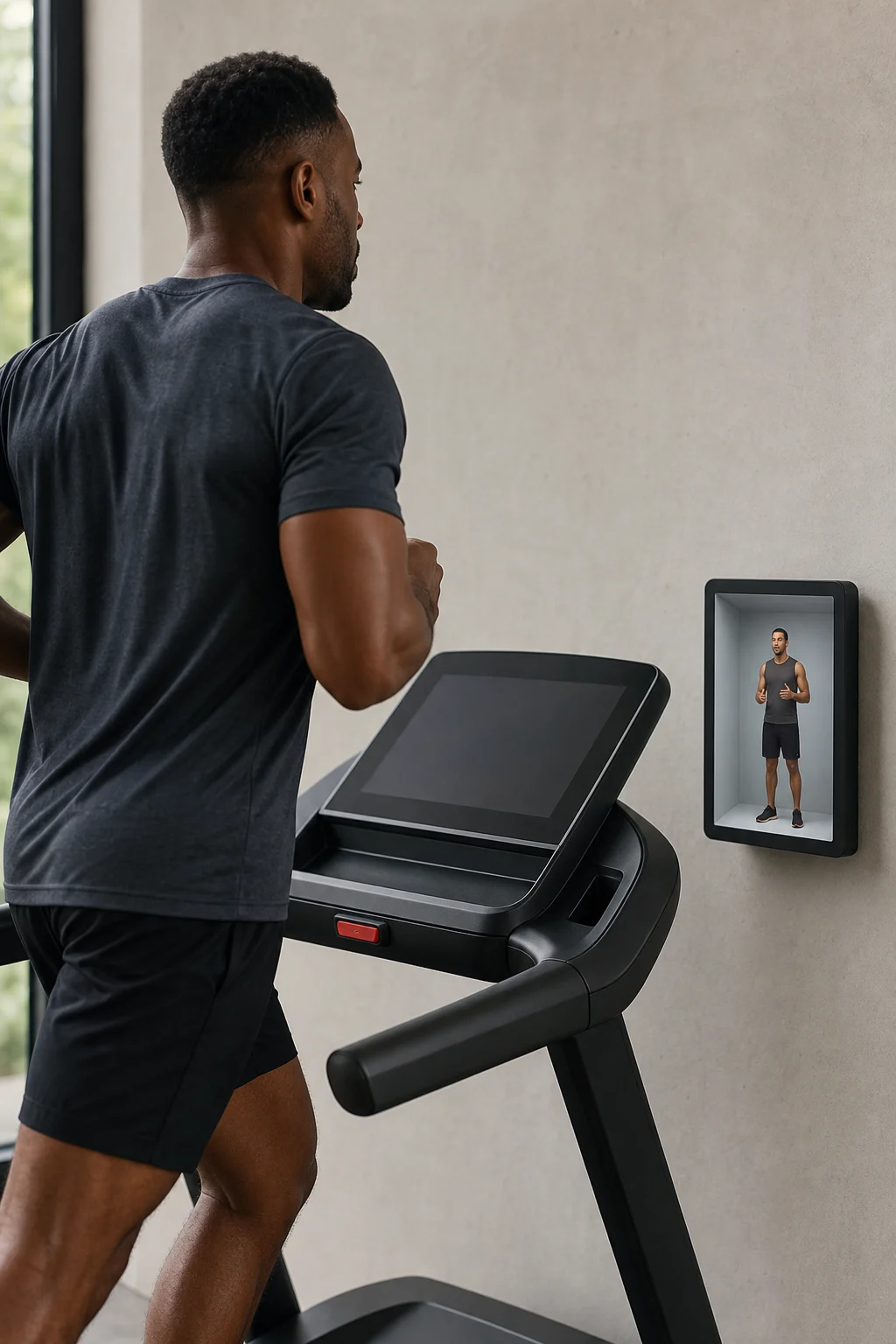
The collaboration concept uses two clearly defined hardware formats. Relay Frame 46 brings a full-body coach, remote participant or physical AI guide into the room. Relay Frame 10 keeps focused guidance close to compatible equipment. The Reality Relay Platform manages scenes, identity, calibration and operations across both.
The 10-inch format is not presented as a life-size presence display. Its advantage is that guidance remains attached to the user’s immediate equipment context. A rider can see cadence and a coach without looking across the room; a rower can receive pacing and stroke cues near the machine; a lifter can review setup between sets. The mounting system must be specific to each product and must not obstruct controls, emergency stops, moving parts or the user’s safe access.
Four modes of coaching.
- 01
Live human expertise
A personal trainer, rehabilitation specialist or class instructor can appear from another location for scheduled sessions, premium coaching and expert escalation.
- 02
Physical AI
An AI coach can observe approved device data, select the right demonstration, respond conversationally and adapt pacing or instruction within clearly defined safety boundaries.
- 03
Authored training
High-quality recorded instruction can be adapted to the calibrated chamber so the coach maintains correct scale, grounding and sightline instead of behaving like ordinary video.
- 04
Connected participants
Friends, family members or small classes can train across homes with a stronger sense of shared timing and social accountability.
Cardio becomes a shared journey.
Across six rowers, the presence layer can support synchronized stroke demonstrations, pacing, race partners, technique review and remote coaching. The user’s real rower stays in the room; a coach or competitor occupies the chamber ahead. For beginners, the coach can break the stroke into catch, drive, finish and recovery. For experienced athletes, the experience can emphasize cadence, power consistency and race strategy.
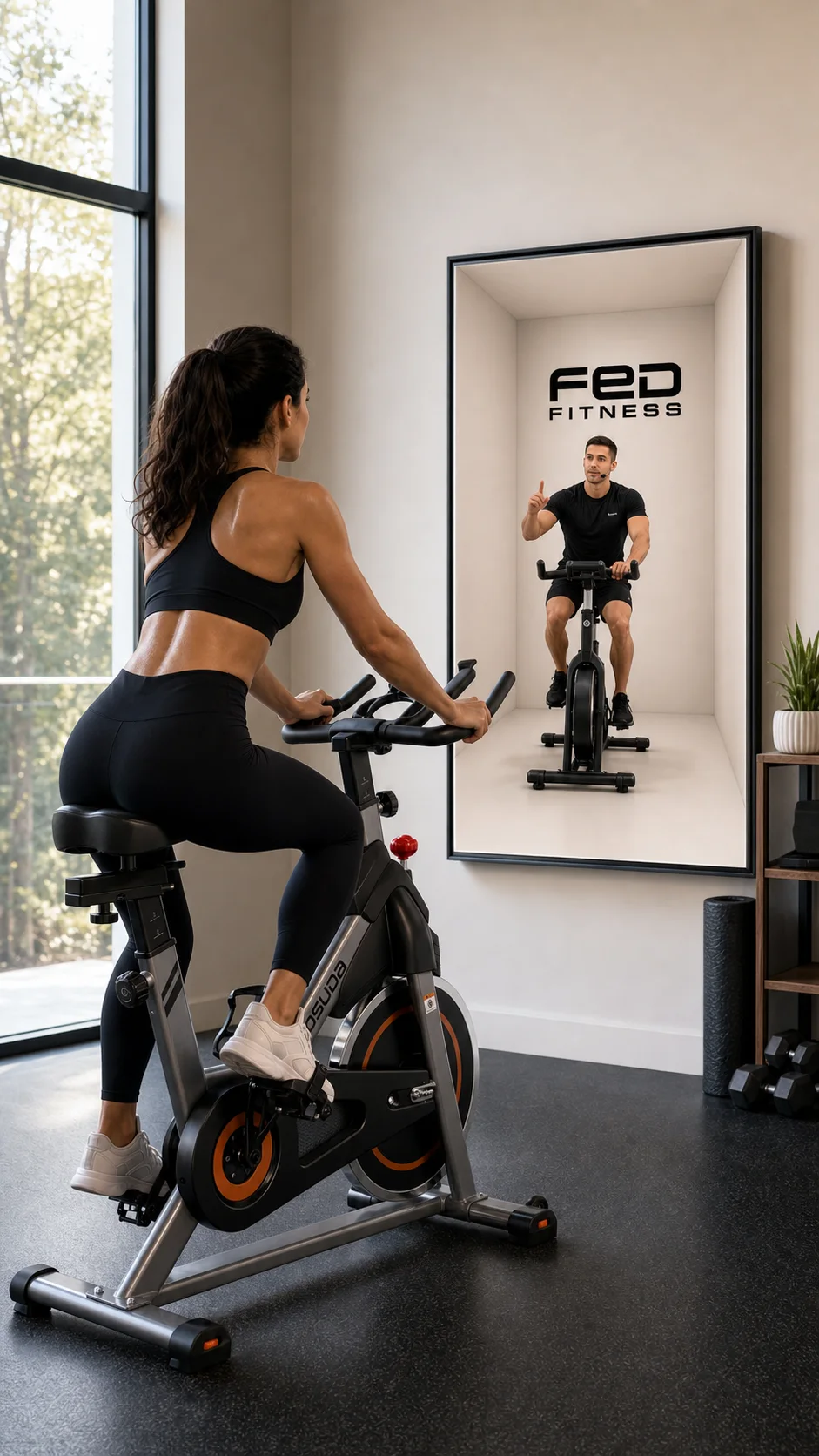
Across eight bike formats—from indoor cycles to recumbent and under-desk products—the chamber can host studio classes, one-to-one instruction, cadence targets, route companions and low-impact wellness sessions. A recumbent-bike user may need calm rehabilitation guidance; an indoor cyclist may want the energy of a group ride. The same endpoint can support both while the software changes the session logic.
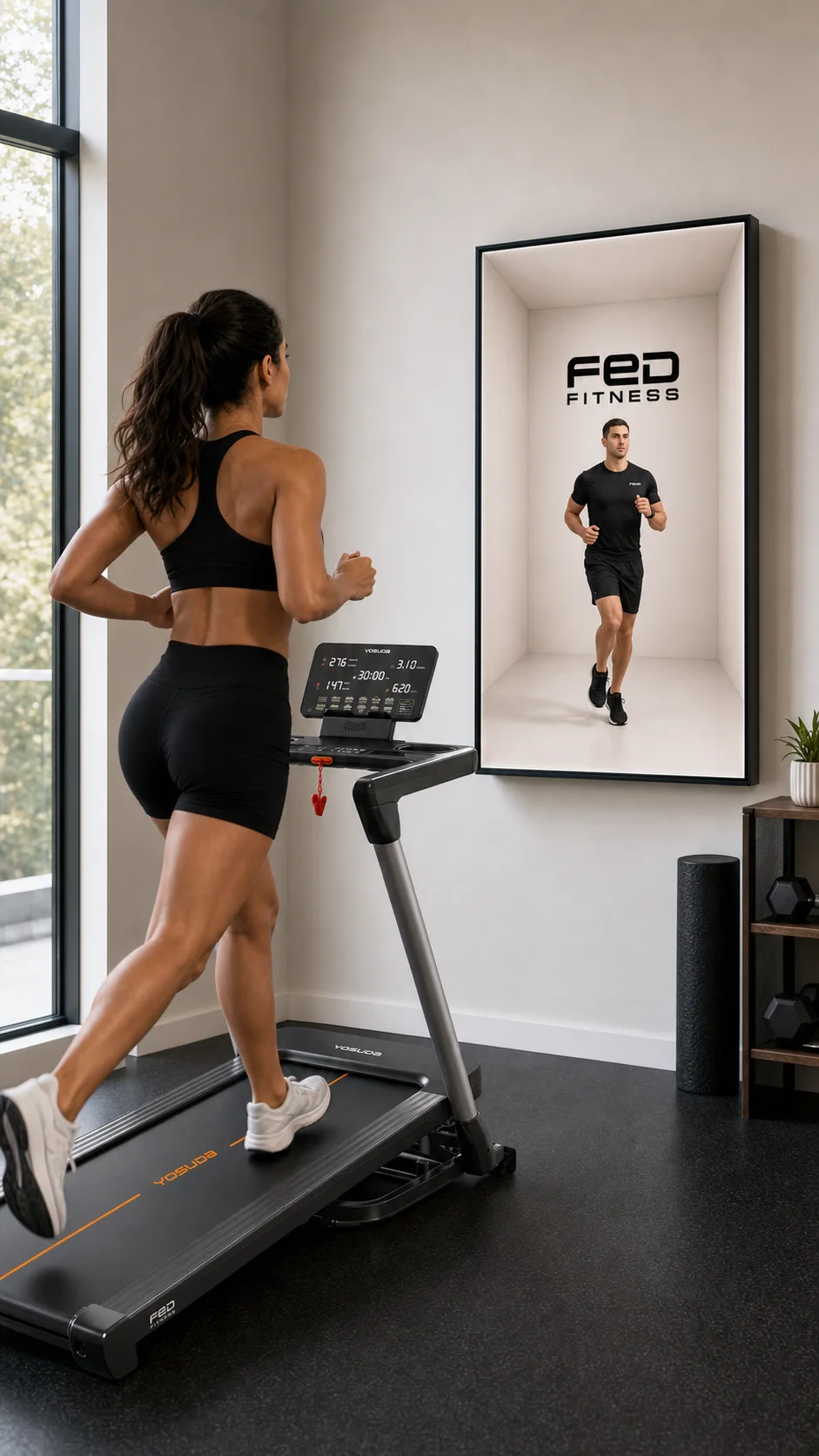
Six elliptical products can use full-body rhythm coaching, stride guidance and interval classes. Two treadmills can add running form, pacing, gait awareness and scenic or social routes. Stair climbers, steppers and vibration plates extend the model into posture, balance, short intervals and guided recovery. In each case the visual focus remains the coach, not a dashboard floating in front of the athlete.
Strength training gains an intelligent spotter.
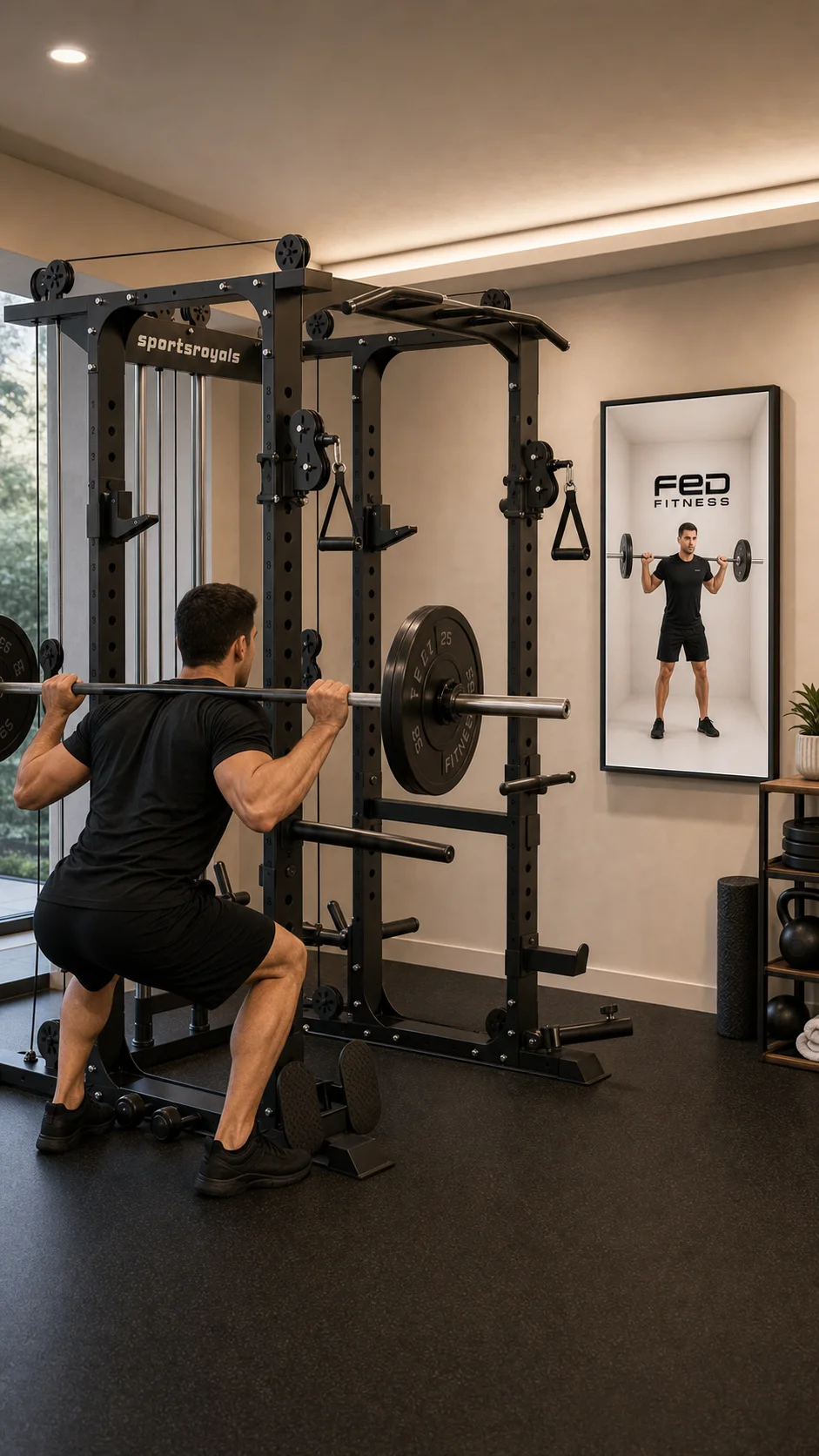
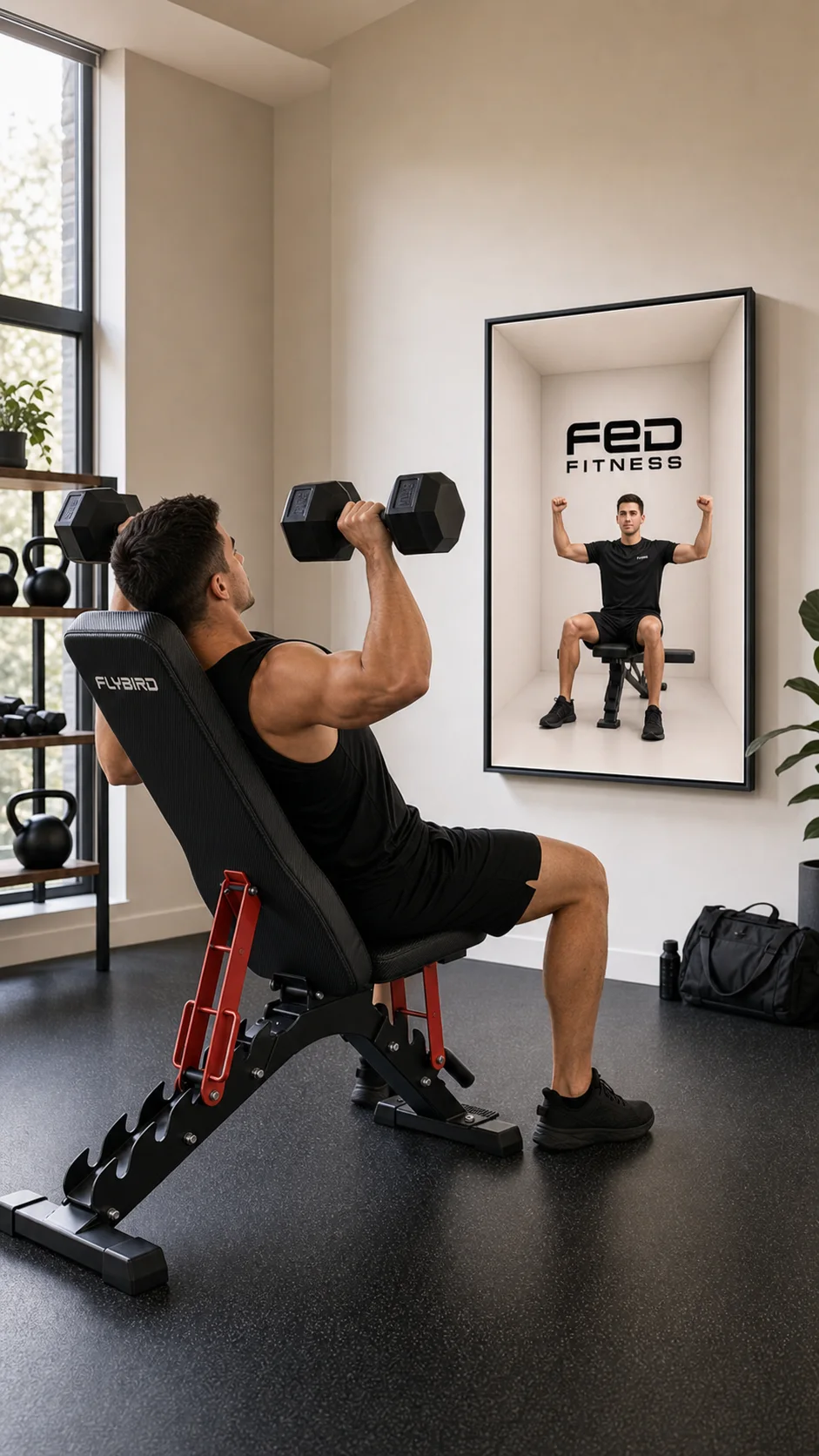
Strength equipment creates a different opportunity. The most valuable experience is not entertainment; it is attention. Eight benches can be paired with exercise demonstration, setup guidance and angle-specific form cues. Five power towers can support pull-up, dip and core progressions. Four rack systems can connect athletes to remote strength coaches for session planning, lift setup and technique review.
Squat, hip, glute and leg machines can use the chamber to demonstrate stance, range of motion, tempo and symmetry. Focused machines for chest, abdominal and rotational work can show the precise path before a set begins, then offer concise cues between sets. Reality Relay should not represent itself as an autonomous safety device or replace physical spotting where it is required. Its role is to make qualified guidance easier to access and understand.
Pilates, rehabilitation and family movement.
Pilates benefits from complete-body demonstration. Across the reformer and two compact board systems, a portrait coach can show breathing, alignment and synchronized transitions without being reduced to a small horizontal video window. The calm optical chamber can feel closer to a private studio than to an entertainment screen.
Seven trampoline products open a different category: low-impact adult classes, rhythm-based movement, short family sessions and age-appropriate instruction. The gymnastics bar can support skill progressions and parent-assisted demonstrations. These experiences require conservative motion design, clear spatial boundaries and product-specific safety rules, but they demonstrate that the presence layer can move beyond conventional cardio.
From one session to continuity.
The larger platform story begins when the athlete changes equipment. A user may warm up on a bike, train on a rack and finish with mobility work. Reality Relay Platform can carry the session identity, approved plan and coaching context between compatible endpoints. The coach changes position and demonstration, but the relationship continues.
For human trainers, that could mean moving between live and asynchronous guidance. For AI, it could mean selecting instruction based on user choices and available equipment while staying inside defined operating policies. For FED Fitness, it creates a path from a catalog of individual products toward a coordinated service experience spanning acquisition, onboarding, training, retention and support.
What a responsible pilot should prove.
A first collaboration should not attempt all 64 products at once. It should validate the system across eight representative machines: a rower, indoor bike, treadmill, elliptical, power rack, bench, Pilates reformer and trampoline. That set tests long and upright equipment, cardio and strength, fast and controlled movement, adult and family use, and several different viewing positions.
The pilot should measure whether people understand exercises faster, maintain better engagement, complete more sessions and value access to live or intelligent coaching. It should also prove practical matters: placement, lighting, sound, calibration, content adaptation, accessibility, privacy, session recovery and safe fallback behavior.
Understanding
Do athletes understand setup, movement and coaching cues faster than with a conventional screen?
Completion
Do more people begin and complete the intended coached session?
Continuity
Does live or intelligent coaching increase repeat engagement across compatible equipment?
A home gym with someone in it.
Connected fitness has spent years adding screens to equipment. Reality Relay proposes a more consequential step: give the equipment access to a person, an intelligent coach and a continuing relationship that feels situated in the same physical place.
The result is not a larger interface. It is a more human home gym—one where expertise can arrive when needed, intelligence can demonstrate instead of merely describe, and every machine can become part of one connected training environment.
Collaboration concept
Build the first eight-machine pilot.
Reality Relay is inviting fitness-equipment, coaching and wellness partners to test how spatial presence can improve understanding, engagement and continuity around physical training products.
Start a fitness pilot conversation