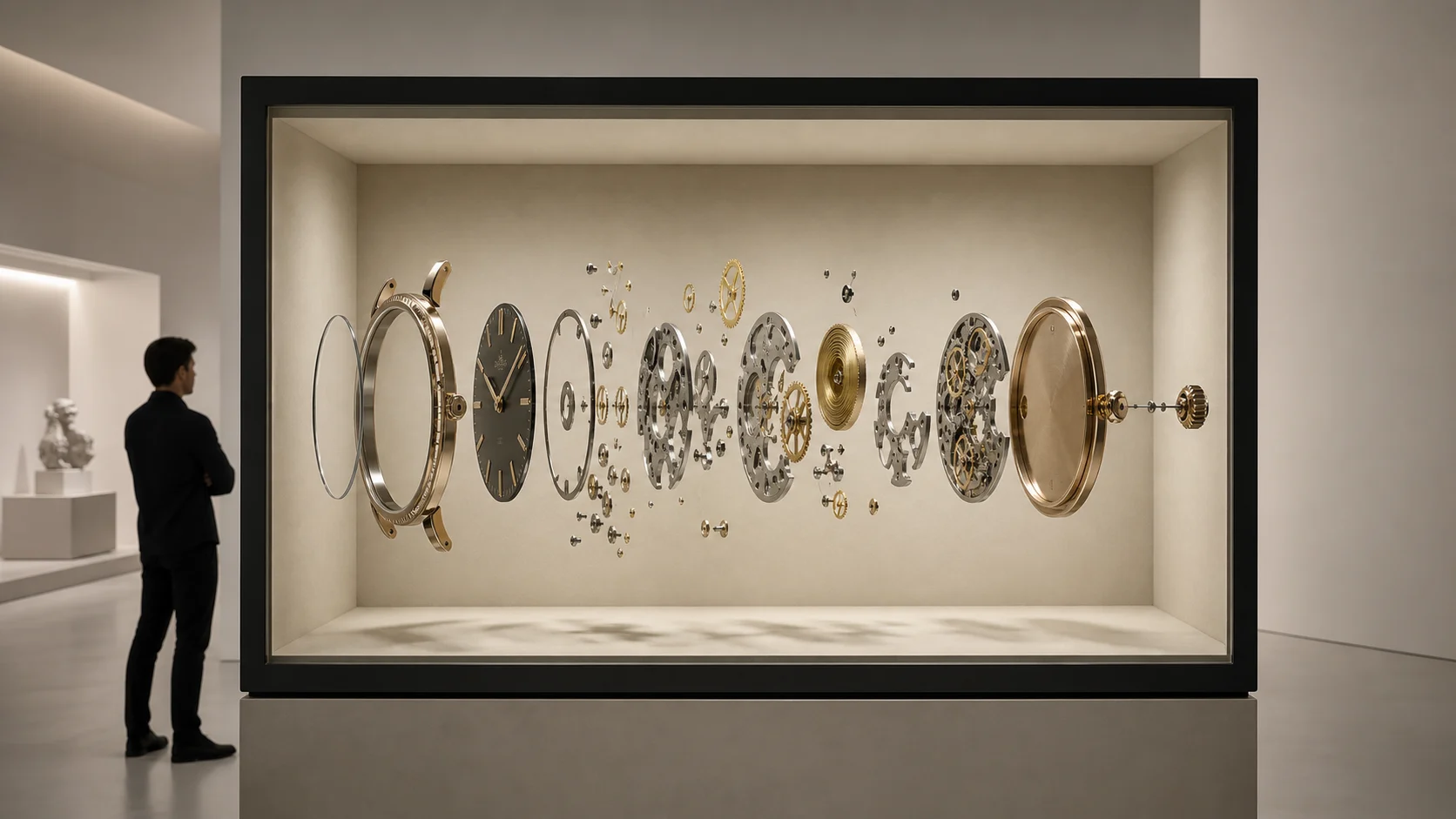
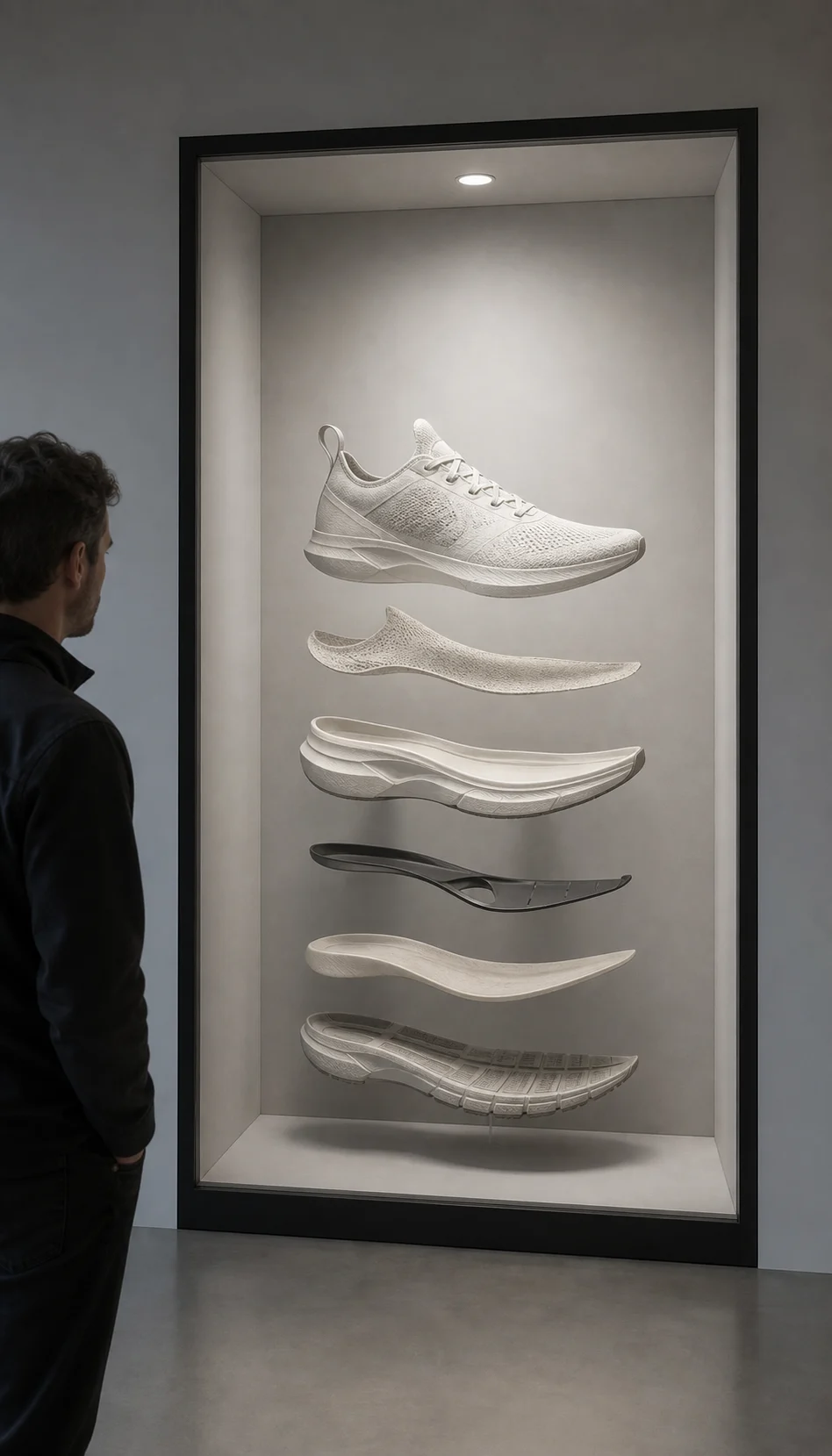
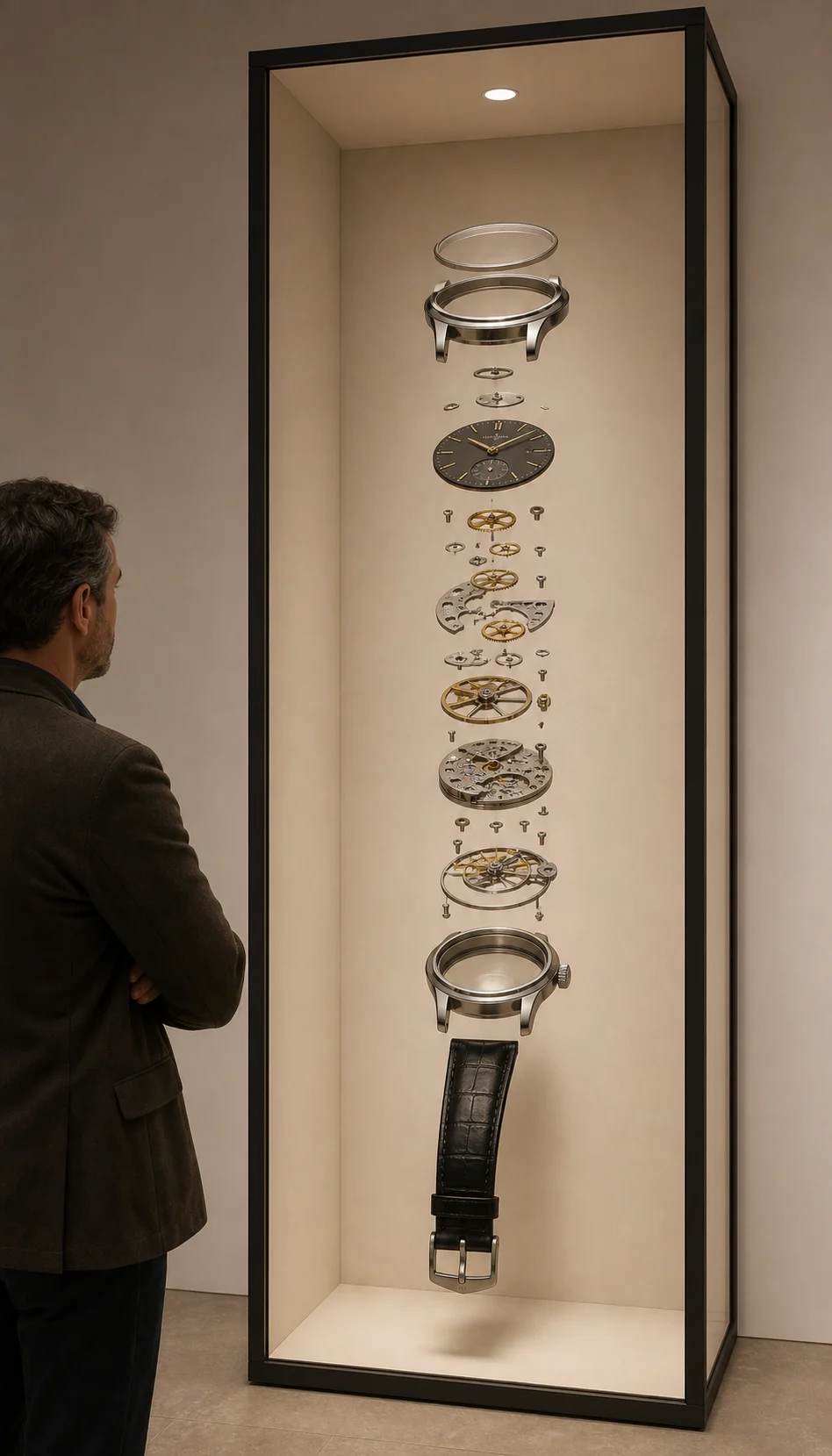
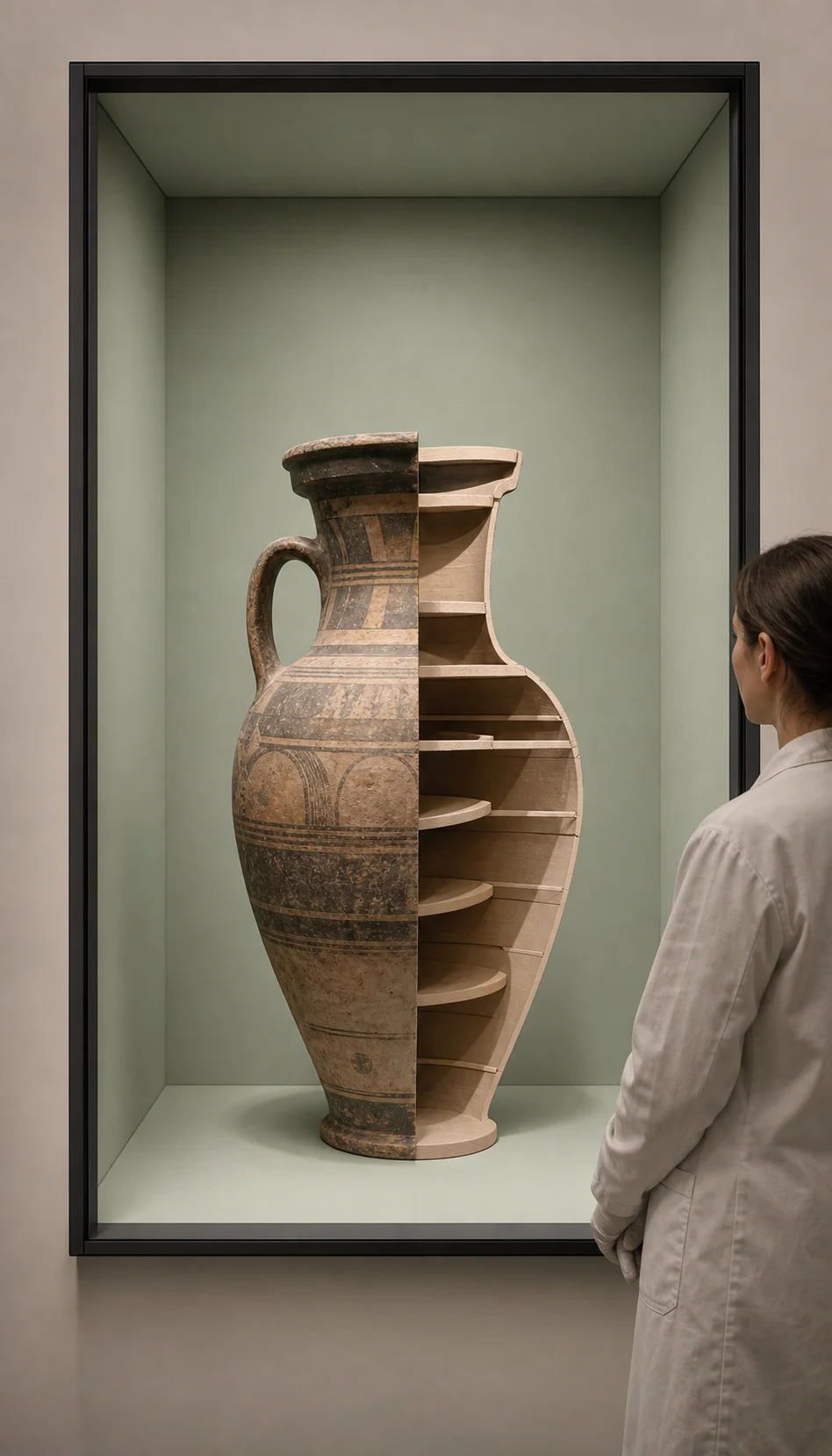
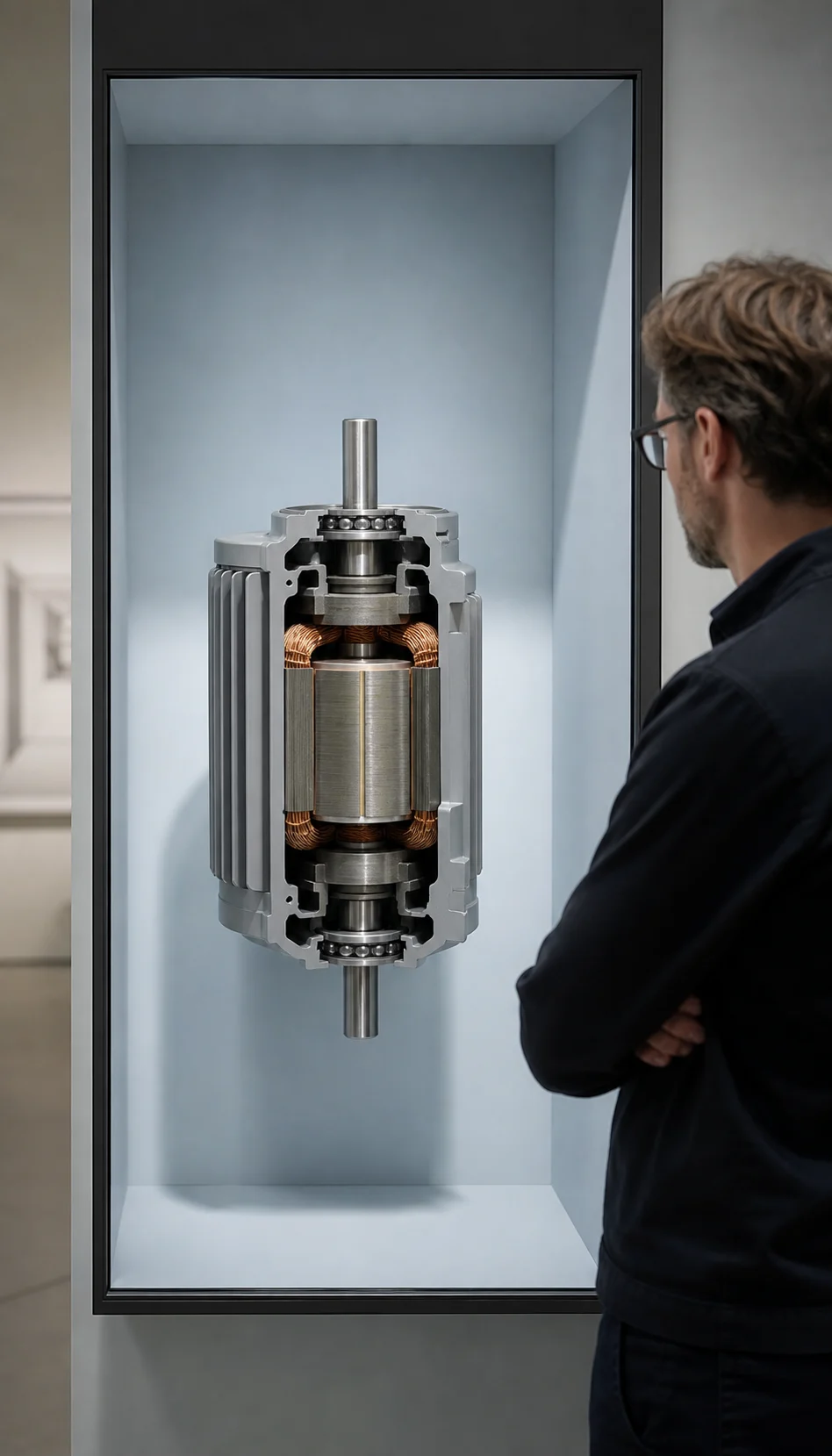
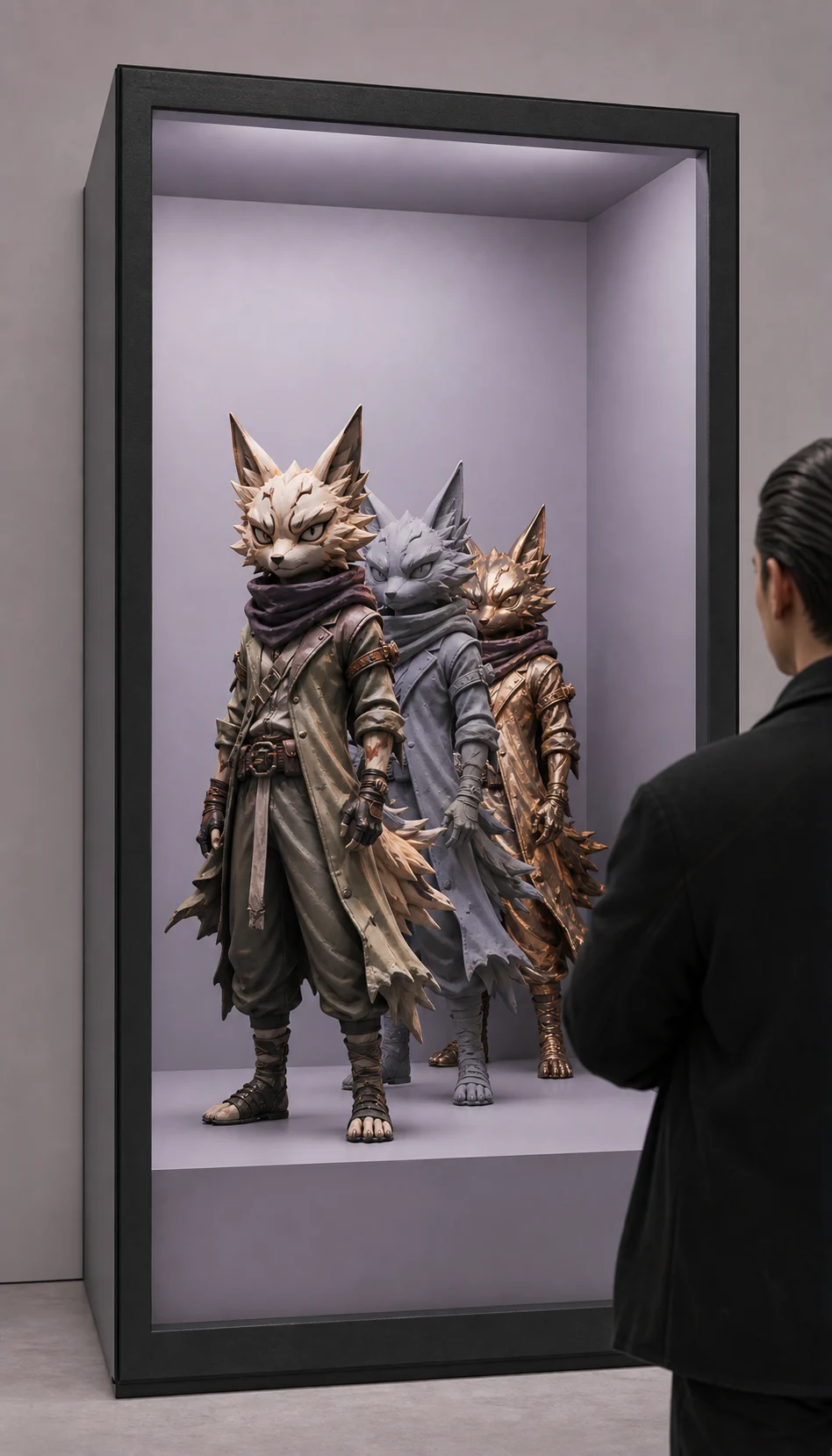
Physical objects are persuasive because they occupy space. Flat screens are flexible because they can transform. Reality Relay combines those strengths inside a bounded optical chamber: a product or artifact can retain visual volume while separating into parts, changing materials, revealing internal geometry or responding to a person.
This creates a new presentation medium for retail, engineering, education, museums, launches and customer support. The chamber is neither a glass vitrine nor a conventional display. It is a calibrated spatial stage connected to content, data and interaction through Reality Relay Platform.
Why objects need a spatial medium.
A photograph flattens depth. A video chooses the viewpoint and timing. A physical sample may be unavailable, fragile, expensive or unable to reveal what is inside. Three-dimensional software contains more information, but it usually remains behind a workstation, headset or touch interface.
A bounded presence space can give that data a stable physical address. Viewers know where to look. Designers can control scale and sequence. The object can behave in ways the real artifact cannot while remaining visually anchored to a room-like floor and coherent viewing volume.
The goal is not to imitate a physical object perfectly. It is to make the object’s most important truth visible.
Five ways an object can become more useful.
- 01
Explode
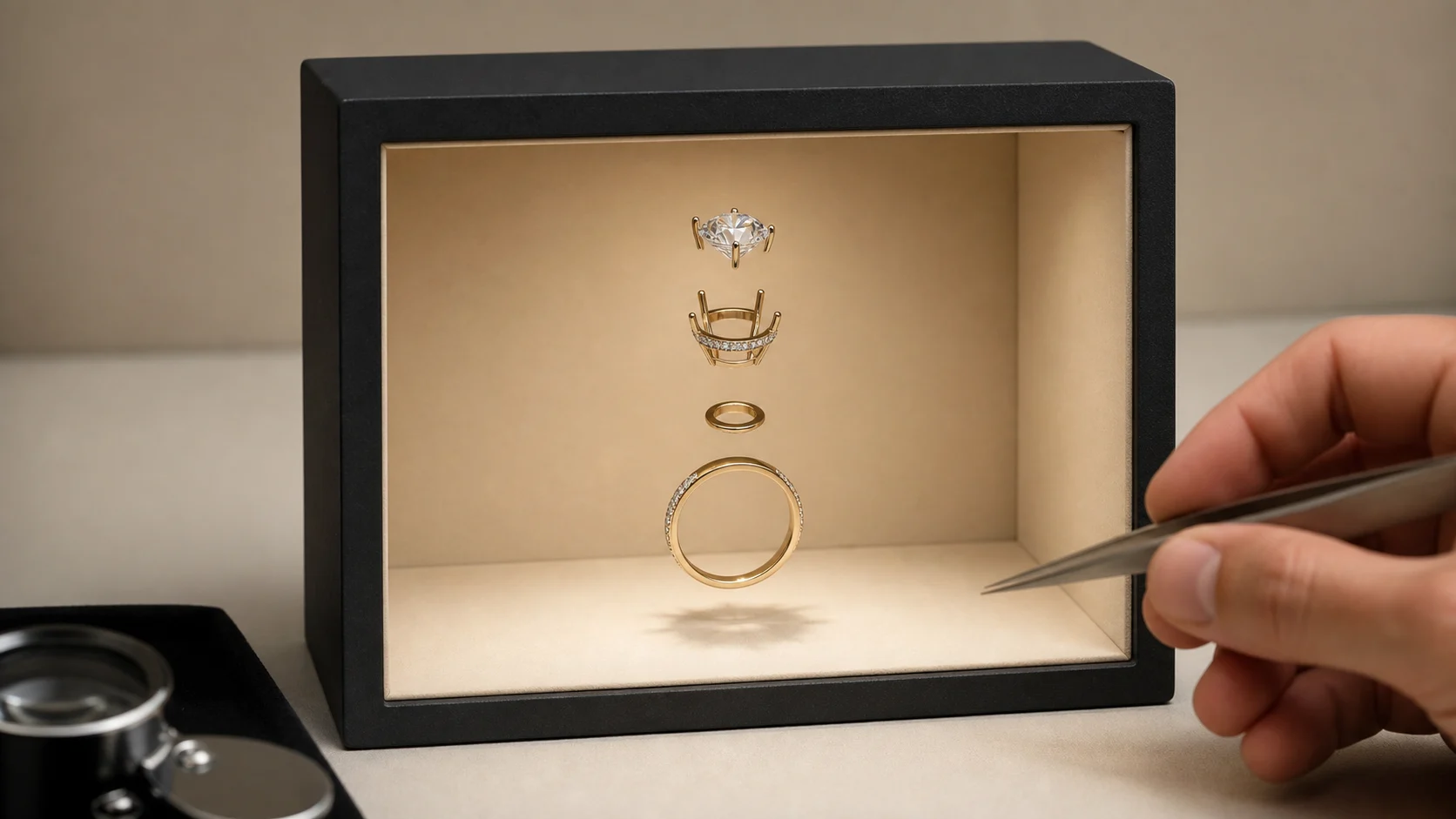
Separate components in a coherent sequence so construction, serviceability and material choices become understandable.
- 02
Section
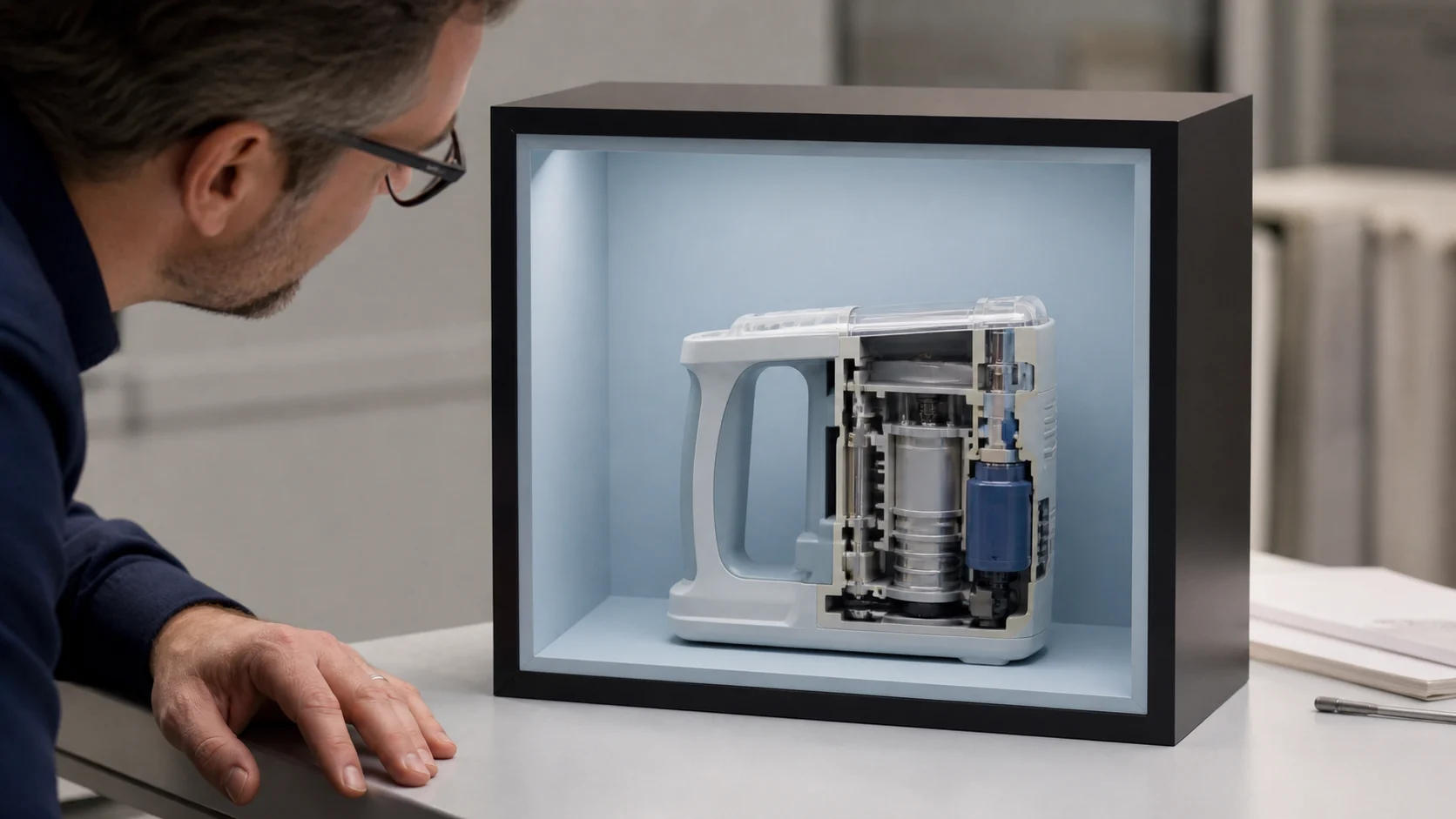
Reveal internal systems while preserving the outer form and scale that give the object context.
- 03
Transform
Move between finishes, configurations and operating states without manufacturing every variation.
- 04
Reconstruct
Compare an artifact’s current condition with evidence-based restoration or missing geometry.
- 05
Connect
Bring in a designer, conservator, engineer or intelligent guide to explain the object in the same visual space.
Large scenes for visual authority. Compact scenes for focused inspection.
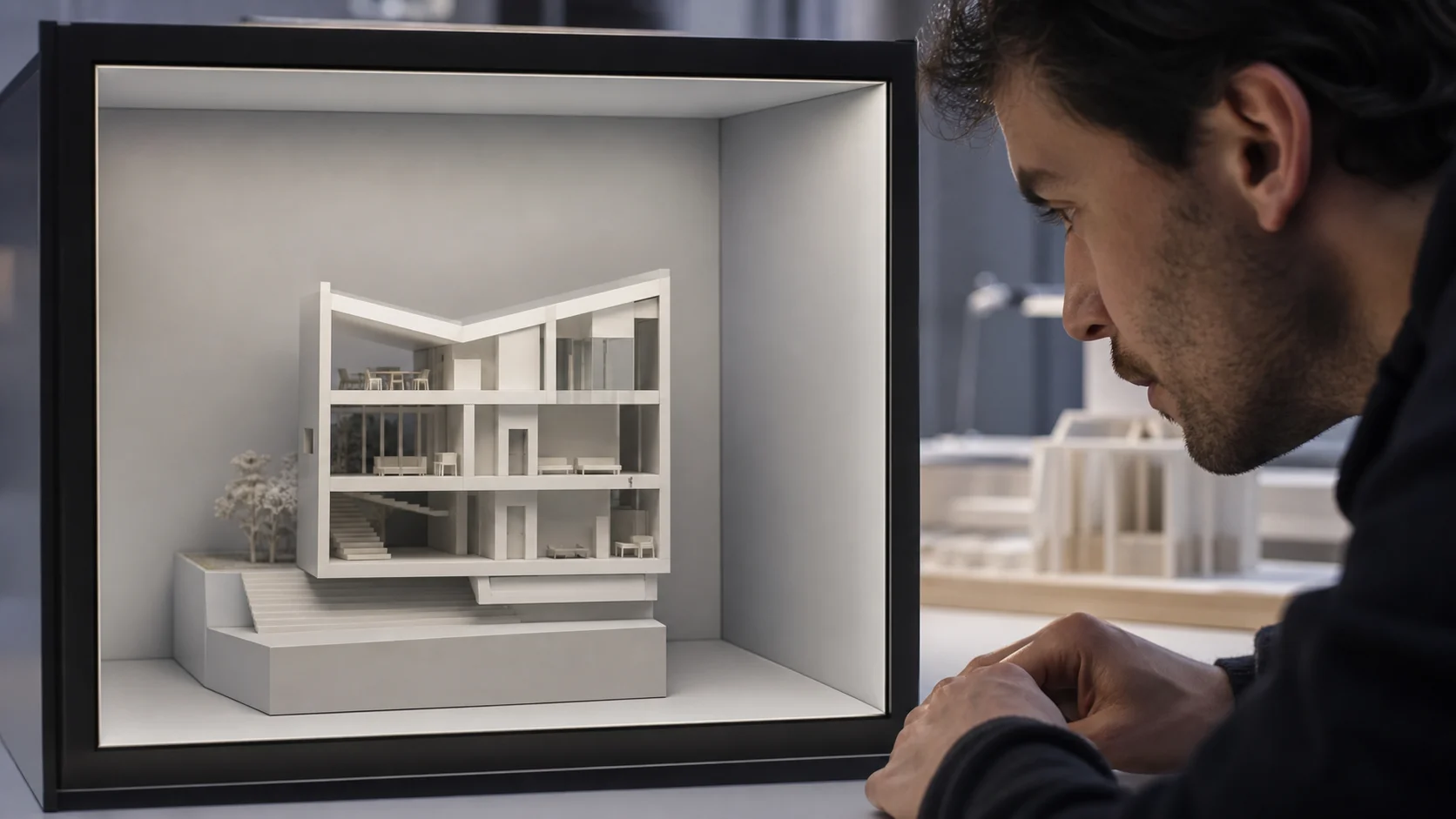
A larger portrait chamber can hold a complete product narrative or a visually powerful launch moment. Compact Relay Box endpoints can sit on a counter, design desk or service bench, keeping the spatial explanation close to the real sample and the person examining it.

The content pipeline is the real product.
Compelling spatial presentation requires more than a model file. Assets must be prepared for the chamber’s calibrated viewing conditions, safe visual envelope and intended distance. Materials, lighting, motion, labels and interaction need an authored hierarchy. Reality Relay Platform can manage those scenes, variants, approvals and endpoint assignments.
Where source CAD or scan data exists, the pipeline can preserve meaningful geometry while simplifying what the viewer does not need. Where it does not, photogrammetry, procedural reconstruction or artist-authored models can create an appropriate representation. The standard is not maximum polygon count; it is perceptual clarity.
Physical AI turns presentation into dialogue.
An approved intelligence layer can select views, answer questions and change the scene based on the user’s intent. Ask where a component sits and the object can separate. Ask how two finishes differ and the chamber can transition between them. Ask for deeper expertise and a remote human can join the session.
This interaction must be bounded by verified product knowledge, transparent AI disclosure and clear escalation. In medicine, engineering and cultural interpretation, the system should distinguish visualization from instruction and simulation from evidence.
What a credible object pilot should prove.
A balanced pilot should include three very different objects: one consumer product with variants, one engineered assembly with internal structure and one cultural or educational object with a narrative layer. That range tests materials, geometry, motion, data provenance and audience comprehension.
Evaluation should measure understanding, time to insight, recall, expert-assistance demand, content-authoring effort and endpoint reliability. The pilot should also document which visual effects remain clear across viewer positions and lighting conditions so every final experience stays within the validated optical envelope.
A new stage for the things people care about.
Objects carry function, craft, evidence and emotion. Reality Relay gives them a medium where those layers can become visible without removing the physical world around them. The result can be more persuasive than a screen, more flexible than a sample and more accessible than a headset.
Dimensional object study
Choose the first three objects.
Reality Relay is inviting product, engineering, cultural and experience teams to build a focused spatial presentation pilot.
Start a pilot conversation ↗